A New Vision for America’s National Security
Event date
Speaker
- U.S. Senator from Michigan (D); Member, Senate Armed Services Committee; Member, Senate Homeland Security and Governmental Affairs Committee
Presider
- Foreign Affairs and Defense Correspondent, PBS NewsHour; CFR Member
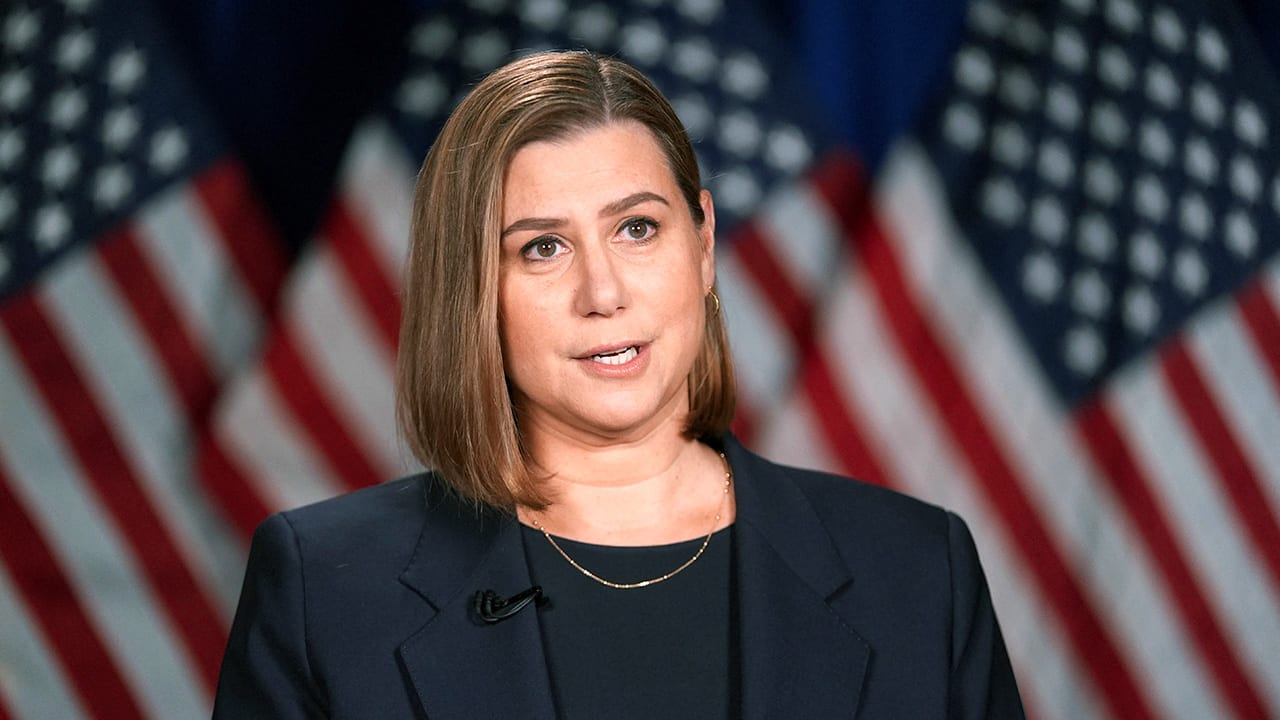
U.S. Senator Elissa Slotkin shares her vision for the future of American national security and American foreign policy.
SCHIFRIN: Thank you very much. Welcome, everyone, to today’s Council on Foreign Relations meeting called “A New Vision for America’s National Security.” My name is Nick Schifrin. I’m the foreign affairs and defense correspondent for PBS NewsHour and I’ll be presiding over today’s discussion. Welcome to everyone here in New York and also to the 400 members that are on Zoom joining us virtually.
Senator Slotkin does not need much of an introduction. She brings a unique resume, as we all know—former CIA analyst who served alongside U.S. troops in Iraq, a former assistant secretary of defense for international security affairs, for the last eight years an elected politician. We’ll try not to hold that against you. And like me, like so many people our age—forgive me for aging us—we were here in New York on 9/11 and that has changed her life and so many of our lives.
So, without further ado, Senator Slotkin, the floor is yours. (Applause.)
SLOTKIN: Join me, Nick, up onstage here. OK. Well, thanks to CFR for having me. And thanks, Nick, for that introduction. I’m really happy to be here because you all are really the standard bearer on bipartisan thought on foreign policy.
This body was actually founded between the world wars at a time of real disagreement and debate over America’s role in the world. President Wilson was championing the League of Nations. The Senate was opposed. Ordinary Americans were split.
This Council emerged from that lack of consensus to answer one fundamental question: how should America engage the world to keep us safe? Today we’re faced with a similar question and it feels appropriate to try and answer it here with all of you.
This is personal to me. As you heard, by training I am a national security professional. I’m also what we now call a 9/11 baby. I happened to be in New York City on my second day of grad school when 9/11 happened. It completely changed my life.
I was recruited by the CIA and served three tours in Iraq alongside the military before serving at the Pentagon and the White House under two presidents, one Republican and one Democrat. Here’s what that experience taught me.
A national security worth its salt must do two things: first, protect U.S. citizens, the homeland, and our way of life; and, second, advance American prosperity. That’s it. But that’s easier said than done.
In the years since I left the Pentagon the world seems increasingly chaotic, contested, and out of control. Authoritarian powers are on the march coercing smaller neighbors. A full-blown revolution in technology is underway. Institutions we all grew up with are fading. The global economy is fragmenting.
We all know, especially in this room, that the old playbook isn’t working and we don’t yet know what the new playbook looks like. President Biden nibbled at the margins of this playbook. President Trump is burning it all down, the good with the bad.
With all that noise it’s easy to spend all our time on the issues of the day. Troops—American troops—in U.S. cities. Ukraine, Gaza. But for our safety over the next fifty years we have to think longer term, because if I’ve learned anything as a CIA officer and a Pentagon official if you don’t give the future a seat at the table you make America less safe.
So let’s get back to basics. To do that I went to what most in this room would probably think is an unlikely source, Michiganders. Since 2017 I’ve been representing the greatest state in the Union, Michigan, in Congress, first in the House and now in the Senate.
I often feel like I have one foot in the national security world, one foot in my life in Michigan. So when I decided to give this speech I wanted to do something that most national security types wouldn’t think was important—reach out to regular Michiganders and get their thoughts on the subject.
Last month I held town halls on national security in Benton Harbor and Troy, Michigan, with people across the political spectrum. For ninety minutes each we talked about what they saw as the greatest threats to their safety and prosperity and what they expect from their government.
Here’s what I heard. First and foremost, economic stress is impacting every aspect of their lives. No matter what we’re talking about, our discussions veered into the cost of living, trade, tariffs, and how U.S. policies could hurt the already struggling economy.
Michiganders across the board saw China as the single biggest threat to American economic security. To them, China owns everything—the clothes on our backs, the phones in our pockets, our Treasury, our debt—and in the words of one Michigander, when you have someone entrenched in your own house how you deal with them is very important.
Second, technology is putting our citizens on the front lines and the government isn’t doing enough to protect them. From social media to AI to cyberattacks, tech threats were top of mind for everyone who attended those sessions.
One Michigander said it well—warfare is still on the ground, it’s still rockets, but it’s also changed. Cyber warfare can be just as brutal. Their bank accounts, their hospitals, their kids’ data—everyone had a personal story of being hacked or ransomed.
On AI most seemed to know it’s coming but they didn’t know what it meant for them. They heard AI can do some good things but they also feel a new round of job loss, which we’ve seen firsthand in Michigan. Regardless of the type of technology, Michiganders feel utterly unprotected like the government was shrugging their shoulders on these threats. That’s a direct quote.
Some folks brought up President Trump’s approach to burning things down. For most, to be honest, the jury is still out and there’s a message in that ambivalence. Many Americans have lost confidence that we know what we’re doing abroad and they have good reason to feel uneasy.
They’ve seen and fought the forever wars in Iraq and Afghanistan. They see support to Ukraine and Israel without resolution all while the middle class is suffering at home. While most Americans still genuinely believe in a strong American role in the world, there’s no mistaking that there’s a trust deficit after the last twenty years.
Before I move on I just want to flag what didn’t come up in those town halls. Traditional security issues like missile defense, nuclear weapons, and major terrorist attacks were not top of mind. Michiganders still expect their government to protect them from those things, but as a rule they’re focused on their pocketbooks and their kids.
I count this, frankly, as a victory. For all our faults we should be proud that for almost eighty years we haven’t had another world war or a nuclear exchange, and despite how President Trump paints those who work in national security we should continue that critical work.
So that’s what I heard from Michiganders, and while they may not use fancy language it’s clear that they understand warfare has changed. So informed by them I’m going to focus on three big things that, if we get right, will define American security for the next fifty years.
First, we need to treat economic security as national security and be ruthless about growing the middle class.
Second, we need to win the tech race just like we won the nuclear and space races. That’s especially true for AI.
And, third, we need to fundamentally rethink how we protect Americans since they are now on the front lines.
First, on economic security we need to treat economic security as a national security priority because it is. I believe in my bones that the existential threat to the United States is not coming from abroad. It’s the shrinking middle class here at home.
Using the term existential is not hyperbole. If you want to understand how the U.S. got to this fractious authoritarian moment in our history all you need to know is that the American middle class has shrunk since its high water in 1970.
In the last fifty years the share of Americans in the middle class has fallen by nearly 20 percent and all of that lost wealth has moved towards those who already have it rather than those who are striving for it. That’s not a political statement; that’s a cold hard fact.
What does that mean for everyday Americans? It means we can’t—people cannot provide to their kids what was provided to them—a home of their own, a fishing cabin up north, a trip to Disneyland every so often.
These are the things that define a comfortable middle class life and when Americans can no longer afford them they feel angry. They lose their dignity. They feel shame and they start looking for someone or something to blame. That’s how we begin to tear each other apart from the inside and how voters end up jumping into bed with anyone promising change.
Back in June I fleshed out an economic war plan to grow the middle class through domestic policy. But the truth is this needs to be a national security policy as well because while the wars of yesterday were fought with tanks and guns the wars of today are economic and they are underway.
China certainly has been engaging in economic warfare for years and has gone so far as to build it into their national security strategy published this year. So to get our heads in the game there are three things we need to do to protect the middle class.
First, we must ensure that the dollar remains the world’s currency. We built the global financial system after World War II and we have deeply benefited from molding that system in our own image. Dollar dominance means lower interest rates for things like mortgages and car loans, more valuable 401(k)s, cheaper imports, and lower inflation.
But right now the dollar is being undermined, largely, by our own actions: Trump’s efforts to bend the Fed to his will, his sloppy tariffs, and a self-generated trade war. Already the dollar’s value has fallen more in the last seven months than in the last fifty years.
Countries are looking for alternatives. This all plays directly into the hands of China who wants to run, obviously, the world on their currency. So we need a comprehensive plan to maintain the dollar as the leading global currency. That also means—and I know this is controversial, especially in New York—leading on the money of the future.
Just as countries like Kenya are skipping traditional banking and going right to mobile money, we want the digital currencies of tomorrow to be keyed to the U.S. dollar. Despite Trump’s abuse of the meme coin we need to double down on dollar-backed stablecoins and the U.S. government should issue a global digital dollar just like the Chinese did back in 2020.
The second thing, we need to treat our critical supply chains as national assets—national security assets. While some items like Rubik’s Cubes and ladies razors will never again be made in the United States, critical items like pharmaceuticals, chips, autos should be made at least in part in the U.S.
China has weaponized these supply chains, giving them a veto on our economy that we should not accept. We, therefore, need real industrial policy that strengthens American industries and offers taxpayer(s) a return on their investment.
We need to stand up a sovereign wealth fund to invest in technologies that usually scare off investors and then we need a rare earth reserve to stockpile critical minerals just as we set up a strategic petroleum reserve in the 1970s after the oil shock.
By the way, as someone who comes from Michigan let me just say that smart industrial policy also means prosperity for the middle class—new manufacturing, engineering, construction jobs—and, critically, it means spreading the wealth across America, not just enriching eighteen tech executives in Silicon Valley.
But if we want to do any of that we need allies. When I held these town halls in Michigan most people understood that our friendships keep us safe. To that end, we need to expand participation in our partnerships, not shrink, and think more creatively about our Cold War organizations.
What if, for instance, in addition to military alliances we had a lithium alliance or a chip alliance? One can imagine a NATO like body where countries agree to shared export controls, shared tech, and protection against Chinese coercion.
But to protect our economy we also need to acknowledge that there is another key battlefield and that’s technology. We are in a tech race right now with China whether most acknowledge it or not and there’s no area more important to win than on artificial intelligence.
I had the opportunity to visit Los Alamos National Lab this past weekend. They are building a new AI research center that will be housed at the University of Michigan. Go Blue.
Los Alamos was the birthplace of nuclear technology eighty years ago and I left this tour with the distinct feeling that AI raises some of the same fundamental questions that nukes did.
How should they be used? By whom? Under what rules? Only this time we are creating a technology that can become smarter than the humans who are designing it, and unlike nuclear weapons AI is almost entirely created and controlled by the private sector.
The last time we were in a race like this we won by setting up the Manhattan Project. We brought together the brightest minds of a generation including many foreign and immigrant scientists. Research funding exploded. Years later Congress set up the Atomic Energy Commission where government leaders worked with the private sector to develop civilian nuclear energy.
Together they mapped out the rules of the road that still govern nuclear power today. We need the same level of ambition now updated for the modern age. If Congress were at all healthy we’d be setting this up right now, today, and I’m ready to work with anyone who actually wants to win this race.
But it’s not enough to just invent the new technology. You also have to adopt that technology, especially in the military. We all know that the wars of the future will be fought with advanced tech. But the Pentagon has simply not kept pace with adopting that tech and our defense industrial base is falling far short of delivering at scale.
China is literally eating our lunch on this score. They’re able to take a new weapon system from idea to the hands of their soldiers in five years. For the U.S. it’s twelve. To help speed up that adoption we should actually take a page from Ukraine and whenever possible start with commercial technology that’s already on the market and adapt it for military use.
We literally need to take a battle axe to the old way of doing business where we spend excessive time and excessive money building the next big toy only to use it for just one threat.
Finally, in this new era of economic and tech warfare it’s our citizens who are now serving on the front lines and they are under attack. Every day our adversaries are using commercial tech to target Americans. Some of those attacks are on American individuals or businesses scamming seniors or hacking schools but other attacks are on our infrastructure—the Chinese government putting malware into our water treatment plants or hacking every single phone in America, a Russian group hacking our oil pipelines and shutting off gas to the Eastern Seaboard. These attacks target our civilians in an attempt to effectively make us go blind, deaf, and dumb.
Make no mistake, these are homeland attacks and AI will only make it worse. It’s, therefore, critical that we reorient the government to protect our citizens at home. We need to train a cyber national guard that deploys to help prevent or respond to attacks. We also need to go after these criminals at much higher rates by equipping and resourcing the FBI and DOD to take down their operations abroad.
And on the national level we need a new vision of homeland security updated from my era of 9/11 with new playbooks, new authorities, and new capabilities to protect Americans from digital warfare. We have the most sophisticated hacking tools in the world so instead of being scared to use them we need to fight back and hit our enemies where it hurts.
If China is going to target our power grid and local water systems we need to take offline the servers they are using to do that, and if a cyberattack in the U.S. causes the same damage as a physical strike we need to treat it as an act of war.
To sum up, we need economic security be a national security priority. We need to get our ass in gear on the tech arms race, particularly on AI, and we need to protect Americans at home from these new threats. We do that and we have a good shot at protecting American security and prosperity into the future.
This will require a fundamental reorganization of the way we look at national security work and old habits die hard. But our security, once again, depends on our ability to change and adapt.
To that end, let me put in one final plug. Our entire national security approach, what we all grew up with, is based on the National Security Act of 1947. It created the Department of Defense. It created the CIA. It was an incredibly important document at the time and that reorganization helped us win the Cold War and the space race.
But we’re long overdue for change. The good news is that we have a rare moment of opportunity here. Trump is, indeed, burning everything down. But instead of snapping back to the old way of doing things we have to build something new out of the ashes.
I am not naive. I know we have real problems right now. But a real lack of leaders that are focused on the future is a problem. If leaders are able to rise above their partisanship America still has a really good hand to play. We still have the best workers, the best researchers, the best innovators in the world.
Our economy has been the envy of countries across the globe and we have a very long history of doing the impossible. That’s what this moment demands of us, that’s what the American people demand of us, and that is what is our duty to deliver.
So thanks so much. Appreciate your time. (Applause.)
SCHIFRIN: And thank you, everyone.
We’ll take about—I think we’ve got about twenty minutes or so that I will take and then we’ll go to the members in the audience as well as online, and what I’d like to do is start big picture, especially on your economic vision, and then kind of zoom in to some specifics.
SLOTKIN: You bet.
SCHIFRIN: So you had a line toward the beginning, President Biden nibbled at the margins of a new playbook. One of his foreign policy slogans, of course, was foreign policy for the middle class. I looked. The most recent Gallup poll judged President Biden’s approval on foreign policy as 40 percent.
Your phrase is economic security is national security so how is your vision different than President Biden’s?
SLOTKIN: Yeah. Well, I think, first of all, the whole reason I wrote this speech is because it’s very easy to get stuck in the conflicts in the headlines and I think, if I can say about the Biden administration, they got very deeply mired down in the conflicts of the day.
Not that they’re not important, right—Ukraine or Gaza. They are important. But what they didn’t do was, A, go whole hog on a sort of national security approach to industrial policy and they certainly, I think, could have done more laying out a kind of forty- or fifty-year plan, again, based on economics and technology.
Some of the things that I’m calling for in the speech were things that I would have been thrilled if they had suggested and—but I think, as often happens, we just don’t have a lot of space for thinking ahead and we all know that Washington is not functioning well right now, and one of the casualties of that is, like, I’m sitting in the Senate as a brand new senator and there’s just not a lot of talk about these future threats. I mean, they’re not even future—they’re here.
So I just wanted to put something out, a little something, to say that if we don’t think about this dramatic change that’s happening right now we’re really not doing what we need to do to keep the American people safe.
SCHIFRIN: So the steps that the Biden administration took, things like the CHIPS Act, things like the—
SLOTKIN: They’re a good start.
SCHIFRIN: —the national security supplemental that had a lot of defense industrial base investment for many years, what, just not enough?
SLOTKIN: It just—it was a good start. It was a good start and I think, again, you know—and I voted on the CHIPS Act. I mean, you do what you can. But I think we need to make a deliberate decision—again, could be controversial—that we as a country are going to push forward a real thoughtful industrial policy.
That’s not a bad word. And I say this, yes, because I care about national security but in this room I feel the need to make the point again there is a problem with the fact that the middle class is shrinking like this.
I live in my farm town, Holly, Michigan, and people cannot live the lives that their parents were living and they are mad, and this—if you’re unhappy—we can’t have a consistent policy as a country if we’re constantly pendulum swinging from Bush to Obama to Trump to Biden to Trump. That reflects the fact that people are unsettled.
So if you care about a strong American leadership role in the world—and that means we have to be consistent with our allies and our adversaries—you should care and give a crap about the health of the middle class because they’re not going to give people in this room permission to do what they want to do abroad unless you are actually making it so that they can live lives better than their parents.
SCHIFRIN: I think it’s starting to age us again but I think our generation is the first on average that is less well-off than our parents, I think, as a generation.
All right. So if that’s the prior president let me ask the big picture question about the current president.
So from the very beginning President Trump’s foreign policy approach has been intertwined with talk of the middle class and his foreign policy tools have overlapped with what we have historically thought of as economic tools.
And this isn’t just about tariffs in 2016. He and Bernie Sanders both emphasized early on how the Trans-Pacific Partnership and other free trade deals were hitting the middle class. That pushed Hillary Clinton, that pushed Obama, against the TPP.
So how does your frame differ from what has been a key aspect of his foreign policy approach for nine years?
SLOTKIN: Yeah. I mean, I think the president is a populist and I think, you know, my experience with Trump is that he’s usually got the wrong answer for the right question, right? He’s picking up on something that’s very real in the country, right, this issue with the struggling middle class.
But then his answer on what to do about that I very frequently disagree with, maybe not always, and certainly the sloppiness with which he conducts his economic policymaking, again, people in this room may know better than me, it just—there is some real basic problems with the economic sense that it’s making.
And as a representative who very much—you know, I won the tightest Senate race in the country. I won by 19,000 votes out of 5.6 million voters. It was tight. OK. It was a cost of living election, period, and voters voted for whoever they thought was going to put more money in their pockets.
He successfully won that campaign because he said he was going to lower costs and I challenge—I challenge anyone to tell me what part of your budget has gone down and not gone, in some cases, up precipitously.
And, you know, this fall with everyone, including probably everyone in this room, getting notification that their private health insurance is going up by 10 (percent) to 15 percent starting January 1. He is not—if he—whatever he claims to care about the results do not match what he says he gives a crap about.
SCHIFRIN: So let’s zoom in. Let’s do the economic stuff, the tech stuff, and then the cybersecurity stuff, if I can get through all of it.
Global digital dollar—that sounds a lot like a central bank digital currency. Is that what you mean, a government-sponsored coin? Because, as you know, the Republicans have emphasized or been pushing a more private solution.
SLOTKIN: Yeah. So, you know, we worked on some cryptocurrency legislation that we voted on in the last couple of months and I think that’s, again, a good start on stablecoin. But I do believe that we need a government-issued digital currency.
The Chinese did it. I think there’s demand for it. It speeds up the, you know, commerce. It’s cheaper and, like, the world is going digital. So we either kind of get in the game or we shouldn’t be surprised that it’s all ceded to these private entities.
So I think we need one and I think that the government should want one, right? Again, if my premise is that—
SCHIFRIN: Although it does have to be an act of Congress. I mean, Jay Powell says this.
SLOTKIN: I’m here. Let’s talk. You know, like the—
SCHIFRIN: Yeah. If Congress creates it then let’s do it, right.
SLOTKIN: Yeah. So I would argue that this administration hasn’t always yielded to Congress on things that are congressional responsibilities but I’m ready to talk.
But I think that that’s something—if we want to keep up with the pace of change and how so many of our own citizens and citizens abroad are transitioning to digital currencies then it’s just kind of we need to do it.
SCHIFRIN: Sovereign wealth fund—traditionally these are created by states. Alaska and New Mexico have one. Countries, of course, with some kind of abundance of assets we usually associate with oil and gas and they usually create sovereign wealth funds in order to diversify future revenues to get off of oil and gas only.
It seems to me, though, that the only surplus in the U.S. economically is debt, right? (Laughter.) Thirty-seven trillion dollars—we’re the largest debtor in history. So is the sovereign wealth fund a good use of money and what’s it for if not to diversify future revenue?
SLOTKIN: Yeah. I think it’s about placing strategic bets on things that traditional investors see as either too long term or too risky in some cases. You have to have a return on investment. It has to make sense to the taxpayer, that’s for sure.
But, you know, we often talk about how we don’t have enough access to rare earth minerals. That’s a huge problem for us, right? China holds that over our heads all the time.
But traditional investors would say, well, look, that’s such a long lead time I’m not sure I’m going to invest in that, or, China’s flooding the market. You know, they’re lowering the price so it seems like a bad bet.
But for us strategically that could be really important. So I want to make sure that we have options on the table to do really big things and place bets on behalf of the American people that will return investments even if it’s in twenty years but it’s something we know we need.
Think about active pharmaceutical ingredients. It is downright scary to me how few of the sort of source materials of our prescription drugs we actually control. It’s another point of leverage on us. I think about getting our military, you know, the insulin they need or whatever it is that they—that are required.
I think we should be thinking strategically about investing in APIs. That is something that the private sector has shied away from and so I think the sovereign wealth fund just puts another tool in the toolkit.
SCHIFRIN: The president talks about—has talked about sovereign wealth fund, of course, usually related to technology, and historically innovation, entrepreneurial creativity, comes from, frankly, anywhere other than the United States government.
It sounds like your vision’s a little bit different but the criticism usually is that if the government is picking winners and losers couldn’t that in fact reduce innovation, the very innovation that you’re trying to create and do you really expect USG management—U.S. government management—to be the most effective way to do it?
SLOTKIN: Yeah, I’m not—but I’m not calling for, like, the entire system. We’re not going back to the nuclear age when if you wanted big research dollars on a piece of technology or on nuclear weapons it was controlled in the hands of the federal government.
That system—that bird has flown the coop, right, and now most of the interesting technology that we all deal with comes from the private sector. I’m just saying that in some cases the federal government needs to get in the game and be additional to our great innovators, not at the expense of.
SCHIFRIN: Let’s talk about specifics on technology—lithium and chip alliance NATO like. So the experts I spoke to about this have talked about a single market for this to achieve economies of scale, to have market influence, and usually it’s seen as a kind of G-7 Australia vision, some kind of common market, some kind of alliance.
But the president has talked about this and I should say the president is working with Australia on that very idea. But the president’s also looked toward the Gulf on this, not just for money but Saudi Arabia has the fourth largest rare earths in the world.
Who would be your allies in this if you were president, if you were designing this? Would it be our traditional G-7 and Australia allies or could you go beyond those traditional allies and how much might values in other realms like in Saudi Arabia influence the list of allies in this kind of effort?
SLOTKIN: Yeah, I don’t—again, I think that we just need to kind of really widen the aperture on what we think of when we think of partnerships and alliances. I tend to think of them as mostly military and then we have some of our economic ones.
I just think that it is—in the world where we all need common things but we don’t have access to those common things like lithium you can see an assemblage of countries, maybe a bunch of NATO countries but not all, maybe a bunch of the G-7 countries but maybe not all.
SCHIFRIN: But could it be with someone like Saudi Arabia?
SLOTKIN: Sure.
SCHIFRIN: OK.
SLOTKIN: Sure. I mean, I think the—to me, the world is requiring us to kind of think in a more kaleidoscope kind of way and so we’re going to have different alliances on different things, and I think that in that case we’re going to be working with people that we need, right?
It’s part of—like, I look at—this is a little off topic but just, like, what this administration has done with India. OK, like, that’s dumb. That’s dumb. And we see, like, you know, the military parades and there’s the prime minister of India who just, to me—
SCHIFRIN: Or Xi Jinping you’re talking about in Beijing, or—
SLOTKIN: Yes. Yes, and it’s, like, you know, you see all these folks together. We should be trying to peel away a country like India and bring them into our orbit rather than alienating them and pushing them into the arms of China.
SCHIFRIN: Which, of course, before the last few weeks was the consensus, bipartisan for the last two decades.
SLOTKIN: I thought we were there but apparently not.
SCHIFRIN: And one more on the rare earths. On rare earths reserve the One Big Beautiful Bill has $2 billion for a stockpile. Is that the right approach? Is that just a good start, as you said about the CHIPS Act earlier?
SLOTKIN: Well, I think we have to look at it. I just think that this idea that we need to make—you know, again, it can be controversial in a room in New York but, like, the free market isn’t perfect at preparing us for emergencies, for natural disasters, and certainly for the technological risks that are coming at us right now.
And so I do think that some sort of reserve for the things that we need is essential. We’ve just got to look at how to set it up correctly.
SCHIFRIN: Let’s do cybersecurity in the couple minutes that I have left.
Quote—I’m going to quote you back to yourself—if China is going to target our power grid and local water systems we need to take offline the servers that we are using—that they are using to do that.
So let me ask different questions about Salt Typhoon and Volt Typhoon. So Salt Typhoon is what you referenced in your speech, this group of Chinese hackers that has infected all of our telecommunications, perhaps to the point where every single American’s cell phone was hacked or a version of that.
So the obvious questions when you talk about going on offense does the U.S. government even know what to target and where to target and who they are, and how do you go on offense—the crucial question about this—and create deterrence rather than escalation?
SLOTKIN: Yeah. Well, first of all, let’s dispense with the idea that there’s any deterrence now on cyber threats, right, and there is no one sitting in Beijing or in Moscow being, like, I wonder what the Americans will do if I go into every single cell phone in the country. They don’t—
SCHIFRIN: By trying to listen into the president or the vice president’s phones.
SLOTKIN: They know. They know what we’ll do. You know, and look, there’s stuff that happens in the Secret Squirrel corners of our government. But in terms of what we can say to the American people we are doing to respond to this I would say some parts of our community have, largely, been—at the Pentagon we say admiring the problem, right? Like, looking at it and talking about it. Oh my God, it’s amazing.
But what do we do about it? And it’s difficult. I admit it is difficult. As someone who did military planning at the Pentagon we don’t have good doctrine on this. And I’ll tell you, it’s confounding. I think about this all the time.
Imagine a hacker based in China or in Russia takes out the power in Michigan in the middle of February and a hundred and eighty elderly people freeze to death in their homes.
Well, a foreign actor just killed a bunch of American civilians on our soil. What is the right response? What does proportionality look like?
Americans don’t tend to kill civilians, kill grandmas in their homes in Moscow. But if the attack came from there and they killed our people how do we respond?
It’s confounding, right? I get it, it’s tough problems. But, like, tough noogies. We’re there and we’ve got to work through it. But I deeply, deeply feel we need to reset deterrence and that will take not just words but action.
SCHIFRIN: But, again, going back to my question, do we know where to point our offensive tools and how do you do that without escalating further?
SLOTKIN: I think we often can trace where these things are coming from—the intelligence question. It’s what to do about it that confounds people, which is the doctrine, right? So, OK, they just killed a hundred and eighty Michiganders. I know the server. I think at a minimum we can be talking about taking out the server.
But we’re all dependent on technology now. Does that mean we’re going to take out something that hurts a bunch of their civilians? This is the kind of complexity that we have not sufficiently worked through.
SCHIFRIN: And you’re jumping to a hypothetical attack on critical infrastructure, which is what Volt Typhoon is, which is a separate set of Chinese hackers that have burrowed into our critical infrastructure. But do you see a difference between hacking into our phones and causing physical damage?
SLOTKIN: For sure. I mean, with anything it’s like—you know, it’s just as we treat, you know, one ISIS guy, you know, carrying out a small terrorist attack in an American city is very different than 9/11, right? There’s a difference and there’s a difference in cyber threats and digital threats.
But I think, to me, I don’t believe that we have yet had in this country the cyber 9/11. We will have it. We’ve had a lot of things that you’re mentioning that a lot of insiders have heard about, Salt Typhoon. I guarantee you most Americans don’t know what Salt Typhoon is and what it actually did in terms of access to every American phone, potentially.
But one day—you know, I hope it never comes but I believe especially with AI we’re going to see a cyberattack that is so shocking and so dramatic that it shakes us out of our day-to-day just like 9/11 did when I was here, you know, that day and suddenly Americans are talking about cyber threats in a way that we haven’t before.
I think that the Colonial Pipeline was the USS Cole attack. It was the attack that’s, like, we knew it was bad. We knew something was going on just like the USS Cole attack off of Yemen before 9/11.
So I don’t want to get there. I want to prevent that and that’s where I think the responsibility of leadership comes in.
SCHIFRIN: And then one last one for me and I’ll zoom out.
So you mentioned the National Security Act of 1947. It is being kind of amended today. At 4:00 p.m. the president will announce the secondary name of the Department of Defense as the Department of War. I assume that’s not what you meant when you said redesign the act.
SLOTKIN: That is not what I meant. (Laughter.)
SCHIFRIN: Can you give us a back-of-the-envelope vision for what it is that you would change in the act? How does the structure of the U.S. government need to change in order to enact the kind of foreign policy you envision?
SLOTKIN: Yeah. So the National Security Act, like, creates the big departments and agencies that we know about and it creates the National Security Council. It creates kind of how we engage with each other around the government and lays out a bunch of priorities.
To me, as someone who served in the White House under a Republican president and a Democratic president, I think—and I think there’s many in this room who will agree—the siloing between national security and economics was profound. There’s a few people, and Mike Froman might be one of the few, who actually did the link between the two but I think that is—that should be gone.
And if you are—we should all be on the same page—
SCHIFRIN: So the National Economic Council somehow merges with the National Security Act?
SLOTKIN: Yeah. I think it needs to be much more elevated. We need a whole different group of folks who can come in and help us on these big tech questions, right? It’s hard to be a good government bureaucrat and then decide the rules of the road for new technology that’s hard to understand. I see this every day in the Senate.
And then I would say we need to—the idea that the secretary of defense and the secretary of state and then whatever we’re going to do on aid abroad are three separate kind of entities that may or may not talk I think that that is gone. What is the point of having them working sometimes at cross purposes?
And I think the closest we ever came was Bob Gates testifying with Hillary Clinton when she was secretary of state and he was secretary of defense. You’ve got to work together on common goals.
And then things like how our embassies are organized, right? If we care about economic prosperity back home, if we think we should be more competitive abroad, if we see China just gobbling up space in places like Africa, shouldn’t we be competing as well and, therefore, do we have the right people in our embassies? Shouldn’t we have a bunch more commercial officers sitting there?
I think there’s a ton to think about. But the bottom line for me is we just need a complete rewrite. You don’t throw out everything but you recognize that eighty years is a long time to work off the same sheet of music.
SCHIFRIN: And it’s worked pretty well but it’s time to change.
SLOTKIN: Yeah.
SCHIFRIN: Yeah. Great.
OK. So we have about—that went a little bit long—fifteen minutes or so. We’ll start in the room and we’ll go to the phone lines, as it were, and—all right. So let me go right in the middle there on the right side first and then we’ll go across the room.
Q: Thank you so much. This is great. I’m Alexandra Starr with International Crisis Group.
I wanted to get your reaction to the news this morning that appeared on the front page of the New York Times about the abortive SEAL Team Six effort.
SCHIFRIN: The one question you cannot answer, right? (Laughter.)
Q: I wanted to get your reaction to the decision to green light it but also the fact that President Trump went ahead with it without informing Congress.
SLOTKIN: Yeah, I will—I know this is—
SCHIFRIN: And then, just quickly, I will say something because I know you can’t.
So this is an extraordinarily rare piece of journalism that has—the level of detail that is classified in here is rare even for unique stories in the New York Times and it basically has SEAL Team Six submarine movement off the coast of North Korea to the point where they were trying to get on to plant the listening device and they had little mini subs that are called wet subs they get on. It goes badly and it’s aborted. That’s the story that I know you can’t talk about. The point that she’s making is something maybe that you can talk about, which is the use of—well, the lack of informing Congress, it seems like, for many years about that particular incident.
SLOTKIN: Yeah. So, and I will—this is not a dodge. I literally was on the train this morning preparing for this speech, so I—we saw the article. My team and I said, holy crap, but I did not read the entire thing.
SCHIFRIN: But still, highly classified details told to the New York Times, right?
SLOTKIN: Right. But what I would say is I think we have—Donald Trump has taught us all that what we thought were laws were actually just traditions in our country and the tradition of informing Congress, certainly on some sensitive issues, some formal notifications, he’s also just done away with. But it’s not the first nor last time that Donald Trump has done this.
The bigger question is what the hell do you do about it. What do you do about it when someone goes against those long-held traditions and just doesn’t inform the, you know, Article I branch of government as laid out by the Constitution, and we are currently living in that hellscape and trying to figure that out.
And I think the—it hits right down the fairway as a new senator because you want the place to work. You want to be that coequal branch of government, and between that and so many other things that he’s doing it is clearly confounding the other branches of government on how to deal with someone like this.
And Trump II is a lot different than Trump I.
SCHIFRIN: All right. Let’s go to this side of the room. I saw someone right there in the middle as well. Yeah.
SLOTKIN: I just have to say, this man with white hair right here is my professor and he was my professor and the head of my international security program at Columbia that got me into this crazy life. So you may have to.
SCHIFRIN: All right, we may have to. Absolutely. (Laughter.)
So yeah, the gentleman who’s just raising his hands now and then we’ll come back to your old professor.
Q: Hi. My name is Hall. I’m a startup founder.
I drive a Michigan-assembled vehicle. Many years ago I was a tank commander. My vehicle was American made in Ohio. But these days we can’t fulfill our tank—possibly can’t fulfill our tank productions on time because the industrial base is hollowed out.
As you know, our Navy ships are all behind schedule and we are in the position of asking South Korea to teach us how to make shipping. Many of—there’s probably more people here than master tool die experts within the United States.
Would you say we need a Manhattan plan to reindustrialize America? What does that look like for you? What do the outcomes look like? And just a fun one for you, you know, how do you think Michigan has a role to play?
I’m a Notre Dame fan, not a Michigan fan.
SLOTKIN: OK. Thank you. I’ll pay you later for that question. Thank you. (Laughter.)
So a hundred percent that you are right and I think Ukraine really laid very, very bare how thin our defense industrial base was. And, you know, in Michigan we feel very proud that we have sixth and seventh generation master manufacturers.
It’s our tradition. It’s our bread and butter. It’s what we do. And we look around at other states and we’re, like, do you make anything or build anything? Like, what do you actually do in your economy, right?
We are kind of a bread and butter kind of place and I think part of having and making a decision as a country that you need an industrial policy comes with a recognition that you should still make things and grow things, right? It’s that the free market on its own will not ensure that we have when we need it a strong industrial base to make the new things, right?
Remember during COVID when we all thought for a hot minute that we really needed ventilators, that that was going to be critical? Well, who do you think they turned to make ventilators? You can’t go—with no offense to Silicon Valley—and be, like, make me a ventilator.
You need people who make shit and that, to me, the minute we lose that—it’s that and, frankly, our ability to feed ourselves by ourselves that should always be must-dos in the United States of America.
Michigan has a big role to play. We currently—we make 60 percent of everything that our soldiers shoot or drive and but I also have been very open that we can’t just do manufacturing the way we used to do it.
We need to combine with founders like you and others to do 3-D printing and advanced manufacturing and bring in all the new techniques and robotics. It’s not going to be the greasy floor of our grandparents’ generation.
So that’s our challenge is take what we do, that masterwork we know how to do—the best precision manufacturing in the world—and add in all the cool stuff that you guys are doing so that we can be the best manufacturers of the future as well.
SCHIFRIN: OK. Let’s go to the online audience for a question.
SLOTKIN: Don’t forget my professor.
OPERATOR: We will take—
SCHIFRIN: I’ll come back to him. Yeah. (Laughter.)
OPERATOR: We will take our next question from Tom Nagorski.
Mr. Nagorski, please accept the unmute now prompt.
SLOTKIN: We’ve all forgotten after COVID how to unmute.
SCHIFRIN: Former boss of—by the way, Tom Nagorski is a former boss of mine. So we’re going to do a former professor.
Tom, we can’t hear you still.
OPERATOR: We will take our next question from James Siebens.
Q: Hi. Thank you very much, Senator.
I want to build on your response to the first question and sharpen it a little bit and ask what you and/or your colleagues in the Congress intend to do to restore and enforce Congress’ constitutional war powers.
SLOTKIN: Yeah. So I would say, just to tell a little bit of the behind the scenes, there is certainly debate going on, certainly among Democratic leaders, on how to respond to Trump. I don’t think it’s a secret that Democrats are on their heels since Trump was elected and haven’t found their footing.
But behind closed doors the debate is no longer the, like, 2017 debate, progressive versus moderate Democrat, right? Is it—are we going to go progressive or are we going to go moderate? That’s not the debate anymore.
The debate now is how do you answer the following question: do you believe that Trump’s second term is an existential threat to democracy or do you believe that Trump’s second term is bad but like Trump’s first term survivable if we just wait it out and let bad things boomerang on the American people?
That’s the question and how you answer that is the debate that’s happening among my colleagues. So I’m in team one, OK? Trump II is different than Trump I and, therefore, if I see that—if I see that he’s an existential threat to democracy the tools that I want to bring to the fight are very different than some of my peers who are, like, Elissa, we’re in the Senate, let’s just wait him out.
So to me it is true, like, we are in the minority so there’s not a lot of great tools in the Senate. The question is what is the responsibility of an elected senator in 2025 in Trump’s America. Is your job more than just the kind of puts and takes of a normal Senate—you know, the tools of the Senate—or do you have a responsibility to lead, right?
Do you have a responsibility to work with the legal community on the court cases that are going up? Do you have a responsibility to work with the grassroots to actually coordinate a plan, right?
For people who are Democrats I hear all the time, like, what is the plan, and it’s not by accident that there’s no coordinated plan. It’s because we’re doing the storming and norming behind closed doors to figure out who we want to be and how we want to respond.
So the answer to the question is, A, you decide that you’ve got a real threat on your hands and then, B, you open up the toolkit and coordination so that we actually act as a united front as opposed to every elected Democrat and every group doing their own thing and that’s what we currently have right now.
SCHIFRIN: All right. So as promised—
SLOTKIN: Thank you, Dr. Betts. Yes.
SCHIFRIN: —Senator Slotkin’s former professor, please.
Q: Always good to see one of my students make good. (Laughter.)
SCHIFRIN: Introduce yourself to the room as well, please.
Q: Pardon?
SCHIFRIN: Introduce yourself to the room as well.
Q: Dick Betts, Columbia University, adjunct senior fellow at the Council.
What’s your domestic political strategy for advancing the new priorities you’ve outlined and how does it relate to sort of the current alignments where we have on the issue of general American activism in the world this implicit peculiar coalition of the far left in the Democratic Party and the right wing in the Republican Party and with the center in both parties more in line with traditional American leadership goals. How does what you could do to realign domestic interest toward your priorities relate to that sort of split?
SLOTKIN: Yeah. I mean, this is exactly why I did this thing that fifteen years ago at the Pentagon I would have laughed at if someone said, like, you’re going to give a foreign policy speech; better talk to a bunch of Michiganders who aren’t in foreign policy, right?
The Canadians one time told me they came for a visit to the Pentagon and they said, we’re thinking of revamping the ministry of defense and so we’re crowd sourcing with Canadians what we should do with our ministry of defense.
I was like, what? Like, how can you crowd source security, right? There’s a lot of stuff that goes on in classified channels that people don’t know. We keep them safe in the dark of night, and so how does that square?
So now I’m an elected official and I understand that the community of national security people out there, Democrat and Republican, will not have a mandate to do important big things if they don’t bring the American people along with them, and national security people haven’t had to talk to normal people in middle America in order to get that mandate and now they do because the left and the right are saying the same thing.
Whenever the left and the right say the same thing your ears should prick up that that is, like, something that’s saturating. So I wanted to start with those Michiganders because I wanted to connect what people in this room do with the things they give a crap about and this is why the economic piece is essential.
They will not give us a mandate to do anything if they’re not seeing themselves and their kids succeed, and so if we don’t understand how national security needs to be tied to middle class economics here then I think we’re missing the boat and I think the good news is—what I heard over and over again even from people who were really pissed about what America does abroad either with the cost in blood or the cost in treasure is they still want America to lead. They still any day of the week want American leadership over Russian leadership or Chinese leadership. They want us to have that role, right, that they grew up on of us from our values leading.
That’s a good thing, but we’ve got to earn their trust back and we do that by saying we’re going to shape our foreign policy around the things that make you safer and more prosperous, and that’s why I talk about economics and I talk about tech and I talk about protecting them at home.
SCHIFRIN: I think we can get to one more question.
Yeah, right here in the middle. Yeah, right there.
Q: Hi. I’m Shinian from Corvex, an investment firm.
My question is, you know, if you look back at the Cold War, defense spending as a percentage of GDP remained—you know, it was much higher than it is today. Can we achieve all the priorities you laid out in the current construct or do we need to increase defense spending meaningfully, and then how do we pay for that if we do?
SLOTKIN: Yeah. So I worked at the Pentagon I think seven years, seven and a half years. Anyone who tells you there’s no fat on the bone at the Pentagon hasn’t served at the Pentagon. I mean, there are places to cut, right?
So I’m a big believer in strong defense spending but, like, let’s also be honest that not every single pocket of the Pentagon still needs to be funded and staffed at the same level. Again, Trump—like, again, he’s almost always got the right question but he gives the wrong answer, right?
So but I do think that the top line of the budget is one thing. What is almost always just as difficult is that we do budgets now in, like, if we can get it, a one-year chunk.
SCHIFRIN: Yeah. If we can get it.
SLOTKIN: The Pentagon needs longer lead times. The investments—I mean, think about anyone who does investing. Like, if you only know what your budget is once a year or maybe even every six months it’s very hard to place important strategic bets and do big things.
So while I want to be—in my oversight role on the Armed Services Committee I want to be, like, in the knickers of the Pentagon making sure that they’re spending their money well, I also want to give them the freedom to think more long term and give them longer—you know, a five-year budget cycle.
And certainly the Chinese are doing that, right? They’re giving them plenty of time to think about their budget over a decade at a time.
So, yes, strong spending. Yes, a little, like, ruthless belt tightening. We may not need every big weapon system that happens to be a jobs program in someone’s state, OK?
There is a little bit of a Bermuda Triangle between the Pentagon, the prime contractors, and Congress, and what it ends up doing is, like, everyone takes their piece of the pie and it’s hard to do the big strategic turns that we need to do as technology comes into our military.
So there’s a lot of issues. Top line is just—it’s too simple to be, like, raise the top line.
SCHIFRIN: Senator Slotkin, thank you very much. Appreciate it.
SLOTKIN: Thanks, everybody. Appreciate the time. Thank you. Thanks so much. (Applause.)
(END)
This is an uncorrected transcript.