Nuclear Energy in Emerging Economies
Event date
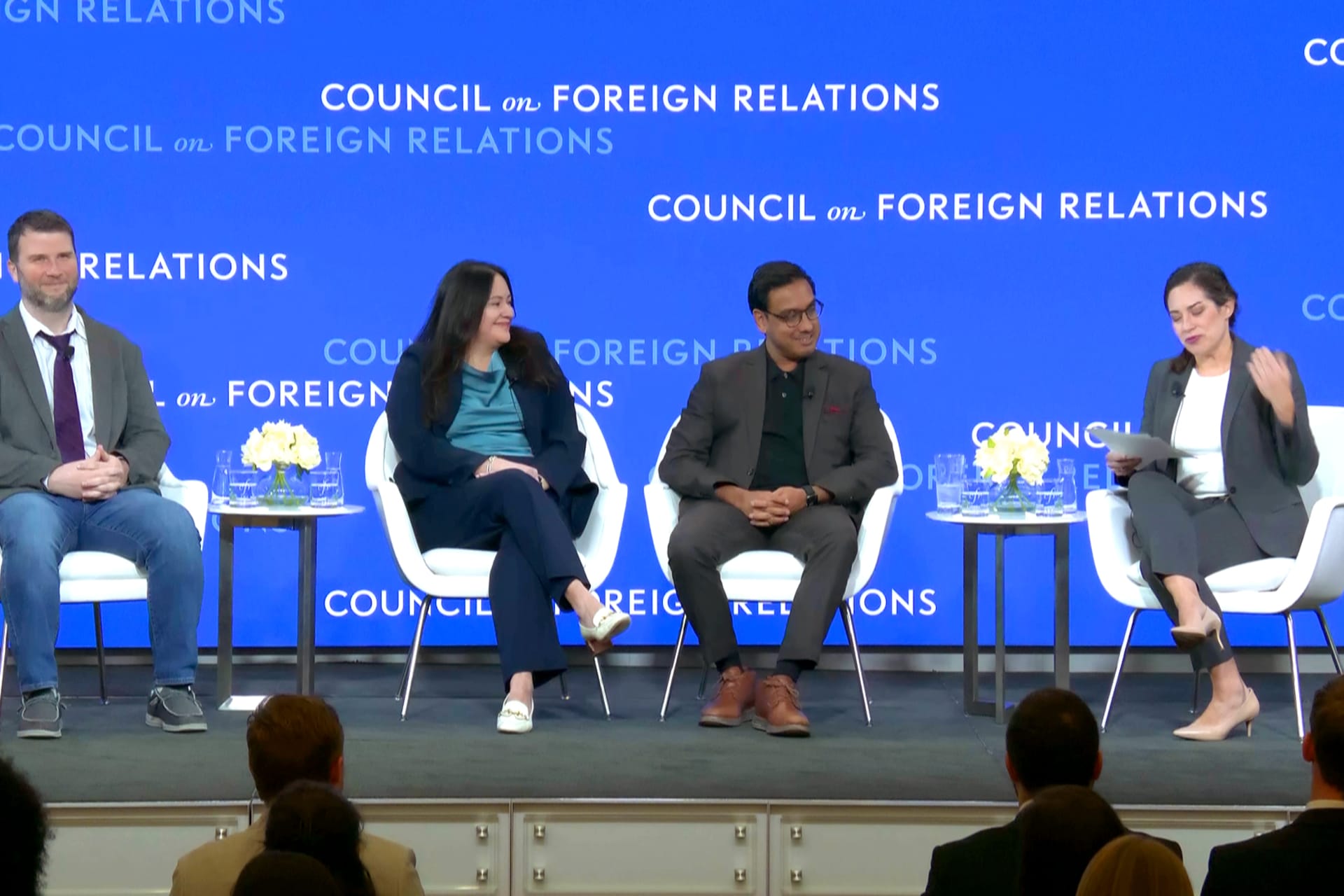
Speakers
- Senior Vice President, Power and Climate, Rockefeller Foundation (speaking virtually)
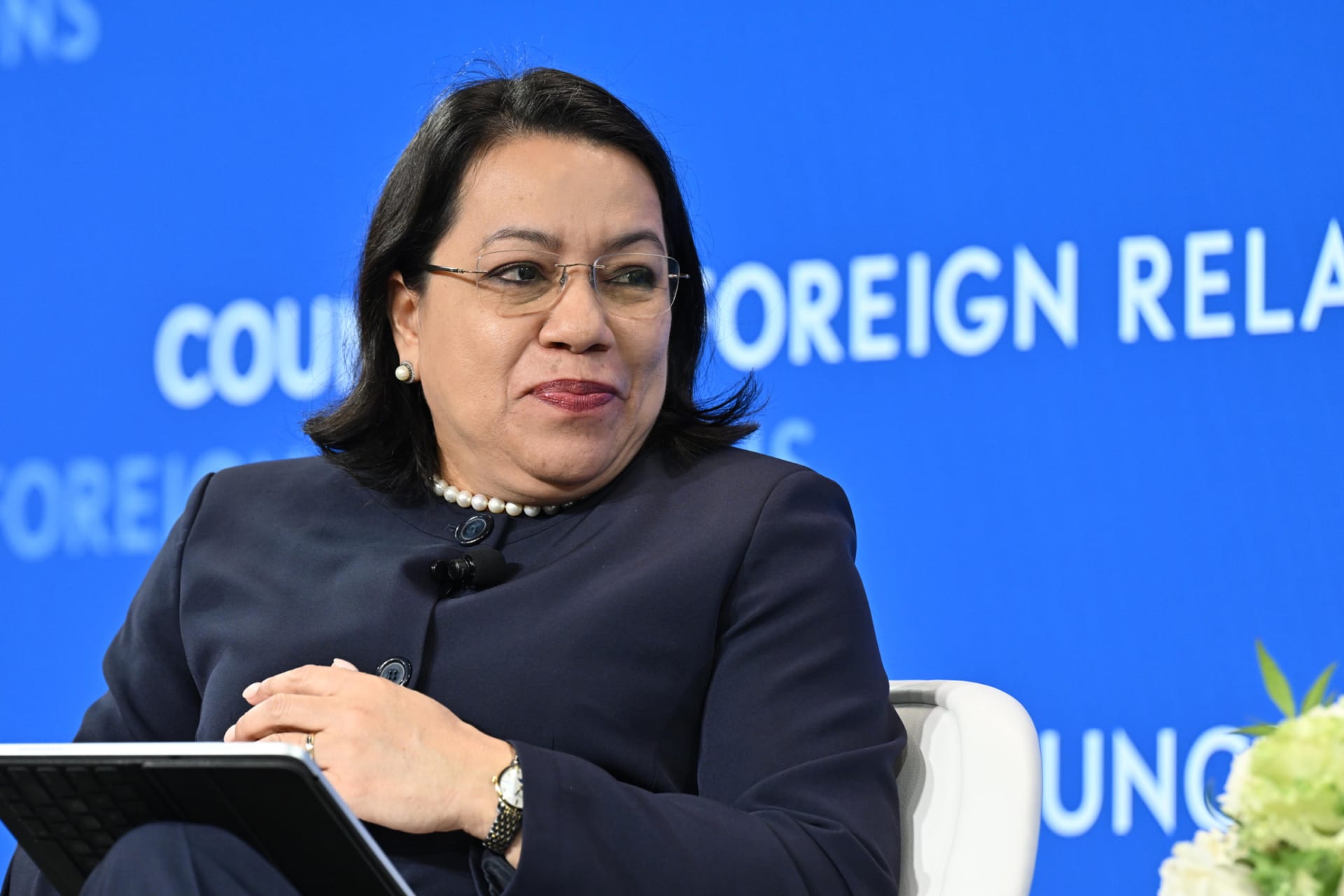
- Director-General, Nuclear Energy Agency
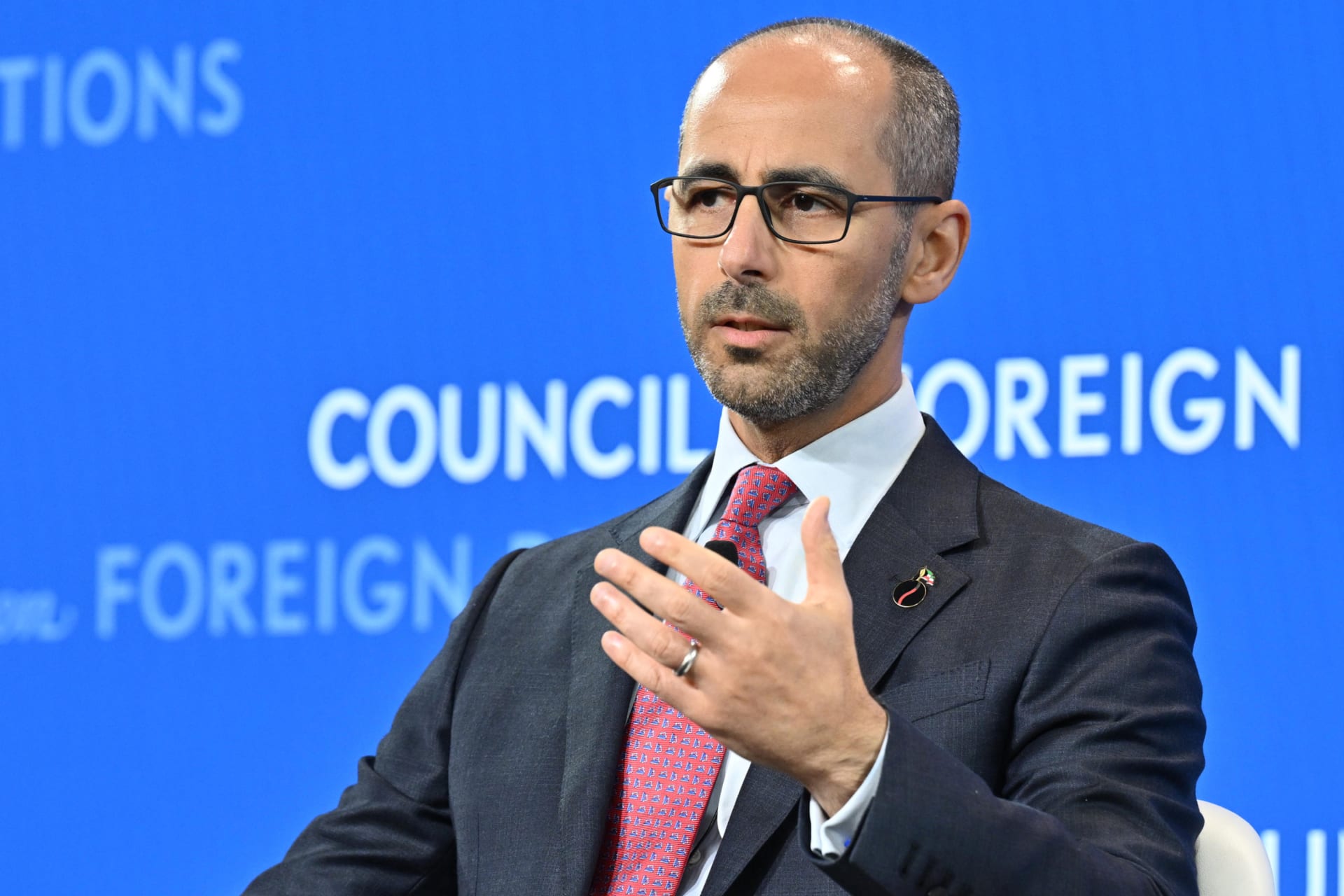
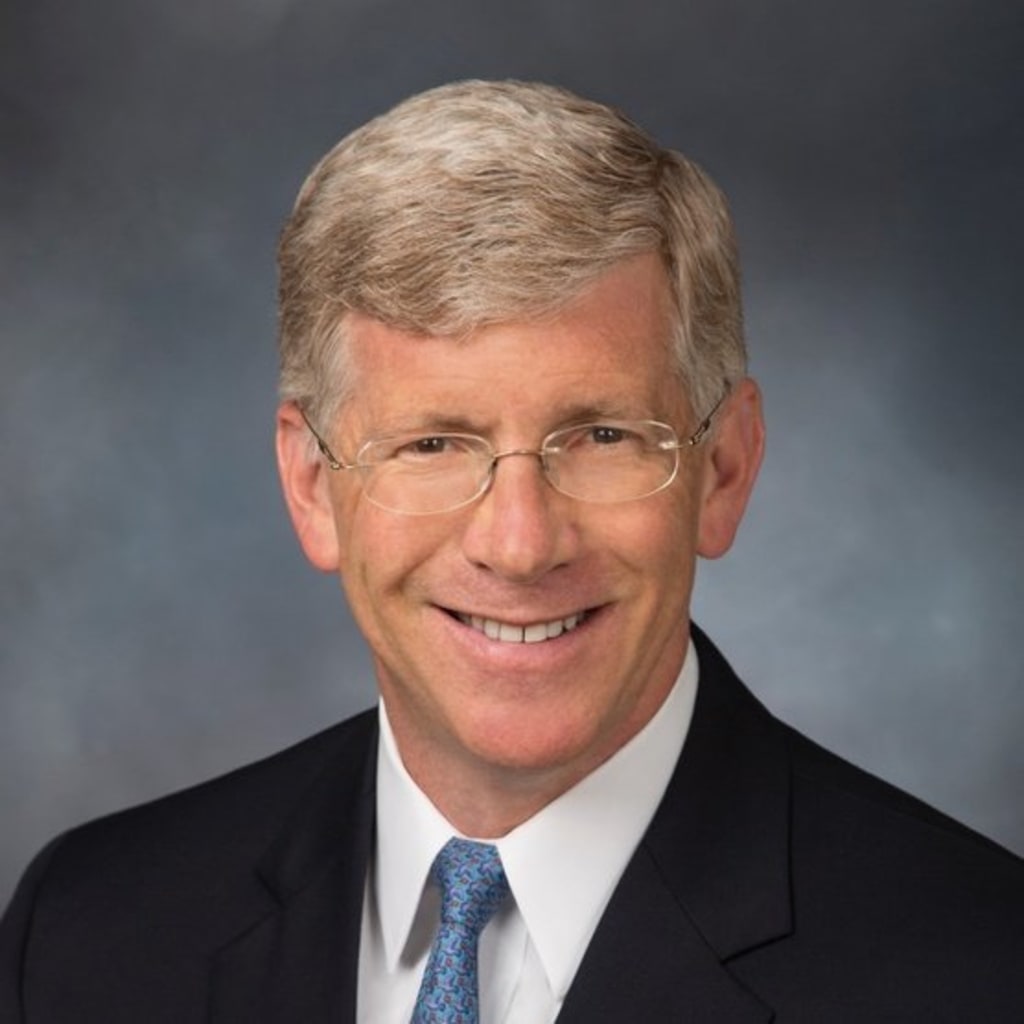 Senior Fellow, Council on Foreign Relations
Presider
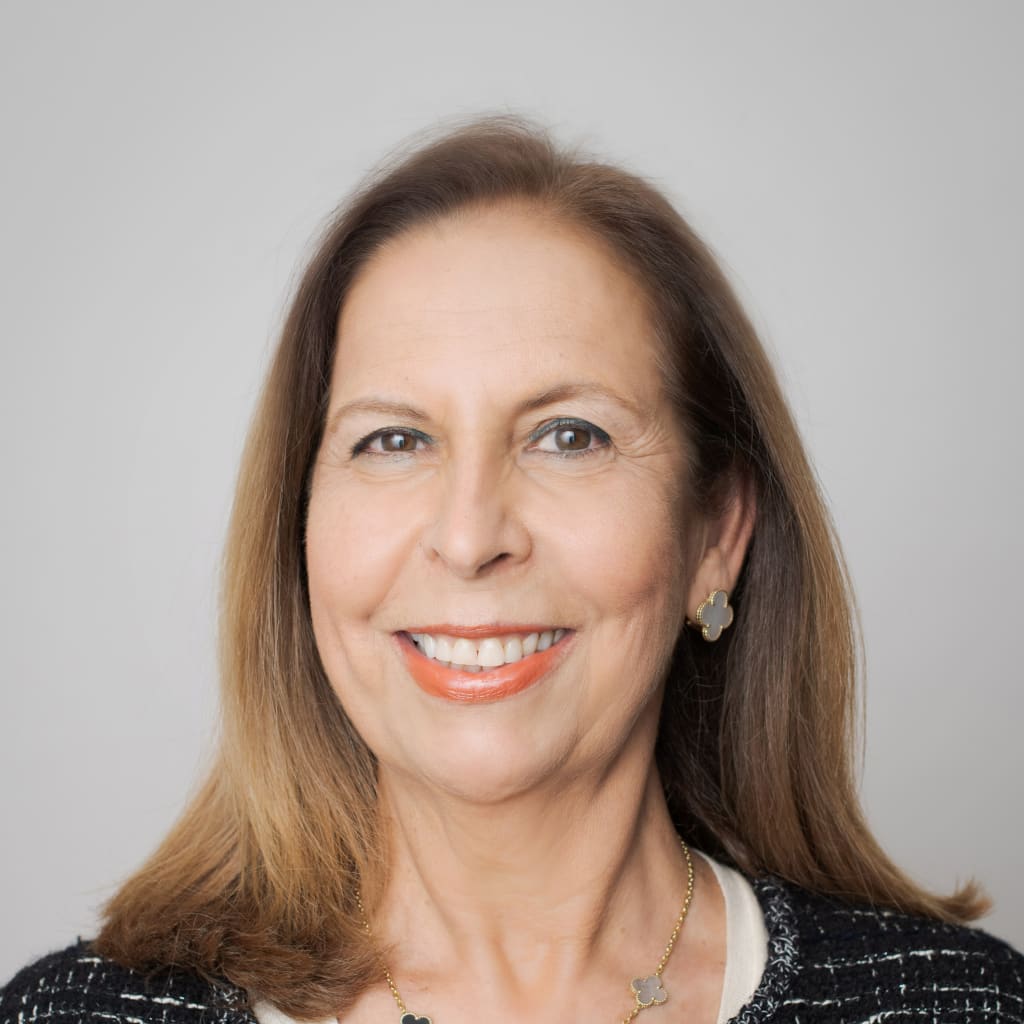 Founder and Chief Executive Officer, RockCreek; Member, Board of Directors, Council on Foreign Relations
From Energy and Climate Program and Climate Realism.
Click here to find The Role of Nuclear Energy in Powering Universal Energy Abundance for Emerging Economies report.
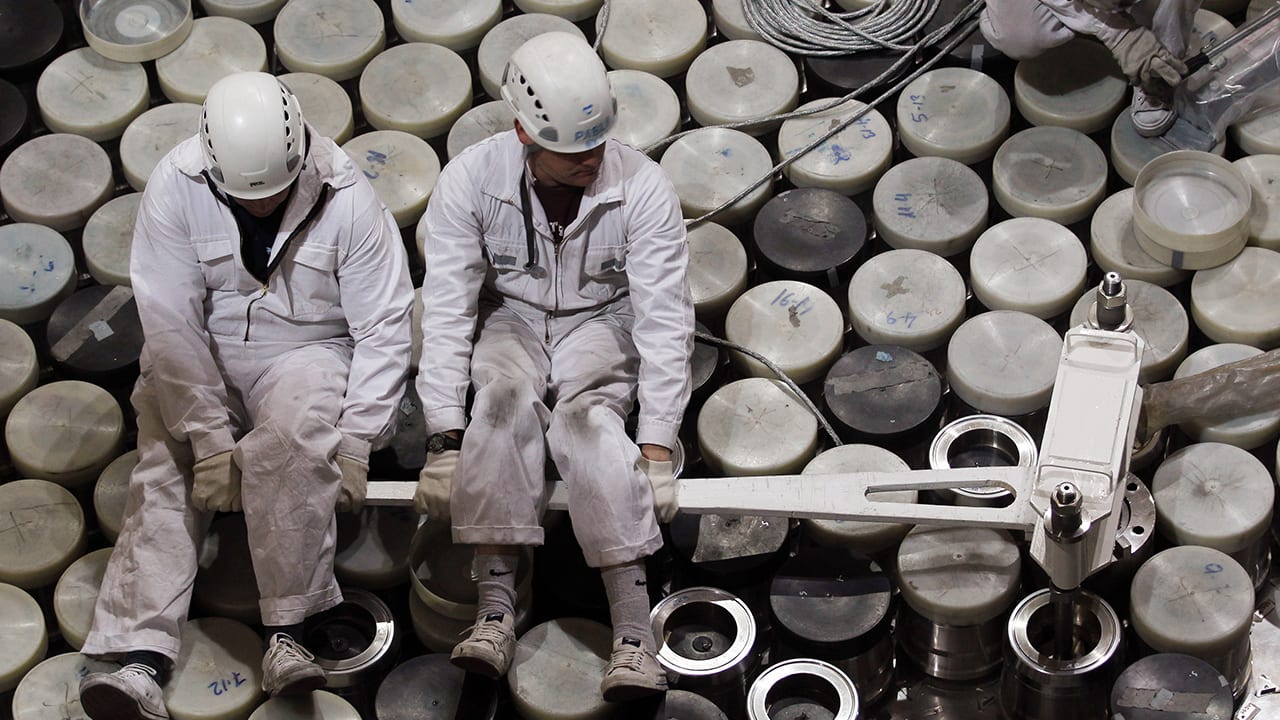
Panelists discuss the role of nuclear energy in emerging economies, including its potential to reduce energy poverty and lower emissions, and consider the key challenges facing its adoption.
BESCHLOSS: Good afternoon. I wanted to welcome you all today to the Council on Foreign Relations meeting on “Nuclear Energy in Emerging Economies.” My name is Afsaneh Beschloss, founder and CEO of RockCreek, and a member of the Board of Directors here at the Council. I’ll be presiding over today’s discussion.
I’m particularly excited today because we have incredible speakers and the topic of nuclear energy in general but specifically on emerging markets is very much—very much on people’s minds these days. And I’m particularly honored to welcome our esteemed panel.
Bill Magwood is the director-general of the Nuclear Energy Agency. He has extensive experience in both the regulatory and the development aspects of nuclear energy, including both in the U.S. but also internationally, and was previously serving as the commissioner of the U.S. Nuclear Regulatory Commission, and led the Department of Energy’s Office of Nuclear Energy. And he has played a very central role in advancing next-generation nuclear technologies and global nuclear governance. Very nice to be with you.
We also have Ashvin Dayal, who leads the power program at the Rockefeller Foundation. Hello, Ashvin. Nice to see you. Ashvin is joining us virtually. And he’s focusing at Rockefeller Foundation on scaling clean energy access to improve lives in the U.S. and globally. Ashvin and his team have also recently released a report on how next-generation nuclear technologies can help emerging economies meet growing electricity demand with clean, reliable power, which we’re excited to hear about. And hopefully you’ll let us know where to get a copy because I’ve read it and it’s an incredible report.
And finally, Dan Poneman, my friend, is a senior fellow at the Council, and his work focuses on nuclear security and nonproliferation. He previously served as U.S. deputy secretary and acting secretary of energy. And from 2015 to 2023 he was president and CEO of Centrus Energy, a leading supplier of nuclear fuel and services. He has written extensively on nuclear power and security, I just learned including at Oxford, and including also on nuclear power in the developing world.
So we cannot have a better panel, given the topic.
And, Dan, I’m going to start with you, if I may, to ask you how you see the role of nuclear energy in emerging market(s) and what you see as the unique opportunities, but also challenges when we come to emerging markets.
PONEMAN: Well, first, Afsaneh, thank you for presiding; a great expert in your own right, and we all learn from your example.
This is an incredible moment globally. You know, we’ve had many decades, really, of kind of flat electricity growth. We have extraordinary needs in the emerging markets. Take Africa alone—the numbers range between 500 (million) and 600 million Africans with no electricity. And Africa, I believe, is the only continent that in 2050 will have a higher percentage of global population than it does today. So the needs are extraordinary.
And we are trying—and this is why I’m so delighted that Ashvin is joining us here today—to work with Rockefeller Foundation and others who are focused on the critical problem of energy poverty. It just is not going to work to tell the rest of the world because we are now worried about climate change to a degree that we were not formerly worried about it you can go ahead and keep in energy poverty while we, you know, demand everyone clean up. So that’s one thing.
The second thing is the capital resources that are now becoming available to support the expansion of nuclear power generally because of the vertiginous demand spike, and now augmented by the fact that through the good work of people like Rafael Grossi at the International Atomic Energy Agency and Ajay Banga at the World Bank the longstanding taboo that, frankly, was politically motivated more than analytically motivated against using nuclear to address these profound needs, has now fallen away. And it’s early days, and I’ve had the opportunity right here at the Council to talk to Ajay Banga about it. They are still on a steep learning curve. But the important thing about this development is when the World Bank makes a move, of course—and you know this better than anybody, Afsaneh—it is enabling to other development banks and the regional development banks to now look very seriously at the opportunities presented.
So, between the energy requirements that are sharply increasing, the capital availability, and frankly the zeitgeist that has evolved as people recognize increasingly that however wonderful other forms of energy are in terms of wind and solar you’re not going to get to the climate results that we’re looking for without a significant contribution from nuclear—so I think this catenation of circumstances has created a unique opportunity, and that’s why I think this session today is so timely.
BESCHLOSS: Thank you so much, Dan.
Ashvin, given the buildup Dan—(laughs)—provided on your work, it would be great to hear, as Rockefeller, obviously, is looking at providing universal energy for the whole world, what does that universal energy abundance mean to you? And what is going to be the role of nuclear, based on your recent study and your thoughts?
DAYAL: Well, thank you, and I’m so sorry that I’m not there in person. It sounds like it’s a wonderful gathering over there. And, Afsaneh, it’s a pleasure to be on this panel with you, and with Bill, and with Dan.
You know, I think, Dan, you’ve already set out some of the basic concepts and arguments around why we need to be thinking more seriously about the role of nuclear in emerging markets. I mean, if we just step back, you know, for the last hundred and fifty years, since the dawn of electricity, economic growth has essentially depended on the same basic ingredient: abundant, reliable, affordable energy. And the empirical sort of reality of this is very stark. You know, when you look at the research about the correlation between GDP per capita and energy consumption, it’s almost a perfect straight line. And there is just no rich country that is energy poor. There is no rich household that is energy poor. And as Dan said, there’s—you know, globally it’s about 700 million people who are un-electrified.
But we talk about energy poverty as being close to 3 billion people who are not able to consume enough energy to participate in the sort of basics of modern life. And that’s why we as a foundation are so heavily involved in trying to change that, to try and find the sort of practical, scalable solutions that deliver not just basic energy but this concept of abundance, the idea that everyone needs to be electrified to participate in the modern economy—so not just turning on the lightbulb or charging your phone, but powering the appliances, and the motors, and the—and the machinery needed on small farms and businesses, cold storage, food processing, transport, irrigation. The list goes on and on and on.
And so we talk about this idea of a modern energy minimum, the idea that just to be at the basic level of productive energy consumption people need to be consuming about a thousand kilowatt-hours of energy per year; and then to be on a journey to this concept of energy abundance, which we put at around 4,000 kilowatt-hours. And that’s a level generally associated with rapidly industrializing economies. Now, when you look at advanced economies such as the U.S., they’re already over 12(,000), 13,000 kilowatt-hours of electricity per annum. So there’s a—there’s a real journey there. But every country that’s achieved prosperity—whether it was Britain in the Industrial Revolution, or South Korea in the ’70s, or China more recently—it did so by sort of mechanizing agriculture, expanding transportation, building new industries.
And then when you layer on top of that the kind of demand surge that we’re seeing today which, Dan, you talked about, you know, just India—I was looking at some data recently—electricity demand is growing year on year between 11 (percent) and 15 percent because electric vehicles are taking off; with heat, the demand for air conditioning is growing dramatically; and then you’ve got just the regular industrialization and growth that’s happening there. And so you might expect that in a fast-growing emerging economy like India, but you’re seeing the same thing now—not at that level, but, you know, 3, 4 percent demand growth in industrialized economies because of datacenters and AI. And that’s after decades of sort of flat or negative growth.
So when you put all of that together, you know, the challenge that we’re going to face as we try and expand energy abundance, as we try to do it on a clean, non-emitting basis, is that we know that, you know, wind and solar—which are phenomenal technologies that we are investing heavily in, they can only deliver power up to a certain point in a power system. And, you know, generally, once you get to 40-50 percent, you start to hit all these other ceilings around adding more electricity through—whether it’s solar, or wind, or some other renewable source.
And so you either have a choice of continuing to use a lot of coal and gas, or you have to seriously overbuild those systems so that they can, essentially, mimic the idea of firm power. Or you have to start seriously looking at things like the potential for nuclear energy in the future. And I know that not all of these solutions are ready today but we have to think about what is it going to take over the next two, three, four years to start building the runway, or clearing the runway, for countries that are ready to be first in line to start adopting some of the newer generation technologies to take them up.
The last thing I’ll say is, you know, something we don’t talk that much about on the renewable side is land. You know, we’re starting to really bump up against that issue. You know, a thousand-megawatt solar plant takes up all of Manhattan, basically. A thousand megawatt of wind takes up Nairobi National Park. You know, a thousand megawatt of SMRs would take up a city block. So there’s all of these practical challenges that means we need a mix of complementary technologies. And that’s really why we got into the study that you referenced. I can say more about it later, but that’s why we think, you know, modern, safe, modular nuclear technologies, alongside these other non-emitting sources, are going to be a critical part of the story of energy abundance in dozens of emerging economies in the next decade or two.
BESCHLOSS: Ashvin, you’ve touched on a number of really important topics. And we’re going to come back to them shortly. Before we do that what would be great, Bill, if I may, is to—you know you’ve worked domestically in the U.S., but you’ve had such an incredible international experience. And what would be good to hear from you is also the role of the NEA, the role of IAEA, and the World Nuclear Association, and how they can help bring nuclear energy to emerging markets. How do you see their role?
MAGWOOD: Well, first, it’s a great pleasure to be here with all of you. I see a lot of familiar faces in the crowd. And, of course, it’s very intimidating to be surrounded by such tremendous expertise here on the dais and on the screen.
Let me first say that, you know, what you heard already I fully agree with. In fact, I want to emphasize a couple of things and highlight that, in my view, there’s really three aspects of this issue that need to be considered. And, you know, I think—you know, Dan quoted some numbers, which I—which I had heard for the first time a couple of years ago, which really kind of burned into my mind. You know, when you think about the idea that there are 5(00) or 600 million people in Africa without access to electricity, and at the same time the population is growing so that by 2050 about one in every four people on the planet will be in Africa—you put those two together and you see a societal catastrophe coming that won’t just affect Africa, it’s going to affect the rest of the world. So we’re really looking at a very apocalyptic future if we don’t take some action.
And I’m convinced that unless countries like the U.S., and Europe, and Southeast Asia provide some support to these countries, they will not be successful. And the kinds of factors that you were just hearing about with the need for electricity is really just growing. The differences between successful economies and unsuccessful economies is going to become even more stark than it has been in the past because of AI, because of electric vehicles, because of other technologies. If you don’t have access to affordable electricity, your prospects for advancement go further and further down. And I think we’re looking at catastrophe in a lot of places in a lot of parts of the world.
So that’s a very important aspect of this. And perhaps on some level it’s more of an altruistic look, perhaps, to worry about how bad things can get in certain parts of the world, and maybe you can just sort of put your walls up and not worry about, you know, all the suffering that takes place in different continents. But I think that when you look at it from a geopolitical point—and this is the second poll, I think, is very important. We’re not the only ones out there talking about nuclear technology. You know, our friends in Beijing and Moscow are very active in developing countries. In fact, they’re much, much more active than Western countries today. When I visit countries in Africa, it’s very easy to go to the desk of a minister and kind of notice a lot of propaganda from Chinese organizations or from Russian organizations on the desk. Nice little plaques on the wall given by Chinese universities.
They’re extraordinarily active. And we are very far behind. And I think from a geopolitical standpoint, we’re looking at the prospect of having Russian and Chinese organizations build nuclear capacity in different parts of the world. And if you think it’s just about nuclear you’re wrong, because nuclear, unlike almost anything else that you can think of, really involves almost everything. It’s a whole of society type of undertaking—universities, government institutions, nuclear regulation, vast parts of the industry. All are going to be involved in this. And if you don’t think that that has an impact on our ability to work with countries in other parts of the world if they’re in that orbit, you’re wrong. And we’ve already seen it.
And the last thing I think that we really should be thinking about is from an industrial standpoint. You know, we’ll talk about different types of technologies—like SMRs, for example. And I don’t want to sound dire about this, but, you know, as we look at the way that SMRs are being explored around the world, the markets are going to become very difficult for some of these technologies because they are competing with established large light water reactors, which are inherently less expensive. And so we’re starting to see that there’s going to be very specific roles for some of these technologies. It’s not all sorted out yet. Still a lot to be seen.
But one thing that I think is almost universal, for small reactors if they’re going to be able to be economically competitive, we have to build a lot of them. And the best way to build a lot of them is to have availability of basically a huge market. And if we ignore developing countries and emerging economies, that market shrinks more and more. And then the prospects of success go down. So I think those three major polls are things that we are thinking about.
And you asked a question about international organizations. I’ll try to be—try to be nice about this. (Laughter.) You know, I think that international organizations have a very limited role, in some respects. The IAEA has a very special role because it is funded and organized to provide a lot of basic support as countries move in the direction of adopting nuclear technology. They do training, provide a lot of advice, which is absolutely essential. And I don’t think we would be able to even begin without that. But it’s simply not sufficient. It’s simply not sufficient. As we engage with these countries, we see that there’s going to be a need for much more intensive cooperation with Western countries. And international organizations, really right now today, are not equipped to do that.
One special capacity that the NEA has—and we are an organization of the OECD so we don’t have African countries in our membership, for example. But what we do have is a very powerful ability to form cooperatives with just about every anybody on almost anything. And so if there are countries that are interested in providing support, we can bring them together very quickly, very effectively in an international way, because we have the legal authority to do that. We have the treaty basis to do that, and can do that very quickly and effectively. And that’s very unique. And we’re trying to apply that to this problem. But, as you know, the resources to do these things are not as available as they were a few years ago. And that’s a big challenge for everyone, I think.
BESCHLOSS: So as you were talking, it occurs to me that you go to all these countries. You manage to travel a lot these days. How do you see the demand changing in these countries as you go all over the world?
MAGWOOD: Well, I think that for many of the countries there’s a recognition that nuclear isn’t simply a way of making electricity. And the electricity is very important. We’ve already talked about that. But it’s also a way of advancing the economy. And this is all—this is true in the 1960s. It’s a way of increasing the number of people who are trained. It’s a way of getting more people to be welders, and pipefitters, and engineers. and scientists. It’s a way of building an industrial infrastructure. It’s really a way—and it’s also—and this is very important, and people don’t think about this enough. Nuclear, because of its nature, brings a discipline to the way people do business that is unlike most other areas. And it really is a way of having all ships rise because standards have to be higher, practices have to be more refined.
And you can’t have—you know, I was in Kenya last year. And a lady came to me and said, how do we trust people in our country to not take the trash and just dump it on the side of the road like they do today? And I said, if you’re offering a nuclear power plant you cannot do that. It’s just not—it’s not going to be possible. (Laughs.) But perhaps what you’ll see is that as the discipline on handling nuclear infrastructure, it goes throughout the society, maybe the people who are throwing the trash in the side of the road will start to see that there’s another way of doing business. And I so I think that there’s a lot of potential here. But we’ll never know if we don’t get engaged.
BESCHLOSS: I don’t know if you’re seeing particular countries in the emerging world, or, Ashvin, you’re seeing particular countries in the emerging world based on your studies, that you think are more at the cusp. Do you want to start, Bill, and then we’ll go to Ashvin?
MAGWOOD: No, I like to hear what Ashvin says.
BESCHLOSS: (Laughs.) Ashvin, any countries that you see are more likely?
DAYAL: Yeah. I mean, if we—if we talk about Africa first and foremost, and the demand there—you know, and, again, we can come back to the question of how ready the technologies are and what the financing challenges are. But from a demand perspective, you know, there was a Nuclear Energy Innovation Summit for Africa held last year. You’ve got countries like South Africa, Rwanda, Ghana, Nigeria, who are sort of really trying to get serious about how they can put the capacity in place, and the regulations, and just the planning, foresight needed to be able to take advantage of these—of the emerging technologies in nuclear.
Of course, you’ve got some fast-growing economies in—I mean, India already has experience with nuclear, but they’ve just very recently actually, in the last couple of weeks, I think, passed a bill that opens up the country’s nuclear power industry to private sector players. They’re targeting now 100 gigawatt(s) of nuclear by 2047, and so that’s a big market opportunity there. And they’ve a long way to go. I think there are about nine or ten gigawatt right now. You’ve got a lot of economies that are looking for not just large grid-connected installations, but also captive. And that’s where the SMR scale is sort of appealing, you know, when you’re looking at 3(00), 400 megawatt systems for heavy industry, for mining.
And also for economies that are trying to find ways to accelerate the phase out of coal, looking at, you know, what do you—how do you replace that with real, firm power? So, you know, from India, to Vietnam, to the Philippines, to Indonesia, to the countries I mentioned earlier in Africa, I mean, there are at least, you know, eight to ten that I would see as being if not ready, certainly eager to kind of be in the—you know, to be sort of thinking about how they can position their economies to attract investment in this space.
MAGWOOD: Can I just—
BESCHLOSS: Go ahead, please.
MAGWOOD: I think that’s a good list. I mean, I’ll tell you who we’re engaged with. We’re spending—in Africa right now—it doesn’t mean that they’re the only countries that are doing things. But we’re spending a lot of time with Kenya, Ghana, and Rwanda. And those are probably the three that we have been engaged with the most.
BESCHLOSS: Not South Africa?
MAGWOOD: South Africa is a bit more complicated. But we’re in touch with them, but there’s not where we’re putting our focus right now today. We are, however, seeing a lot more opportunities, actually, in Southeast Asia. And I’m really pleased you mentioned that. The Philippines in particular I’m very excited about. I’ve been to Philippines twice last year. But we’re also watching Indonesia, Malaysia, Vietnam very closely to see where we can become engaged. And I think it might surprise people, but Southeast Asia may turn into a real hotbed of activity over the next few years. That’s an area to watch very closely. And let me say that the reason for that may not be what you think it this. It isn’t just the electricity supply. It really is very clearly energy security.
BESCHLOSS: Absolutely. And that takes me to Dan, because there’s energy security and then there’s the issues around nonproliferation. Both things that you have thought about, and written about, and ran programs. How would you look at the economics right now of this sector? And to what extent do we need to be worried about the nonproliferation issues?
PONEMAN: The answer is yes. (Laughter.) So on the economics, the intrinsic economics, I think, end up looking quite favorable, especially when, as Ashvin was saying, you talk about total system costs, which is something that we don’t always do.
BESCHLOSS: Absolutely.
PONEMAN: Economists will appreciate there’s been this sort of myopic focus on least—LCOE, lowest cost of electricity. And that only looks at the generator. It doesn’t look at for the 70 or 80 percent of the time the sun isn’t shining, and the wind isn’t blowing, you need backup power. It doesn’t look at the transmission, if the sun’s over here and the load’s over there. So when you have a holistic analysis, it looks better.
However, the problem is because the United States, frankly, got out of the business of doing this because of Three Mile Island and a thirty-year hiatus, we got slow. We lost our supply chain. We lost our workforce. We lost a lot of just kind of craft experience. And therefore, I was—we were talking before the session. China has built thirty-seven plants in the last ten years. The United States has built three plants in the last thirty years. Now I don’t believe for a second we can’t get there, but we’re not there yet.
So to be practical about the economics and get away from theoretical, we need to collectively do a much better job at that. A lot of the things that have been happening lately—Bill was just yesterday at the Nuclear Regulatory Commission. We need to get more agile and effective. Not lighter in terms of rigor, but in terms of sometimes a heavy-handed approach to things. We have to inform—have risk-informed basis. So I think the economics intrinsically are favorable, but we need to improve on the practicality of it.
On the security aspect, and this ties in very much with what Bill was saying a few minutes ago, when you enter into a relationship to build a nuclear reactor in another country, as Bill said, it’s not just about electrons. It’s not even just about heat. It’s a strategic relationship. It’s a 100-year relationship. If you look at between the planning, the financing, the construction, the operation, and then the spent fuel, it’s a century. And I must say, with all due respect, the United States has not always viewed this in a holistic, strategic way, in a way that both Russia and China are doing.
And I have been to Africa a lot. And I have experienced exactly what Bill has described. And I’ve been in the presence of nuclear officials with literally one cellphone they got Rafael Grossi saying come to the nuclear summit, the other they got the Russians saying coming to ATOMEXPO. And the guy puts down the phone. He goes, where are you guys? What do you want me to do? I have the Chinese inviting twenty, thirty of my people. And they come back speaking Chinese. Now, do we want all the nonproliferation rules and safety rules written in Chinese? I don’t think so.
I don’t want to be jingoistic, but way back in Bush forty-three they had a thing called the Global Nuclear Energy Partnership. And at least my way of thinking about it was: If nuclear energy isn’t a choice but a fact—and there’s 400 reactors around the world so like it or hate it it’s there—you’re going to have to want two things. It’s got to be safe. And it can’t lead to bombs. And if you care about those two things, you really want to have, frankly, I think, the kind of standards that the United States has promulgated both in our Congress and in our regulatory authorities.
And the last thing about that is you can have the most wonderful standards in the world, and I would humbly submit that we do, but as one of my old bosses, Ernie Moniz, likes to say, no exports, no influence. So right now, you know, could take a show of hands how large people think the Russian order book for reactors is globally today? $300 billion. What is the U.S. order book in round numbers? It is the roundest—zero. (Laughter.) Now, we have lots of hopes and aspiration in Poland, and Bulgaria, et cetera, but we are not performing the way we need to. And that’s going to require not only a more agile diplomacy—we have—and I see Laura Holgate—Ambassador Holgate here. We have a very important mechanism called a 123 Agreement, which is the basic legal understructure for a relationship between countries.
We’ve got to get better and faster. We used to sort of hold ourselves up, we’re not going to sign one of these agreements with you unless you do this, this, and this. And I’m thinking, you should flip it around. We should get the agreement. You don’t have any leverage until you’re already in there, especially when, as Bill said, the Russians are going to go in there, finance the whole thing, take back the spent fuel. So we’ve got to, frankly, better our game if we have any hope of doing this.
And the last thing I’ll say. We are all of us I think around here—maybe that’s why you had such a robust turnout this group—hopeful that we’re now going to see a wave of deployment of, I think, both small modular reactors and large reactors, because of their virtues in addressing energy, poverty, and climate. But if we have, let’s just say, a security Fukushima or an incident, you know, it’s game over, because the social license will go poof again. So that’s why I think the nonproliferation aspect of this has got to be designed in from the beginning. And that’s why also I think it’s right for the United States to really, frankly, try to recover the leadership.
We used to be the global leaders in the ’50s, ’60s, into the ’70s. Globally everybody wanted our technology. Everybody needed our fuel. And we have basically allowed all of that to atrophy. We have an opportunity now. I note the Department of Energy, where I used to work, just deployed $2.7 billion for enrichment. That’s very important for both energy and for having the United States controlling this enrichment technology, which has weapons applications. Better we should be doing it than we should have thirty other countries doing that at the same time. So I think it’s critical. Glad you raised the question. We’ve got to integrate the proliferation piece in at the same time we’ve got to work on, frankly, building up our own capacity on the economic side.
BESCHLOSS: We’re going to go to our members in a second. But before that, I just want to ask all three of you, SMRs. You know, Ashvin has done a lot of work on bringing energy to small and large centers. You know, we talked about large nuclear, but small communities in these areas that are more remote. Why is it that SMRs are not the big topic? Is it in this country or, in particularly, emerging markets? All three of you can answer.
PONEMAN: Well, we’ll all have a view on that. I’ll be quick.
There’s a lot of talk about it. And there’s—frankly, there’s a bit of an ambivalence or internal contradiction, what you will, in the emerging markets, as was already said. There are great applications for advanced reactors and small reactors. They don’t have to be grid oriented. They can—they’re smaller, therefore they can be faster and cheaper. You could build one and the revenue stream from that can help finance a second. There’s lots of virtues about it. But many of the people I’m talking to, Afsaneh, in the emerging markets, say, like, I don’t want to be first. Like, you know, if this is so good, how come you guys don’t make one first? So that’s kind of the tradeoff. And I think that the potential of these reactors is extraordinary. It’s been said by many people we’ve got to stop building reactors like airports and start building them like airplanes. We have to get to serial production. That’s how you get the cost down, and so forth.
So I think there’s the opportunity there. But I think, frankly, once again, you got to look to our own—got to put our own house in order. Let’s have us—we’ve got we talked about it before. This is the Advanced Reactor Development Program. We got a bunch of reactors being developed in this country. Let’s us kind of show the way. And then I think you’re going to find people who are very responsible in these other countries reasonably asking, like, why would you want me to be the guinea pig? You’re the one who’s inventing the technology. You should deploy it first.
BESCHLOSS: Bill.
MAGWOOD: I mean, I think there’s, there’s a couple of dimensions here. One thing is that when we first started developing these small modular reactors, this current generation of small modular reactors, it was in an environment when electricity demand was very, very flat in OECD countries. You know, we were—you know, in the U.S. if we went up 0.5 percent a year we were doing pretty well. And now you’re seeing the countries are talking about doubling demand, you know, by ten years.
And so that’s an entirely different situation. So when you talk to, you know, the utilities and other suppliers, they tell you very directly, we need to build as big as we can. So there’s less interest for grid applications for small modular reactors than there was before. It doesn’t mean it’s gone away, but you can see the shift taking place. And they’re clearly—the countries we work with in our membership, the big focus has been on large reactors more than small reactors. There are still a lot of people who think the small reactor is going to play an important role, but it’s going to be a very—it’s going to be interesting to see how that sorts itself out.
When I look at a lot of the emerging economies and the energy requirements they have, small reactors just make more sense for them—for the applications, the grid, the complexity. And a lot of them have concluded that it makes more sense for them—not all, but many. So I do think that small reactors are going to very likely be extraordinarily attractive in many of these emerging markets, more so perhaps than the OECD markets. So that’s a little different than what I think we thought was going to happen.
But you do have this issue that Dan mentioned, which is, well, why should we deploy these in our country first, if you haven’t built them? And that’s something we have to deal with, and have a challenge. But I actually don’t think that’s going to be a big problem in the end because there are absolutely going to be applications for many of these small reactors in OECD countries. We’re already starting this. We have a project in Canada at the OPG to build the BWRX-300. We have other countries are looking at Rolls-Royce very seriously, and other technologies. So I think you’re going to see it happen. And then once that happens, I think the floodgates can open and emerging economies can look at these technologies very seriously. So I think we’re—I think we’re actually in good shape from a timing standpoint. The question is, can we deliver it? That’s really going to be the question.
BESCHLOSS: Right. Right. Ashvin, how do you see it?
DAYAL: I mean, I think a lot has been said that I would agree with. I absolutely—it’s going to be country by country, case by case. You know, Bill’s absolutely right. There are going to be economies that, you know, for whom they want the gigawatt-plus scale. But there are also going to be a lot of emerging economies that for whom that modularity of the sort of below 500, the 3(00), 400 megawatt scale is actually ideal for their diverse needs.
I mean, the one thing I would just say, you know, you referenced the study we did at the start. And we’ll make sure that everyone gets the link afterwards. You know, the big picture here is it’s all of the above, right? It’s all—it’s all best of the above, if we want to put it that way. There is a—our modeling shows that if we really get this right between now and 2050, total system costs could come down by as much as 30 percent. And we’re talking about saving trillions of dollars here for—and this is just based on a study of eight countries. You know, this is the scope of the study that we did. So I think what we don’t yet know is what is the cost curve going to look like on SMRs, right? Are we going to have an optimistic or a pessimistic outlook on that?
And that really depends on the first movers, the second movers, the Nth movers, and then, you know, being able to predict that. On PV, or solar, it’s so much more predictable right now because we’re kind of closer to the bottom of the curve. And so we are entering somewhat uncharted territory on the financing side. And that’s why the last point I’ll make is just the move that the World Bank made recently, you know, to take the decision it did is so important, because whatever uncertainties there are around the future of SMRs or nuclear technology more broadly, the financing solutions needed to help these projects move in the markets we’re talking about don’t currently exist.
These are facilities with sixty-, seventy-year life—you know, lifespan. They’re not going to be suitable for a twenty-five-year bond, for example. So there’s all sorts of innovation that’s needed that we need the MDBs to play a role in helping structure, because these economies are going to need that kind of support over the next fifteen years. And so I think a lot of exciting work to be done. And I think a role for philanthropy, and that is going to be to really look at the capacities on the financing structuring side, on the regulatory side in countries, to be able to clear the runway, as I said earlier, for SMRs and other larger-scale systems to be deployed.
BESCHLOSS: Thank you very much for that. We’re going to at this time go to questions from our members. Just to remind you all that this conversation is on the record. Mr. Kennedy.
Q: Mark Kennedy with New York—Mark Kennedy with New York University.
You’ve mentioned the need for financing, and that Russia goes in there and it’s all financed. Sixty, seventy years, as you mentioned, multilateral development banks. What role do the DFIs, like our Development Finance Corporation and the Export-Import Bank, do? Are they poised for this? Or do they need changes in their charter to effectively get the nuclear out there in the developing countries, as we’re hoping?
PONEMAN: I’ll take a stab at this. It’s a great question. When I was deputy secretary of energy, we’d run around the world. And I would go with the head of our Ex-Im Bank, and the head of what was then called OPIC and TDA. And Ex-Im Bank has always been OK on this, and has always had both a mandate and a willingness to participate. The others, not in the old days. But both OPIC, which now Development Finance Corporation, they had a formal change in their charter to enable them to do this a few years ago. And under Enoh Ebong, TDA also became very bullish, for all the reasons we’re talking about here, right?
So I would say—and maybe Bill could comment more easily—they’re poised. They’re ready. I think DFC has actually gotten rather active. But I think you have to remember that it is a very competitive world out there. And I’m not saying it’s the only reason, but when the United States lost the big contract to build the UAE at Barakah, the fact that Korean credit support was robust I think was at least a factor. So the problem is, we’re not operating in a vacuum. We have authorities. I think they can and should be exercised more robustly. But we also have to, in exercising authorities, look at the other export credit agencies in the competing countries in Russia, and China, and Korea. And we got to make sure we’re not taking a knife to a gunfight.
MAGWOOD: I think that—I think that—I agree with Dan’s comments. I think that one of the challenges that we have run into is a lot of these institutions are very project focused. And if there’s not a specific project that’s basically poised to be financed, they don’t really have a good mechanism to engage. And for a lot of the countries that we’ve talked about, they’re not at that stage. They need initial investment to build capacity, to build infrastructure. And if you’re—if you don’t—we don’t have that tool really today. Whereas the competitors are going in with significant amounts of money and supplying those as part of the overall effort to sell nuclear technology. So we don’t have the—we don’t have a mechanism that competes in that market. And that’s really, really—that’s really, in my view, an impediment for us.
Q: Whitney Debevoise from Arnold & Porter.
I wanted to follow on this finance question, in particular talk about the availability of FX hedging. I just worked on a project that was announced at the COP in Brazil, which provides eight- and ten-year hedging, which is a real breakthrough. But we’re talking sixty-, seventy-year cycles here. Do we need some new financial engineering to do this? And is that going to be possible?
PONEMAN: I think that’s to you, Afsaneh.
BESCHLOSS: To you or to Ashvin.
DAYAL: I think, Afsaneh, that’s a perfect question for you. (Laughs.)
BESCHLOSS: But I can—I think, as you—I think you are one of the world’s top experts on this topic yourself. (Laughs.) So I think if you don’t have the answer for it, I certainly don’t. When the World Bank helped create the swap markets, and you are very involved in that, of course, you know, I think up to, what, you know, longer periods has been possible, but certainly not for the kind of long-term capital that is needed for these projects. I think the thing to do probably is to chop up the project into bits, right? So if it’s the construction, during the construction period, during the utilization period, during the dismantlement, or—if you do it that way, you might be able to do it. But to have swap markets that that deal with effects risks for that long, I don’t think is going to be something that any of these multilaterals are going to innovate today.
I think it’s probably—I think the bigger issue is probably—you know, the effects is important, but it’s—one is the availability cap of capital. And I think what Bill said, which is also the availability of this capacity building money. And I think that is the key. The World Bank, for example, where I worked, used to do that in big, big amounts. Ashvin has been involved in—sort of capacity building is something I think he spends a lot of time on. And you may want to touch on that. But I don’t know if any of you wanted to touch on the question on FX? OK.
Q: Hi. Laura Holgate. Former U.S. ambassador to the International Atomic Energy Agency.
This is all very inspiring. And, you know, I’m a big fan of high-quality nuclear deployment that is safe and secure. What I hear when I talk to U.S. vendors however, as a shift from a decade ago, is they’re not looking at exports. They can sell a hundred copies of their reactors domestically. Or if they’re looking at exports, they’re looking at Europe where the money is there. So it’s not just a money thing, I don’t think. And it’s just that they can—they can avoid the hassle of exports by saturating the domestic market. How do we incentivize U.S. vendors to see Southeast Asia, Africa as real market opportunities, not just memorandums of understanding, and boondoggle trips, and handshakes, and all those things. (Laughter.) Yes, there’s knowing laughter around the room. This is what’s happening, not real deals. How do we help broaden that focus beyond datacenters at home?
PONEMAN: Well, I’m also hearing a lot—and I’m hearing—I’m not saying I’m not hearing what you’re saying. But that’s not all I’m hearing. And I’m talking to a lot of the advanced reactor, the OEMs, the developers. And they’re sort of saying the counterpart of what we were talking about a few minutes ago. We got to get it done here first. And it may be because of all the reasons we said. It may be because the demand is there.
The second thing I would say, Laura, is—and this goes back to the earlier discussion—we have to get out of our own way. I mean, U.S. companies, I think, not to be naïve, they are responsive to their government. And no one would know better than you. If we make it impossible to engage with foreign countries because of all the sturm und drang around it, then they’re not going to, right? But if we make it clear, like, you know, Eisenhower did with Atoms for Peace, that this is something that is, you know, critically important to the country, our government has ways of being persuasive both in the rhetorical way but also what we we’re just talking about in response to Mr. Kennedy’s question.
You know, if Ex-Im Bank and DFC really step up in a meaningful way, if the MDBs step up in a meaningful way, if the demand signal is coming and the capital is available, and you have 700 million people who are demanding it, and you have people, like in the Middle East, who are able to support it financially, I think—I think that you can get both the political and the economic incentives lined up sufficiently. The demand is measured in the trillions of dollars. And even if you satisfy domestic U.S. demand, I think there’s going to be a lot of demand, and capital to support it, available.
BESCHLOSS: Dan, you mentioned earlier, before we started, about how Russia is doing this for free, right? You and Bill were talking about how Russia is not charging countries, and then selling the power. Like, sort of, it used to be with natural gas projects, that was how some people did it. So how do we compete with that model?
PONEMAN: Well, it’s a very good question. And I’m going to tell—this is a true story. (Laughter.) But I guess I can—I’ll basically do it on the record. In my conversations—for five and a half years, we had a thing under Obama and then-President Medvedev, U.S.-Russian Bilateral Commission on Nuclear Energy and Nuclear Security. And it was actually a quite robust partnership. So I worked a lot with the Russians in that timeframe. And during those conversations, you know, in one of the events that they were hosting, by way of saying that there was vodka served—(laughter)—the guy says to me, you want to know why we’re beating you all over the world in nuclear commerce? And I’m thinking, look, I really don’t, but, I mean—(laughter)—but I’m sure I can’t stop you.
He goes, you know, when the Soviet Union and the United States, we started our programs, we wanted to do everything. You know, from soup to nuts. He goes, you know, Malaysia, Vietnam, they want electrons. So I go in there. I go, I’ll dig out the uranium. I’ll mine it, I’ll mill it, I’ll enrich it, I’ll fabricate the fuel. I will design, build, own, operate the reactor. I’ll finance the whole thing. And I’ll take back the spent fuel. Your move. (Laughter.) So you go, well, against that now, I see why they got a $300 billion order book and we’re saying, well, I might sign a 123 Agreement with you if you do the following steps, right?
So that, having been said, when I have conversations—and Bill, and Laura, and others do—people still want to work with the United States. They want to work with U.S. companies, for all the reasons you’d expect. The quality. Frankly, the commitment to safety and so forth. And the political overlay for people who don’t want to be dependent. You know, people did draw lessons from Ukraine about how they don’t want to be dependent on some of these countries. So what we need to do, Afsaneh, is take the advantages that we do have, and instead of as the Bible admonishes, you know, hiding our light under a bushel, we need to shine and show that we can be the kind of partners that they want us to be.
MAGWOOD: Let me just comment on Ambassador Holgate’s question. I think it’s a great question.
And one thing I would point to is, if you go to the NEA website you’ll see the very famous SMR dashboard. And for those of you who haven’t seen it, we’ve analyzed essentially all the SMR projects around the world. And in the second edition, which came out a year or so ago, we had, I think it was, eighty-seven technologies that are under development in different countries. Most actually are in North America. When the third edition came out, we expected to start to see a contraction of those numbers. There’s now 127 of them out there. So the numbers of projects are still expanding. And all these people think that they’re going to be building reactors in their domestic markets.
So when you say that they’re focused on domestic market, well, yeah, they are. But it’s not real, because they’re all not going to be building reactors in the domestic market. There’s just not enough—they’re not going to be successful. There’s not enough market for them to all be successful. So there’s going to be a contraction at some point. And once that contraction happens, you’re going to start to see a very, very aggressive move to get exports going, because there’s going to be no other way to support the economics of small modular reactors unless they’re able to build large numbers in the global market. They just don’t—they just haven’t come to grips with that yet.
BESCHLOSS: Great point. I think there was a question over there.
Q: Hi. Andrew Holland, CEO of Fusion Industry Association.
So thanks for the discussion here. And I guess my question is to Ashvin, and then to the whole panel. How would it change your paper that you just put out if me and our companies are right that we’re going to have commercial fusion power plants demonstrated in the early 2030s? Because, you know, nuclear is not fast. It may be big, but it’s not fast. So legitimately what we’re talking about for deploying these things and exporting these things is that same timeframe. So if we can get breakthroughs next year, and then if we can then get pilot plants putting power on the grid here in the United States and in Western Europe in the early 2030s, how does that change the deployment? How does that change all of this? And, you know, because we don’t need 123 Agreements to export a fusion power plant, because there’s no special nuclear material. So how does this change it? And, you know, we want to make sure that in the process of making incentives for all of the nuclear power plants to export, you don’t create an unlevel playing field that blocks us out.
PONEMAN: I’ll comment after Ashvin. (Laughter.)
DAYAL: I think—you know, I think, look, I mean, that would be a gamechanger. And I think everyone is very hopeful that the promise of fusion is realized, as you say, in the next decade. I think a lot of the issues we talked about will remain relevant that we need to address, whether it’s the capacity questions, the financing questions, in some of the markets that we’re concerned with—whether it’s a Ghana, or a Rwanda, or a Philippines, or an Indonesia. So from a technological perspective, it would be—it opens up a phenomenal new opportunity. The underlying capacity building that needs to happen with planners, regulators, with the financing community to look at how do we actually get the pipeline then developed in, you know, what are harder to deploy markets is still going to be the hard work that I think organizations like ours need to be investing in.
And, you know, in some ways I think it’s essential that the first mover projects are happening in the U.S. or in Europe, and that the rest of the world can then benefit from that in terms of what we learn around technology, efficacy, the cost curves, et cetera. So I don’t think it fundamentally changes the need over the next five years to actually be looking at, if—you know, if Bill, Dan, and I made that list of ten countries that we think really should be where we focus, we need a plan then to really go at those ten countries and see how can we support the capacity and the conditions needed to take advantage of whether it’s fusion, SMR, or any other combination in those markets, because a lot of the bottlenecks and barriers, things like FX hedging, et cetera, those apply economy wide. And so it’s going to take a heavy lift to be able to take advantage of these technologies. But we really think there’s no other choice if we’re serious about energy abundance and also creating a cleaner energy system overall.
PONEMAN: I was—I know we’re low on time. I will simply say, I echo what Ashvin said. I think everyone’s very bullish. We’ve talked about this in the past. Very exciting developments. We’re taking a close look at the Tokamaks, the Stellarators, and inertial confinement, and everything. I view that as kind of like a high-class problem, frankly. I think the demand is sufficiently robust to support both. And my very crude analogy is Boeing didn’t stop rolling 737s off the line while they were designing the 777, right? And in the United States alone McKinsey says datacenter demand was twenty gigawatts in 2024, it’s going to be seventy gigawatts in 2030. So the headroom is there to support both fission and fusion.
Q: Thank you. I’m Caren Merrick, former secretary of commerce and trade in the Commonwealth of Virginia, and now in private equity.
And I worked on a variety of nuclear deals, Commonwealth Fusion Systems, multiple SMRs. And, as you know, in Virginia we have a nuclear Navy. We’ve got a lot of legacy there. But one of the biggest issues, and to capacity building and I’d like to hear your thoughts on, is workforce. All across—from the best-educated, to the welders, to the electricians. And we are looking for a variety of ways here in the United States to fill this need, whether it is through public education, through trade schools, through high school education, through technologies. And so we haven’t solved that problem. So I would love to hear your thoughts on how we cross that chasm with some of these—maybe the ten emerging markets that you’re talking about.
BESCHLOSS: A super interesting question. I think just before we started you were talking about this, Bill.
MAGWOOD: Maybe the biggest single problem that we see, workforce. And, you know, I focus—I tend to focus on engineers and scientists, just sort of by nature. And one of the things that we’ve started to do is we’ve been holding these national workshops in various countries to look at how the overall education system is supporting the development of nuclear engineers and scientists you need for the future. And as we’ve gone through a couple of these, one of the—one of the things that I realized was that when you boil it all down the real problem is there’s not enough kids in a lot of the countries that we work with. And so there’s if there’s not enough kids, then there’s not enough people going through school who have an aptitude for science and technology. And then for those that do have the aptitude, they’ve got fifteen million different career options—IT and other things. And so the numbers that go into the physical sciences are actually so small that there’s just not enough people coming into the system.
So we have a big problem. And a lot of the emerging economies, they may have the population, but they don’t have the training infrastructure. So maybe there’s a match there to be made. I don’t know. But we have to do a lot more than we’re doing. We’ve launched different initiatives to try to encourage young people. We are talking to people about how to analyze the needs of the future. But we’re not doing nearly enough. It’s going to be a major problem for most of the countries we work with. And the U.S. is actually better off than almost everybody else in the OECD countries. In Europe, it’s almost catastrophic, honestly. It’s going to be a huge, huge problem.
BESCHLOSS: Well, look at what’s happened in France, right? I mean, the French were so ahead, and now so behind in nuclear.
Q: And competing with China and Russia.
MAGWOOD: Yeah.
BESCHLOSS: Exactly.
MAGWOOD: Yeah.
BESCHLOSS: I think we had one last question here.
Q: Hi. Jeremy Harrell. I’m the CEO of ClearPath, a clean energy advocacy organization here in D.C.
Dan mentioned a little bit about the Barakah story. And the U.S. obviously played a big role in their regulatory structure. I’d be curious what, you know, lessons learned you think we have from that new start experience? Obviously, the UAE is a very different scenario than the kind of emerging markets that you all laid out, capacity to throw more resources at this problem. But how do we aim and try and lay the foundation for commercial deployments now, as we wait for U.S. reactors to demonstrate? And, Ashvin, and I’d be curious to hear your perspective, is there a white space there for philanthropy as you think about emerging economies?
PONEMAN: I’ll make a preliminary comment before Ashvin goes. I was actually involved way back in 2005, maybe that’s why you’re asking the question, when the Emiratis were saying we need a lot of base load. It’s going to have to either be coal or nuclear. We don’t have either. They were already thinking about Masdar. And so they said, we don’t really want to do coal. You buy coal, you a stockpile it, and you have to keep it wet in the desert so it doesn’t catch fire. So they came up with this spreadsheet. And, in my private capacity, we looked at that and go, the numbers add up. Kind of a dangerous neighborhood. You might want to let people know you’re not going to build a bomb. I’m being a little bit glib about it.
And they did a wonderful job. And they can afford it. They went deep. They developed their own regulatory infrastructure. They developed their own whitepaper that said, we’re not going to enrich uranium or reprocess plutonium, so you don’t have to worry about weapons here. They developed their own security force. They developed a world-class regulator. They brought in American regulatory expertise. They did it right. And they ended up with a very smart, tough, young contracting entity—you know, the Emirates Nuclear Energy Corporation led by a very young guy at the time, Mohamed Al Hammadi. And they put this bid out for tender. Everybody bid on the deal. They wrung every last cent out of it till they got a good deal from the Koreans, which we couldn’t match. And then they built it. You know, not—maybe not to the day on time and on schedule, but pretty close.
And so I think that is the template for how a country in ten years can go from—literally from sand, to these four beautiful, operating reactors. I remember taking a helicopter trip. And there was, like, one ring and four pieces of, you know, stake and a little wood showing where the three other units were going to be. And now I went back a few years later and they’re up and running. So that—and I think we should actually work with the Emiratis to help them go to other countries now and explain how they did it from the ground up. But it was the whole kit and caboodle. It wasn’t just construction. It was the security, the safety regulations, the nonproliferation, and the construction.
BESCHLOSS: By the way, the World Bank used to do that—take the best examples and then really do exactly what you said.
PONEMAN: Really?
BESCHLOSS: Ashvin, last word.
DAYAL: No, I mean, I couldn’t agree more with what Dan just said. I mean, look, I think that there’s a lot of white space. There’s almost too much. (Laughs.) And I think, you know, that the issue is I come back to this question of if we can—if we can identify, you know, seriously engaged four or five sort of countries, and think about the convening that’s necessary to kind of corral different stakeholders from the private industry, from amongst financiers, government, public policy, and the intergovernmental bodies to really look at what the roadmap needs to be—whether it’s capacity, whether it’s workforce, all of these issues. Build and seriously invest in capacity. This is not a two-, three-year thing.
The challenge here is we’re talking about projects that won’t come on stream for another decade. And that often—that sort of timeframe is so hard to galvanize stakeholders around. But we have to crack that nut because if we can’t do that then we’re just constantly in a short-term cycle that we can’t break out of. And the third is something that we referred to earlier, which is work on the financial, economic, and investment theses with the multilateral banks and the rest of the financial community, the DFIs. Because I do think quite a lot of innovation is needed in that space. It’s been dormant for decades because of the politics around nuclear. That’s changing. And we have to back that up now with new thinking around how we’re going to finance these projects.
BESCHLOSS: There are a number of other questions in the audience, I know. And I think our panelists are here and will be around if you want to, hopefully, you know, talk to them. But let me thank you all for today’s conversation. It’s been super exciting. And thank you very much, Ashvin, for joining us virtually. Thank you, Bill, thank you, Dan, for this conversation. I look forward to future ones.
PONEMAN: Thank you. (Applause.)
(END)
This is an uncorrected transcript.