Screening and Discussion of “Kissinger”
Event date
Speakers
- Writer and Producer, Kissinger, Ark Media
- Chairman Emeritus, International Rescue Committee; Former U.S. Ambassador to China; Former Special Assistant to the National Security Advisor Henry Kissinger; CFR Member (speaking virtually)
- Mack Brown Distinguished Chair for Leadership in Global Affairs; Professor of Public Affairs and History, University of Texas at Austin; CFR Member
Presider
- Director, Congressional Research Service; CFR Member
Introductory Remarks
- Executive Producer, Kissinger, American Experience, PBS
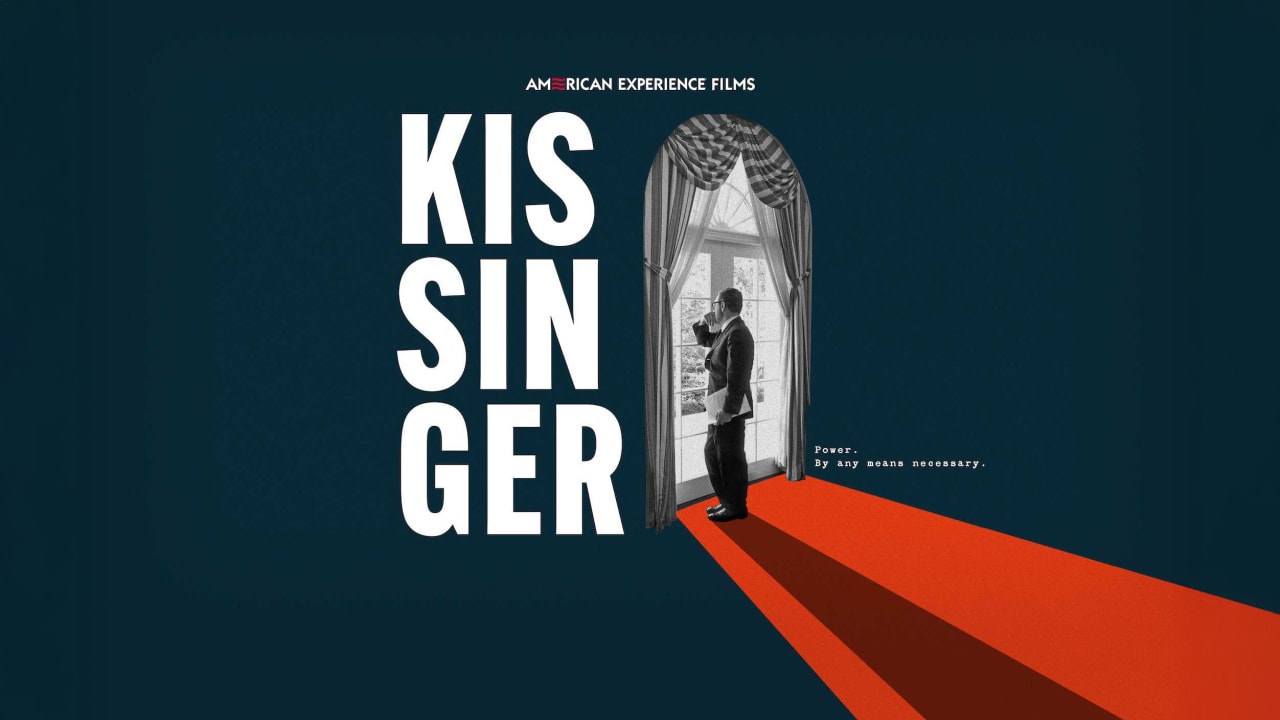
We invite you to a special screening of the new American Experience film, Kissinger, followed by a panel discussion on diplomacy, foreign policy, and global leadership.
The film offers an incisive portrait of Henry Kissinger, a prominent figure who served in the highest levels of American diplomacy. It traces his life from his childhood in Hitler’s Germany to his years as a Nazi hunter in the United States Army, his rise through American foreign policy, and his tortured relationship with President Richard Nixon, exploring the contradictions that defined both his pursuit of power and America’s role in the world.
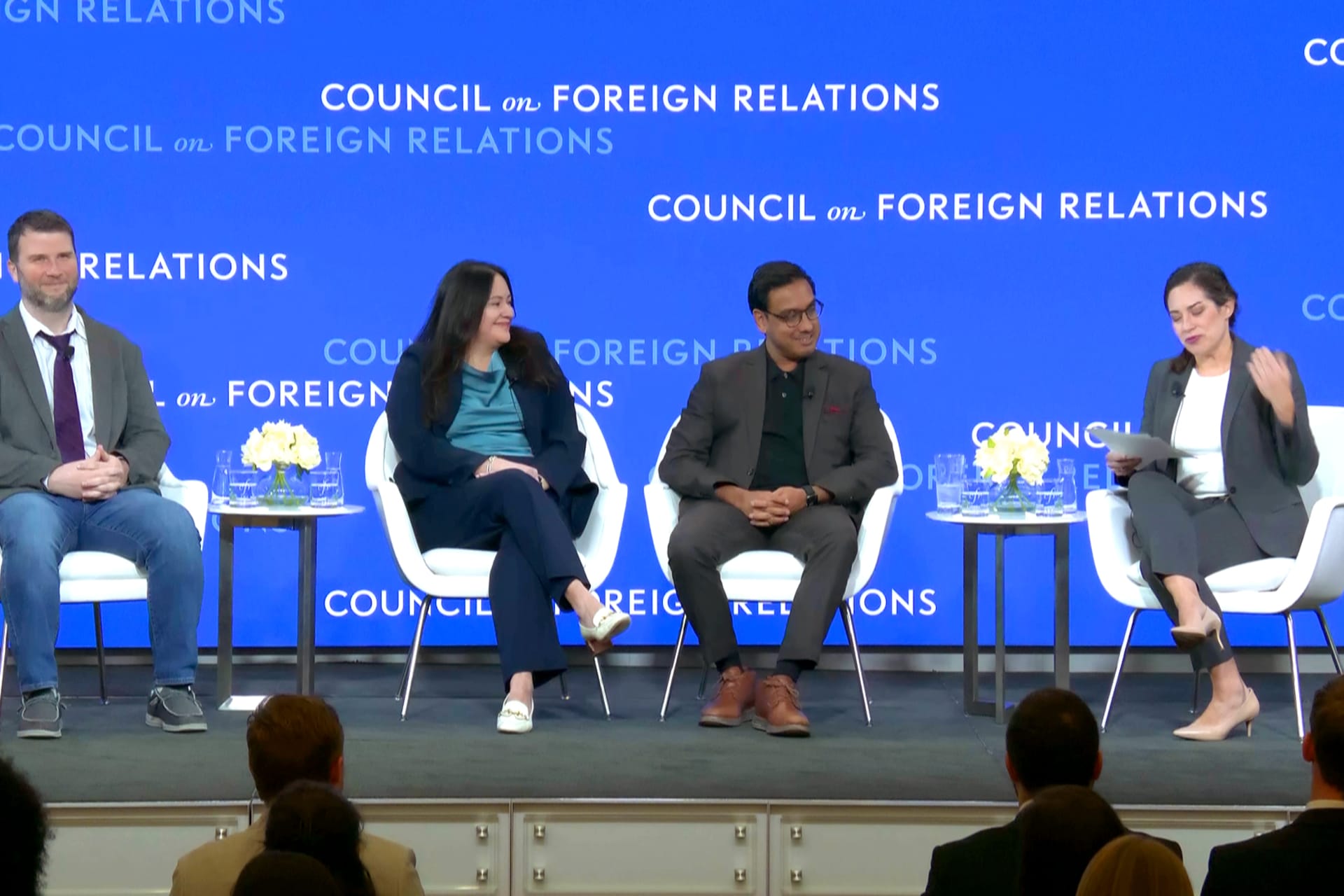
DONFRIED: Well, welcome to the Council on Foreign Relations post-screening discussion of Kissinger. I’m Karen Donfried. I’m the director of the Congressional Research Service, and I’ll be presiding this evening.
We have the great privilege of a fantastic panel. You have the bios of our panelists, so I am just going to give you a few nuggets about each one.
We have Winston Lord on the screen, who is a diplomat extraordinaire. He served as special assistant to Kissinger on the NSC and then was director of his policy planning staff at State. Lord was the only other person at the center of all of Kissinger’s major diplomatic activities.
Then we have, to my far right, Barak Goodman, who is one of the most prolific and honored documentary filmmakers in the United States. Kissinger is his fourteenth film for the series American Experience, which include award-winning films on Bill Clinton, the Oklahoma City bombing, the My Lai massacre, among many others. And he is a founding partner in the company Ark Media in Brooklyn.
And then in the middle we have Jeremi Suri, who is the Mack Brown distinguished chair for leadership in global affairs at the University of Texas at Austin. He is the author of Henry Kissinger and the American Century, among other books. And he’s also the author of a daily Substack newsletter on history, leadership, and democracy called Democracy of Hope.
I’m going to start by asking the panel a few questions, and then I will open it up to all of you shortly before eight.
I’d like to start with you, Barak. How do you approach a film about a figure as consequential, as polarizing, as controversial as Henry Kissinger?
GOODMAN: Thank you for asking and thank you all for coming. Really appreciate it.
First of all, you don’t shrink from it. (Laughter.) Nor, though, do you criticize glibly or sort of, you know, without understanding context, without understanding what choices were available to a figure like Kissinger, and really trying to understand what motivated him—what worldview motivated him, what moral compass motivated him, to understand from his point of view the world that he inhabited.
And to do that, first and foremost you need time. And we had the chance to really sink into the enormous scholarship that exists on Kissinger and those who knew him personally, some of whom I see in this audience, who could explain him. And I have to say that this is really why this film could only have been made for PBS, for American Experience in particular, because they give us the time, right, and the resource to spend months before we turn a camera on just trying to understand, to think, to talk. Cameo and I talked for months about who this man was, why he did what he did, trying to get beyond the simple polarization that exists about Kissinger, the sort of ad hominem attacks on one side and the sort of thoughtless sort of defense of him on the other. We wanted to go to the people who really knew him, like Ambassador Lord, Rick Smith, many others who I see out here and hear from them.
And so, again, it’s just a shame that PBS has been defunded the way it has because it really is the last place to make a film like this. And maybe that will come around again; we’ll see. But, yeah, that’s my answer. Thank you.
DONFRIED: So when we were chatting earlier I learned that you never actually met Henry Kissinger.
GOODMAN: No.
DONFRIED: He’d passed away. So this film in a way was your introduction to him. And I’m curious, did you learn things about him that surprised you?
GOODMAN: Well, absolutely.
DONFRIED: At the end of the project, did you have questions about him that were left unanswered? Just give a sense of that.
GOODMAN: Definitely, and Jeremi and I were just speaking about this. What surprised me, first of all, was, of course, having grown up in the era in which Kissinger was, you know, the predominant foreign policy voice in the—in the country, I knew how brilliant he was and all that. What I didn’t understand was what an effective infighter—political infighter he was, how extremely skilled he was at accruing and holding power, and what an interesting and ultimately productive relationship he had with Nixon.
What confounded me and still confounds me to some degree is how such a brilliant man—such a far-seeing, perspicacious man—could become trapped in the paradigm of the Cold War to the extent that he did, I think. I think it explains some of the mistakes he made in Vietnam, in Cambodia, even in Chile and places like that. I think—I don’t believe that Kissinger was badly motivated. I don’t subscribe to this war criminal notion of Kissinger. But I do think that he made mistakes that were attributable to this box that he was in and, of course, a lot of people were in at the time. But Kissinger was able to see outside of things. You see—you see the opening with China, for example. He could seize on opportunities and see things other people couldn’t. And yet, he couldn’t see past that to a large extent. So that has still confused and confounded me.
DONFRIED: Thanks so much.
Now I’d like to turn to Ambassador Lord on the screen. It’s wonderful to have you with us. As you know, the folks in this room have watched about one-third of the film. You have seen the documentary in its entirety. You also knew Henry Kissinger extremely well. I’m really interested in your view of the film when you think about it as a whole.
LORD: Thank you, Karen. And welcome, fellow panelists.
I do want to stress the point you just made, because if you see the entire documentary it is leaving a much different impression—and frankly, a more negative impression—than the very constructive and, I think, balanced, fair opening that we’ve seen tonight. So please keep that in mind. You may be surprised by some of my verdicts. And I’ve written my views down just to be precise and to be fair.
First, let me say I have great admiration for Mr. Goodman, and Ark Media, and PBS, and the past biographies that have been shaped. I know, of course, there’s a challenge of shaping a documentary on a complex and controversial figure, and Henry Kissinger was no saint. One must show his various dimensions, good and bad, along the lines that Mr. Goodman has said he attempted to do; for example, Professor Suri’s incisive book on Henry.
Now, obviously, I’m biased, but I’m trying to be fair and clinical in assessing the merits of this documentary. But I must also be candid.
First, the good news. The opening thirty minutes—indeed, the opening hour that we’ve seen, particularly the early years in Germany and New York and at Harvard—provide an excellent historical and personal context for the rest of the documentary. It is simply the best pictorial depiction that I’ve ever seen on the shaping of Henry’s psyche and strategy by his experiences in Nazi Germany and wartime service. Professor Suri, Angus Reilly in the audience, and others have shed very good light on this—these passages. And especially toward the beginning of the documentary, there are many references to the tough decisions that have to be made: the choosing between the lesser of two evils, the balancing of pursuing justice and stability. Let me add also that throughout that I and both sympathetic and neutral observers have their day in court in this program, as well as the critics. There are terrific photos and videos. It is a riveting production. Plus, this documentary is certainly not a hatchet job.
But—and I am not maligning intentions, and I point to Mr. Goodman’s well-intentioned comments—in its total impact, this documentary is not a hatchet job but it is a knife job. This is more insidious. It’s more insidious. A polemical screed would be dismissed. This program, with its overlay of objectivity and its excellent beginning, is more effective in rendering Henry guilty at the very end. By the time the viewer has been exposed to prolonged and vicious diatribes on Vietnam and Cambodia, one has forgotten the sensitive historical context at the beginning and the agonizing decisions facing statesmen.
The fundamental unfairness of this documentary is a wildly disproportionate and prejudiced agenda. Southeast Asia consumes fully half of the entire treatment of the issues, equal to the combined coverage of the geopolitical earthquake of opening to China, easing nuclear war threats, and concluding the first major arms control pact with the Soviet Union, and making the first strides toward stability in the Middle East, while severely reducing Moscow’s influence. Chile and Bangladesh together receive about as much time as China, and more than the Soviet Union or the Middle East. Moreover, there is no mention at all of Henry’s achievements under President Ford, despite depleted of executive power; the further shuttle agreements with Syria and Egypt; the Helsinki Accords, which helped to unravel Soviet domination of Eastern Europe; two years of intensive diplomacy on Africa, which changed our policy to supporting majority rule and led to independence for Rhodesia and Namibia.
In the unbalanced weighing of the eight-year scorecard, there is no real appreciation of the nightmarish landscape that Nixon and Kissinger inherited in 1969, beyond the Vietnam depiction. Because there was not only a long, bloody war that they inherited and its riots, but racial unrest, three assassinations, the resignation of a president, total hostility with Beijing, nuclear tensions with Moscow, Soviet sway in the Middle East. In short, angst and anger at home and the image abroad of America mired in a quagmire.
DONFRIED: So, Ambassador Lord, I think you make a really important point, which is how do you make choices about what to include in any documentary? And I think here we have one that’s three hours and can only capture part of this. And I think one of the themes was this question about the relationship of morality to foreign policy. And, Jeremi, you’ve thought a lot too about Kissinger’s legacy. And I just want to bring you in as well to speak to this question of how do you capture this history on the screen?
SURI: Well, I think—
LORD: You, correctly as a presider—I understand I was perhaps going on long—but I wanted to give a full picture, and I would like to come back and finish my presentation later on. Thank you.
DONFRIED: OK, yes. That we’ll—I was just keeping it on the clock because I want to make sure we get the room in as well. And I want to make sure we have a little bit of a conversation here. But, yes, you’ll have another chance.
SURI: So I’ll—and Ambassador Lord is a friend. And I have very high regard for you, Winston. And I really—I think it’s important that you brought your perspective in. I think it’s really important. And I was telling Barak that I was—as I watched the full three hours last night, made my wife sit through it with me, which she enjoyed—except for the times I was on screen, of course—(laughter)—but what I kept thinking is, what would Henry have said? And I think we’ve heard a little bit of that from Ambassador Lord. I think I had the—I had the good fortune to get to know Kissinger quite well when I was working on my book. And he was a man who, as I think Ambassador Lord has put very well, was conscious of the context that he was in and believed that he was coming into American foreign policy at a time when the United States was facing not only a very difficult, troubled world, but troubles within. We would never feel that way today, would we? (Laughter.)
And he felt he had a role to play in protecting what he saw as the sanctity of American power. One of the points I make in my book that comes out, I think, very well also in the documentary, especially earlier on before where we came in, is how much, for Kissinger, the United States was a savior country. Was axiomatic that the United States had a role to play in the world. I think the limitation that Kissinger had though, that many of us have written about—and I think it’s hard for someone like Ambassador Lord to see because he was working through the moments and working so hard to do the right thing—but I think what’s often lost, that I think the documentary brings out very well, are the ways in which well-intentioned, hard-working policymakers can lose sight of the world they’re actually operating in, which is different from the way the world looks in Washington.
And I think one of the real disjunctions we find, and that I and others have written about—Bob, Klaus (sp), other scholars in the room—was how the Kissinger team lost sight of some obvious things around them. And I do think Cambodia is Exhibit A for that. I do think the Palestinian story in the Middle East is part of that as well. I do think the human rights issues. Helsinki was not actually Kissinger’s preference at all. He went into Helsinki despite his preferences. It was the Europeans who largely pushed the United States into Helsinki. So one of the lessons, and one of the reasons I think this documentary is so valuable, is because it captures Ambassador Lord’s perspective—which I really want my students and a new generation to see, that people can go into foreign policy and believe in American power and believe in using American power for good. That’s the moral mission. But there’s also a hazard in seeing it only in the mirror of American foreign policy without understanding the other societies that we’re operating in.
And I’m sorry to say, I think we’ve made many of the same mistakes in Afghanistan, we were talking about this at the table and elsewhere, as we made in Kissinger’s era. Not because we had bad people in policy, but because we had too American-centered policy when thinking about the larger world. And that’s the moral question. How can we defend the national interest and think about a larger moral mission that is not just the narcissism of Americans, which is what we are suffering from right now in doses that I have never seen in my life.
GOODMAN: May I just quickly, also? First of all, I want to honor and thank Ambassador Lord so much for not only his comments tonight, but participating in the film at all. It’s rare to find someone who will go back, who was there, and cooperate with someone like me, put their faith in someone like me, knowing—as I’m sure he did—that it wouldn’t exactly be his point of view that ultimately came through. So thank you, Ambassador Lord, for that.
I just want to say that, you know, it is about choices in making a film. And Kissinger was everywhere all at once. I never encountered any—I’ve done many films, and there’s never been anything close to the tough decisions I had to make about where to talk about—you know, what to talk about. He was literally everywhere at once. He had the energy of five men. And so we did have to make some tough choices. But when you’re sitting across from someone like Ambassador Valdes of Chile, and you see the tears in his eyes, and you hear the accounts of what American foreign policy did to his country and the people in his country, and the betrayal he felt. And you realize that it was, to some degree, a betrayal of American values—with all the caveats that I’m sure Ambassador would supply, and which I believe, that Kissinger was attempting to do the right thing, that he saw the world in a certain way, that this was a threat that needed to be managed in a certain way.
Nevertheless, his policies—Nixon’s policies did have a real world impact. And I do agree with Professor Suri. Sometimes they lost sight of, not Ambassador Lord, personally, please, but generally speaking. And while China was, of course, a much bigger deal, a much more consequential deal, morally speaking I think things like Chile, Pakistan need to be addressed. Because we continue, the United States, to do things in the world that may be not a reflection of our values. And I think that’s important to discuss in a film like this. So thank you for your comments. But I just wanted to—I wanted to make that point.
DONFRIED: And, Ambassador Lord, let me give you a moment to come back in. And then I’d like to open it to the room.
LORD: Yeah. OK. My main objection was the selection of emphasis on the various issues. I’ve addressed that. But in the limited time that I have let me give three examples of misleading both the morality and the geopolitical wisdom of some of the moves that were made. For example, the Vietnam peace agreement is portrayed as a charade, and we’re going to sell out Saigon, and it’s a phony settlement. I gave a detailed rundown of the reasons we thought it would hold up. I won’t go into them now. On the Cambodia situation, there was no recognition of the fact—I’m not complaining about my—I got lots of time. I’m just saying somebody should have made these points, that Sihanouk asked us to keep the Cambodian bombing secret because he was allowing bombing on his own soil of the invaders along his border.
And finally, the peace is at hand press conference at Kissinger, which comes in the documentary, it is portrayed as a ploy to influence the election. What is not shown is that Hanoi forced Henry to respond to his publication of our draft agreement and attacks on the U.S. He was signaling both Hanoi and Saigon that we would abide by the basic agreement to strike trouble in Saigon. And in effect, peace was at hand three months later. So this documentary tries to be fair. And I really admire the producer. And I thank both of the panelists for their gracious comments about me. But it will not change the informed opinions of observers of Kissinger, positive or negative, but it is likely to poison the judgments of those viewers, including the young, who are fresher to Henry’s journey. Thank you.
DONFRIED: Well, I think probably the one thing everyone can agree on is that it is really striking that fifty years after Henry Kissinger served in government, he has this relevance and this controversial aspect to his legacy. And I think we can dig into that more. But I want to invite questions from all of you. And I want to remind you that we are on the record. So who would like to jump in with a question? Please introduce yourself.
Q: Thank you. Isaac Stone Fish. Author of the book America Second about Beijing’s influence in America, and Kissinger’s relationship with being a consultant.
SURI: Excellent book, by the way.
Q: Thank you. Appreciate that.
When we talk about deciding what to write and say about Kissinger, why does his business interests get so little attention and the forty years he spent running Kissinger Associates usually overlooked?
SURI: Yeah, I’ll give a—I’ll give a very direct answer that you’ll appreciate, as a fellow scholar. I actually tried to write more about that, and he wouldn’t give me access to anything. Kissinger Associates, unlike his government service, is not subjected to the same sort of open records. And so it’s not something he was willing to talk very much about. I think he has talked a little bit to Niall Ferguson about it, so maybe Niall’s second volume, if it ever comes out, will have something on that. Walter Isaacson writes a bit about this. But it’s like trying to get information on Exxon, right? That’s really—for me, that was the main reason. I can’t write about what I don’t have evidence on.
DONFRIED: Who else would like to jump in with a question? Please, here in the front.
Q: Thank you. My name is Paula Stern. Which happened to be the same name as Henry Kissinger’s mother. (Laughter.)
I wrote a book a zillion years ago, published in the ’70s, called Water’s Edge: Domestic Politics and Making American Foreign Policy. And it was on the Jackson-Vanik amendment, and how domestic politics shapes our foreign policy. And, of course, this involved very much Henry Kissinger and Richard Nixon, as well as Henry Jackson’s group—Senator Jackson of the Jackson amendment. Did you deal with the issues of that particular real challenge to our foreign policy and the role of human rights issues in that period in the documentary? I can’t wait to see the rest. Congratulations.
GOODMAN: Right. No, I believe that was under the Ford administration, was it not?
Q: No. (Laughs.) It started in—it was an amendment to the Trade Reform Act of 1972. It was ultimately signed by—but it was a two and a half year battle.
GOODMAN: Right. We stay—and, by the way, I want to acknowledge Michael Shorris in the back there, who was my partner in crime on this film. Michael, if you would quickly stand up. Michael and—thank you, Michael.
DONFRIED: That was really quick, Michael. Wow. (Laughter.)
GOODMAN: That’s the most you’ll ever get out of him. (Applause.) It’s one of many, many, many, many stories that we could not include. We did study it. We understand it involved Russian Jews and—
Q: Yeah.
GOODMAN: Yeah.
Q: It was all would-be immigrants.
GOODMAN: Yes.
Q: But it was certainly triggered by Henry Jackson, who was running for president—
GOODMAN: Yes, who was such a—deserves his own film. Yes.
Q: —who was the most concerned about the Jewish community from the—from the Soviet Union. But it was all non-market economies.
GOODMAN: Yes. Yes. I mean, it was one of many stories we just didn’t have the space or real estate to include, but was revealing of who Kissinger was. So the short answer is we did not deal with it in the second episode. We were busy with these other things that Ambassador Lord mentioned. (Laughs.) But, yes.
SURI: I’ll just say one thing on Jackson-Vanik. And your work is really helpful on this. It was, of course, an effort by a Democrat to limit the ability—Scoop Jackson was a Democrat from Washington, right—to limit the ability of the Nixon administration to make some of the deals they were making with the Soviet Union that did not address human rights, particularly the right of refuseniks to leave Russia, to leave the Soviet Union. There was no way you could work this into the film in the time, but to me it’s an interesting way in which Kissinger’s life—or, his early life circles back.
And he was not happy that I wrote about this, but when he talks to Nixon about the Jews in Russia, it’s important to understand that he’s a German Jew and comes from a different—a different Jewish background. And that’s a very interesting element in those discussions. You can look this up yourself. It was something he was very, very uncomfortable with. But I would encourage you to look at how he talks about his Jewish community, and how he talks about refuseniks and Russian Jews. And it’s a good example, I think, of how identity does matter in foreign policy, which is very relevant for thinking about Chile and other areas. That’s not to condemn Kissinger. It’s just to say we’re all human beings, and we all have our own assumptions about different groups of people that we carry into policy. And Kissinger is as representative of that as anyone else.
LORD: Let me point out that Kissinger worked behind the scenes to get Jews out of Russia. And that many, many more got out when this was done secretly than after the Jackson-Vanik intervention. So let me just make that point. Thank you.
SURI: That’s true. That’s true.
DONFRIED: In the middle here. Yes.
Q: Thank you all. My name is Danielle Dooley. I’m a pediatrician here in D.C.
And I’d like to know what you would—I have the privilege of glimpsing the world through the eyes of young people. So I’d love to know what you all want young people to take from this film.
GOODMAN: Oh, wow. That’s a great question. Well, one thing is just to ask themselves the question, if they’re American children, what is this country for? What is it about? Is it—and I don’t mean this as a condemnation of Kissinger. It’s just a general question. What is the purpose of America? Is it simply to become as rich and powerful a country as possible? Or is it something more than that? And that’s, I think, very relevant right now. So—and I think this film engages on that subject, without any easy answers. But to me, that would be a discussion worth having with your children, if you force them to watch this endless thing. (Laughter.) But so I hope that answers your question.
SURI: So I have a few students in the audience—former students of mine. And I think there’s a good and a bad story here. And we need both. History is filled with both. The good story is that Kissinger is part of a generation—I’ve written about this; many in this room have written about this—a generation of Americans who commit themselves to being serious experts on foreign policy, just as you’ve committed yourself to being a serious pediatrician. They’re experts. And they really try to understand the issues and work through difficult dilemmas. And policy needs that.
Policy is not just who shouts loudest or has the best social media tweet. It’s about actually understanding the issues. And I want them to be inspired by Kissinger. That’s why I was. That’s why I wrote a book about him early on, right? That’s one of the books—of the books I’ve written, it’s one that’s closest to me because I really feel I respect that, even though I disagree with a lot of what he did, right? I respect the world of the great, wise men who populated this organization—men and women—for fifty, sixty years, right? I respect that. So that’s what I want students to take, number one. Expertise matters. Doing your homework matters. Studying the issues matter. Facts matter.
On the other hand—on the other hand, it’s the old story that goes back—Rick Smith actually says this a few times in other parts of the documentary, David Halberstam made this argument famous—we are all susceptible, as Americans, to hubris. We’re not uniquely susceptible to that, but because of our power and wealth we might be a little more susceptible than my German and Italian and other friends, right? And so while I want my students to be experts, I don’t want them to think that they actually run the world. I want them to think that we are a big, important country that has a responsibility in the world, and maybe has a little more influence than most other countries, but we never have and never will run the world, nor ever should we. And that mix of expertise and humility is hopefully what I think. I think it’s what they will take from this documentary.
GOODMAN: I just want to pick up on one thing you said, Jeremi, which is just to notice the extraordinary group of people Kissinger assembled around him. You know, we talk about the NFL coaching trees where an NFL coach will have lots of acolytes who go on to do amazing things. Look at the group. Morton Halperin I see his is here tonight, Ambassador Lord, Roger Morris, Tony Lake, goes the list—John Negroponte. The list goes on and on. These were brilliant, brilliant people. Who did not always. Many of them disagreed with Kissinger. And Kissinger loved that relished it. And this—I mean this is a unique and really inspiring kind of way of being in government. And I think—I know we’ve lost some of that. So, to your point, it speaks volumes about who Kissinger was.
DONFRIED: And, Ambassador Lord, let’s give you a chance as well.
LORD: Well, a more general comment. Anybody who’s lost fifteen people to the Nazi Holocaust, and anybody who is an immigrant coming to America, cannot be accused of being insensitive to what he wants to represent in this country. So I would—and I know that the program attempts to do this. I would urge people to keep in mind the tough choices that have to be made and the vision that Henry had. And I must say, the first half hour or so was brilliant. As I said earlier, of explaining the context of his psyche and his strategy toward the world, in which, in balancing stability and justice, he did give a lot of attention to the former because he felt that the breakdown of authority in Germany against well-meaning people was a disaster. And this always gnawed at him. So I’d just like to make those general comments. There’s no question this was a complex human being, and that that part has been very well captured in this documentary.
DONFRIED: Thanks. Please, here in the front. To your other side.
Q: I’m Bob Lieber, emeritus professor at Georgetown, who once wrote a book called Indispensable Nation.
I raise it because both Jeremi and Barak in this film and their approach are minimizing a critical point. Bill Clinton invented the phrase “indispensable nation.” And even Barack Obama, in the last month of his presidency, reluctantly acknowledged that the U.S. really had a special and unique role. Kissinger got that in a different idiom and so on, whether we agreed or disagreed with his choices. But I don’t think Jeremi and Barak are fully on board about that in terms of appreciating the significance of America’s role in the world, not just its one among many.
SURI: Right. No, I completely agree with that, Bob—Dr. Lieber. I completely agree with that. I think the United States by virtue—as you’ve written, right—by virtue of its power, by virtue of its position, by virtue also of what it stands for, which is the point Barak has made, it has a special role in the world. But I don’t think we always understand what that specialness is, right? And so that’s what we need to think through. It’s not as prima facie. Being special doesn’t mean that we have the answers for everyone. Nor that it has to always be our way. And what I revere of Kissinger’s generation—and here I’m talking about the Henry Kissingers of the world, but also the Dwight Eisenhowers and the Dean Achesons of the world—was they recognized the virtue, as you do, of multilateralism.
One of the things we’ve done best is build alliances, which we never did before World War II. We had one alliance before World War II, right? The French alliance in the Revolution. No alliance again until after World War II. And that generation trains itself to be multilateral. Not to always be fair, not to be error free, but to be the indispensable alliance-builder in Europe and elsewhere. And that’s maybe our special role. It’s not a special, unilateral our way or the highway role. And I think that’s what we need to understand. But that’s your argument too, I know.
DONFRIED: Great. Thanks. Toby Gati, I know you’ve been trying to get in.
Q: Thank you. Toby Gati.
Maybe it’s a coincidence, but a book on Zbigniew Brzezinski has just come out this year—the first really big book. And Ed Luce has done a fantastic job. It’s really amazing. A very different person. Very different NSC. There was no Vietnam, no Cambodia. And yet it’s Henry Kissinger who emerges as everybody’s hero—lover, friend, whatever you want to say. I worked for Brzezinski, in all fairness, out at Columbia. I was his research assistant. So I do have a view. But the question about the youth actually spurs my question. Could Henry Kissinger serve as the National Security Advisor to Trump if he had been asked? Zbigniew Brzezinski never could have. Is this an unfair question? And looking—if youth is going to look at this, am I wrong in my conclusion?
SURI: So, I mean, it’s very interesting. This was when I was involved with—you know, talking to Kissinger a lot more, I was writing my book. He wanted to run George W. Bush’s foreign policy. It was a very difficult moment. Some of you might remember when he was originally chosen to lead the 9/11 Commission, and then he had to resign because he wouldn’t reveal his client list. (Laughter.) It seems so quaint relative to today. (Laughter.) I happened to be talking to him that—I mean, he really wanted to run W’s foreign policy. So I think it’s a very fair question to ask. I think, and it’s a point I make and I think Winston will partially disagree, Henry had a lust for power. And I think some of that came from a good place in his own mind. He believed that, if there’s an indispensable nation, Bob, that he was also the indispensable policymaker. And that he had a better sense of things than anyone else.
And so I don’t think he saw the limits to himself, even as an older man. He worked twenty-hour days till the end of his life. He had gone to Beijing right after having COVID, just months before he died. I mean, this was a man who never stopped. I think it’s a kind of Holocaust syndrome, right, coming out of that generation, that you’ve never done enough. So I think he’s very different from Zbigniew Brzezinski. And I actually think that answers your question. I think Zbig appears in people’s memory of being a little more partisan. He was a Democratic policymaker for a particular kind of Democratic Party. And I think Larson’s book—which I think is the book you were referring to—makes a very good point about there was an ideological, principled framework for Zbig’s policies. That’s good, but that makes him less the everyman for every issue. And that doesn’t make him less of a policymaker. That just means he becomes less of that figure who can be plugged into every issue in the way Kissinger can.
LORD: Can I make a few comments?
DONFRIED: The cardinal rule at the Council is every meeting must—
LORD: Yeah, but please—
DONFRIED: Oh, OK. You get sixty seconds, Ambassador Lord, and we have to close.
LORD: Yeah, I’d like to have—we’re talking about balance here in terms of coverage. First, I’m a great admirer of Brzezinki. Secondly, for me to deny that Henry lusted for power, I would lose all credibility. (Laughter.) I cannot—I cannot quarrel with my fellow panelists. Thirdly, when we talk about what we want young people, my problem with this documentary—and there’s many good aspects, and, again, I’m not maligning intentions—is that future generations will have no feel for the geopolitical earthquake, as I said, what we did with China, what we did with the Middle East, what—I say “we”—what Henry and Nixon did, and with the Soviet Union and Southern Africa, which is never mentioned.
This is what distresses me about the final verdict of this documentary. And, finally, whatever else you think of Henry, he was always concerned about future generations. At the age of ninety-five, he decides to learn about artificial intelligence because he knew that was going to be crucial for the future, and U.S. relations with China would be crucial. So at the age of 100 he turns out two books on artificial intelligence and goes to China for the 100th time because he was worried about the fate of future generations and young people. Thank you.
DONFRIED: Thanks so much. And you all are going to be the ones to judge for yourselves. We hope you’re all going to watch this when it comes out.
GOODMAN: Please watch.
SURI: It’s next week it’s out.
DONFRIED: Next week, yes.
GOODMAN: Monday and Tuesday.
DONFRIED: So thanks to all of you for coming. Special thanks to Ambassador Lord, to Barak Goodman, to Jeremi Suri. I don’t think we could have had a more interesting panel to help us think about what the message of this documentary is.
SURI: And to The American Experience also, thank you.
DONFRIED: And, you know, I just want to remind everyone that the video and transcript of this meeting will be up on CFR’s website. So if you want to check back, you can look there. So please join me in thanking our terrific panel. (Applause.)
(END)
This is an uncorrected transcript.