The Year Ahead in Commodity Markets
Event date
Speakers
- Chief Strategist, Commodity & Energy, BCA Research
- Managing Director, Global Oil and Commodities Research, JP Morgan Chase & Co.
- Associate Dean, Center for NYU Global Affairs and Founding Director, Energy, Climate and Sustainability Lab, New York University; CFR Member
Presider
- Rebecca PattersonCFR ExpertSenior Fellow, Council on Foreign Relations
Panelists discuss the outlook for key commodity markets, examining the factors driving energy, industrial, and precious metals prices, and exploring the implications for the global economy and broader financial markets.
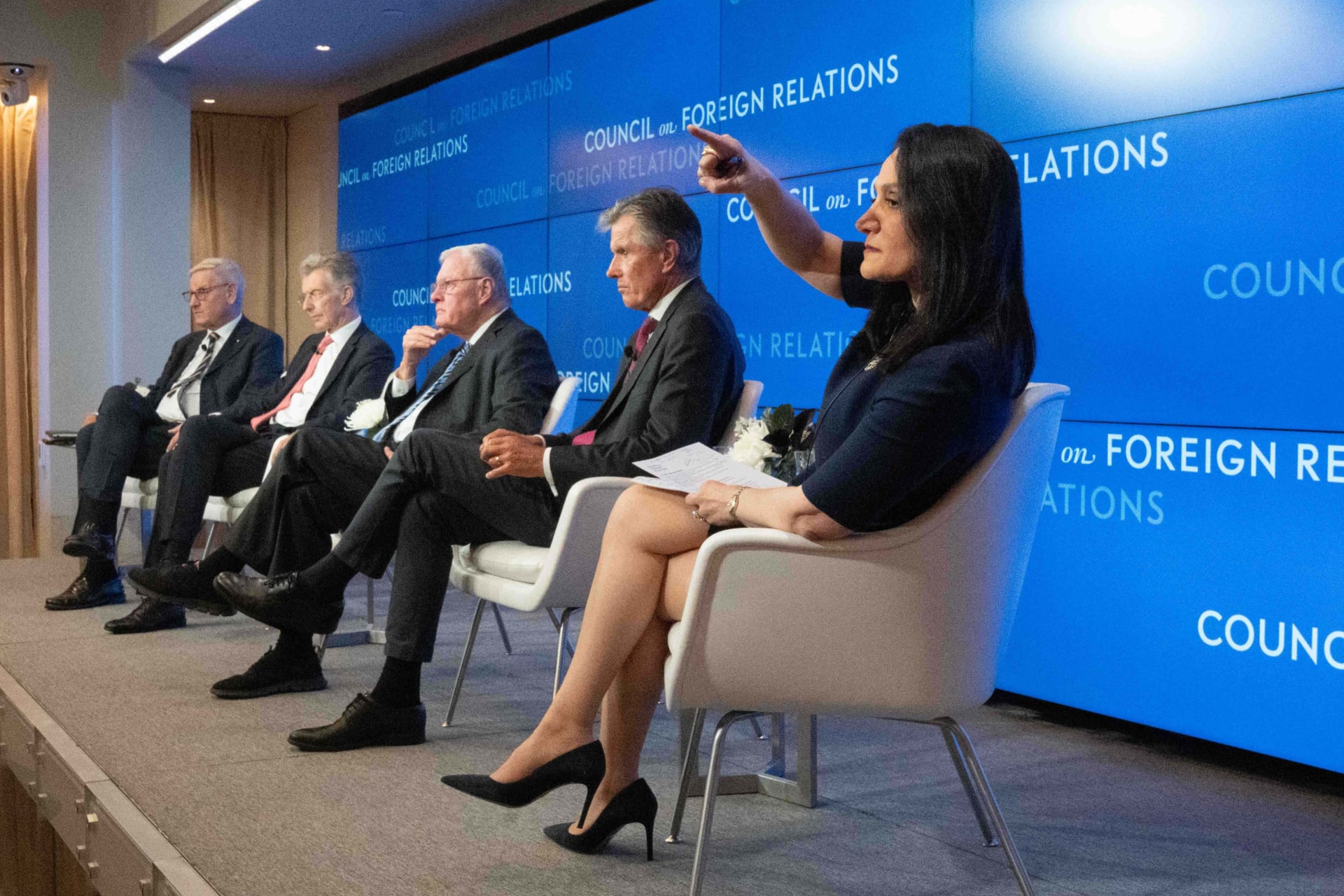
PATTERSON: Well, good afternoon. Great to see some familiar faces, and lots of new faces in the audience. Thanks for joining us today. And thanks for those of you who are joining us online today. My name is Rebecca Patterson. I’m a senior fellow here at the Council on Foreign Relations.
I also have spent a good chunk of my career researching and investing in commodities, which is probably more helpful today for the conversation we’re going to have. We’re going to be talking about the outlook for commodities in the year ahead. We’re going to focus primarily today on energy markets and industrial and precious metals, although I know with this group that if you want to talk about something a little more esoteric—winter wheat, I don’t know—I’m sure someone here will be game.
So let me introduce the panel. You have their bios, so I’m just going to give the headlines, and then we’re going to dive right in.
So, first, next to me we have Roukaya Ibrahim. She is the chief commodity strategist at BCA Research, wonderful research firm. Wonderful to have you here from Montreal today. Thanks for joining us.
And then next to her, Natasha Kaneva. She’s a managing director and the head of commodity research at JPMorgan, just down the street here in New York City.
And then finally, but certainly not least, Carolyn Kissane, who is the associate dean at the Center for New York University’s Global Affairs and has been in commodity research in policy space and the academic space for many, many years.
So wonderful to have all three of you here today at CFR. Thank you for joining. So the way this is going to work, I think you already heard it but I’m going to say it again because I’m told to, is that for the next half hour we’re going to have a conversation between the four of us, and then we’re going to spend the second half hour taking your questions. It is on the record today. And we’ll make sure we get people in the room, and then anyone who has questions online. So all right. With the housework taken care of, let’s dive right into the content.
You know, it has already been an amazing year and it’s only January 21. When I looked this morning, silver prices were up 31 percent year to date. I’m still wrapping my head around that. Over the last twelve months you’ve had silver prices up, I think, about 190 percent, gold prices up well over 60 percent, oil prices last year down 20 percent, now this year up. Brent is up, what, 6 percent or so year to date. So it’s a lot of volatility. A lot more than what we’ve seen in quite a long time. So you guys are all extremely busy. I want to start by talking a little bit about what’s happening right now, then we’re going to talk about the year ahead, and then a little bit about the implications of all this. So, fine, commodity prices go up and down. So what? How does it affect the global economy? How does it affect other financial markets? How does it affect geopolitics? So we’ll make sure we hit on implications a little bit.
But let’s start with the first question, which is just, looking across what’s happening today with all these markets, all these movements, there’s so much one could talk about. But pick one or two things. What stands out to you? And I’ll just go down the line.
IBRAHIM: Yeah. I would say that over the past month or so the thing that stands out to me is the broad-based nature of the move higher in industrial metals. So I think, you know, in the case of energy, that’s clearly a result of the geopolitical events that we’ve seen, and that’s also boosted precious metals. But if you, like, take a look at last year, up until, you know, early December it was really copper that was driving the increase in industrial metals. And over the past month or so it’s been much more broad-based. And I think the question there is, is this driven by the macroeconomic backdrop? Is it signaling an improvement in manufacturing conditions, and therefore suggesting that the move is more sustainable? Or is it something else that’s driving these that’s likely to be short lived? So I think that’s an open question that has caught my attention.
PATTERSON: Natasha.
KANEVA: Yeah, so this is the thing that we have been mentioning and writing about. So we call it the crocodile cycle. Yeah, so if you take a look at the past fifty years—
PATTERSON: I’m from Florida. We do alligators, but you can do crocodile, OK?
KANEVA: We call it the crocodile cycle, yes.
PATTERSON: A big open mouth is what we’re talking about, right?
KANEVA: Exactly. So if you look for the last fifty years, yes, like since the early 1970s, commodities always move in the same cycle. Precious metals and energy and agriculture, they always move exactly—they’re very, very synchronized. Why? Because for the last fifty years, it was driven by demand. Whatever demand does, that’s what commodities price would be doing. Since 2022, we’ve noticed—first we’ve noticed, we were not sure this is a trend or not but now we call it the crocodile cycle. It’s a very, very visible trend. The mouth has opened. So you have the body, the tail of the crocodile, and then you have this massive opening in the jaws, the metal prices, whether it’s precious metals, industrial metals, are moving up, energy prices are moving down.
And so what we said is that since 2022 there is a differentiation in the drivers of the commodities markets, commodities prices. It’s no longer demand-driven market. It’s a supply-driven market. And the differentiation in the supply, that’s what drives the prices. So the market—the argument we have been making is that the worst thing that happen to energy prices, as an investor, is that it became a national security consideration. You can see a very, very big drop in the metals—I’m sorry—in the energy prices. Yes, oil was down 20 percent last year. You know, European gas prices were down almost 30 percent last year. So in the case of the metals, we have the exact opposite movement. A lot of that is absolutely with things that the global economy is doing absolutely great. We think that 2026 will be a great year for the global economy. But a lot of that is Section 232, especially, you know, the very, very early movements this year.
PATTERSON: And just to make sure everyone listening and here is aware, when you say Section 232, we’re talking about specific national security-related tariffs, that included some commodities.
KANEVA: Pretty much we don’t know yet what is included in the commodities. So the way the president is mentioning it is that it might or might not include particular commodities, including gold, silver, and copper. So we were expecting some resolution.
I see my mic is dead, yes? No? You can hear?
PATTERSON: No, you’re good.
KANEVA: Yes. We expected some resolution in January—I’m sorry, January 17. So we did not get anything. So you can see a little bit softening in the silver prices. But there is a question mark whether they will be included as a national security consideration or not.
PATTERSON: And Carolyn, what stands out to you about how last year ended and this year began?
KISSANE: Yeah. It’s wonderful to be here. Well, wonderful to also follow Roukaya and Natasha.
I mean, there’s so much that’s happening, like, everything all at once. I think, you know, we definitely, in terms of geopolitics and just as, you know, to Rebecca’s point, that we’re only twenty-one days into January but we already saw events in Venezuela. And, of course, Iran is a continuing question. So, you know, we haven’t quite—we haven’t seen in terms of what’s happening in an energy market specific to oil. I think that’s going to be very interesting in 2026. But to Roukaya’s point about industrial metals, that I think, you know, looking at copper, tin prices, for example. Tin is way up. I think a lot of that is also built on both sort of supply issues, where we’ve seen some supply, sort of, outages in different parts of the world, as well as industrial demand, looking at datacenters, electrification. Also I would emphasize on the defense side in terms of requirements around defense technologies and industrial metals.
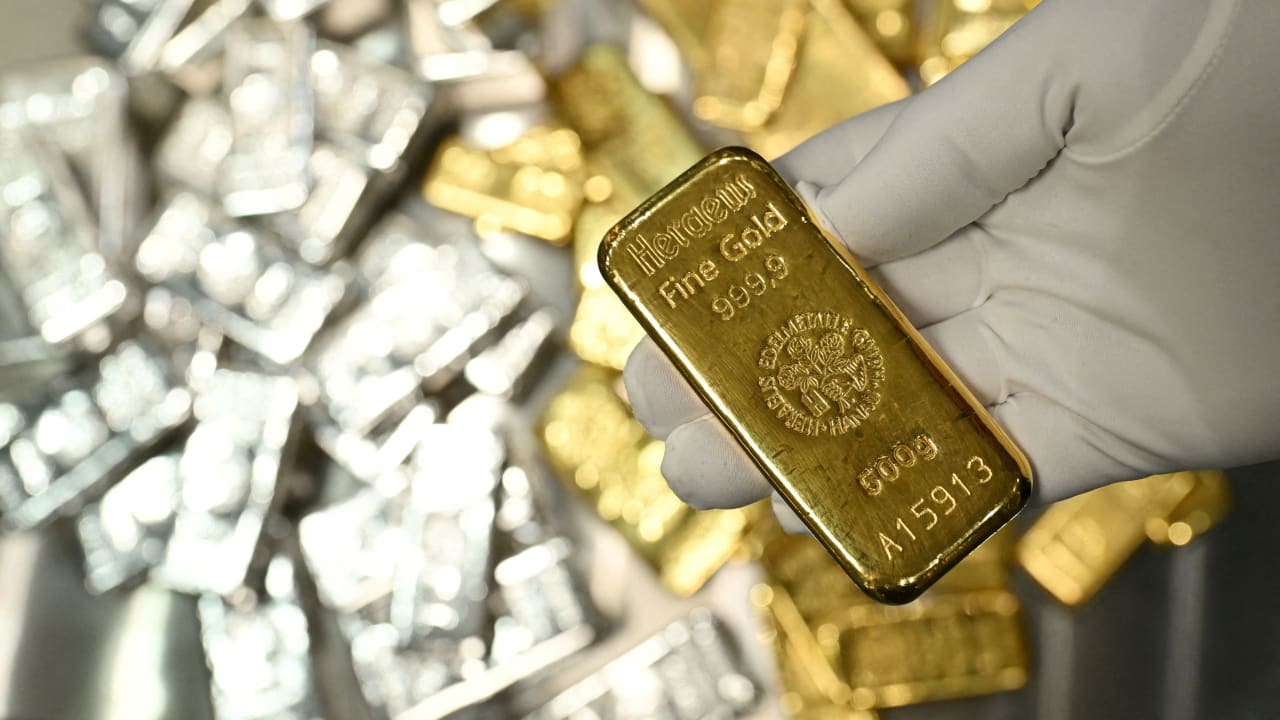
PATTERSON: So thank you for that, laying the groundwork. Let’s look ahead. And Roukaya, I’m going to start with you again. Let’s talk a little bit more about precious metals. I think a lot of people who try to follow gold, frankly, get confused with what to look at. Is it a hedge against the U.S. dollar? Is it a hedge against inflation? Is it a tail risk hedge, you want to own it when there’s a crisis or a recession? It tends to go up when interest rates go down, but not always. There’s so many things that drive it. Central bank diversification. Are there one or two things that you think are relatively more important now? And do you think these gains can continue? I mean, we’re near or at record highs today. And it looks like we’re going to break $5,000 an ounce relatively soon. So how do you see it going forward?
ROUKAYA: Yeah, so I know you’ve been bullish on gold for a while. And so have we, actually. We put on—you know, we started getting bullish actually November 2022. And I think the factors that are driving gold higher have sort of evolved over that period since then. So initially, I think it was, you know, central bank reserve diversification. That’s very clear in the data. Emerging market central banks started buying gold as a result of the freezing of U.S. dollar reserves of the Russian Central Bank. So they needed to diversify their reserves. And, you know, the gold purchases by emerging market central banks have been extremely strong. And that remains the case. You know, in volume terms, last year they did come down a bit but they’re still much stronger than they were prior to 2022. And in value terms, actually in 2025 it was a record high.
So that tells us that, you know, even though gold prices are rising this is a relatively inelastic source of demand that I believe is going to continue pushing prices higher over the coming years. And actually, you know, to your question, I view the gold rally as structural in nature. And what was really interesting over this period is the breakdown in the relationship between gold prices and other typically cyclical drivers of gold prices, in particular, real rates. So, you know, since late 2022 gold prices have moved higher, even though real rates actually increased. And so, you know, that highlights that central bank demand was really the dominant driver. The typically inverse relationship with the U.S. dollar also broke down. And also, you know, typically when prices are high recycling volumes also increase. But in this case, it hasn’t happened.
And I think that highlights that investors expect gold prices to continue increasing and so they’re holding on to more gold rather than recycling. So I do think that these sort of tailwinds have evolved. What we’ve seen more recently, and I expect also to continue boosting gold prices, is increased demand from investors. So like ETF demand for gold in this environment of elevated geopolitical uncertainty, you know, I think that gold is a really good hedge in this environment, will continue pushing prices higher.
PATTERSON: Great. And real quick, just while we’re still on precious metals, you know, we have seen them all kind of move up together. And I feel like often they do. Often they’re almost marketed to investors as a basket, a precious metals basket. But there is obviously different uses for different precious metals. Platinum and palladium, silver, gold. Talk to us a little bit about some of those differences, and what the heck was silver, right? Almost 200 percent from twelve months ago to today. Is it partly because of gold? Is it Section 232? Is it datacenters? Something else? Like, help us understand the volatility in these gains, which are something I haven’t seen in my career.
ROUKAYA: Yeah. I mean, I think that the key differentiator between gold and silver, platinum, and palladium is that while industrial applications account for most of the demand for silver, platinum, and palladium, that’s not the case for gold. So, you know, these other precious metals are semi industrial metals as well. And they are driven also by the industrial cycle. And, for example, if you plot the silver to gold ratio, it’s a very good correlation with measures of manufacturing activity. So, for example, the global PMI tends to correlate well with the silver to gold ratio.
I think that, you know, the move in silver, platinum, and palladium is a little bit concerning. I do—I’m still bullish on precious metals overall, but just the extent of the move. And even last year, you know, prior to this more recent move higher, they were very closely correlated with financial assets that are highly speculative. So, for example, bitcoin, NASDAQ. And I think that speaks to a speculative element to the rally. And then I fully agree with Natasha that the Section 232, you know, did influence the recent move in silver prices. And if you take a look at, for example, inventories on global exchanges, you know, inventories in the U.S. have increased due to some stockpiling ahead of potential tariffs. And that has depleted inventories in London and Shanghai.
So that is, I read, contributed to the move higher. I was actually surprised, you know, I guess it was last week or so when—you know, when the announcement was that, you know, there were no tariffs that were imposed on silver, and silver prices didn’t really respond to that. But I think the reason why is that the announcement didn’t completely remove that risk, because it basically just said that for now they’re going to try to, you know, address the national security concern through bilateral agreements. And if that doesn’t work out, then they might resort to tariffs. So it hasn’t completely removed that risk, which is, I think, why silver hasn’t responded more meaningfully to the announcement.
PATTERSON: Thank you. Yeah, and it’s interesting to me that there’s this optimism reflected in these commodity prices about manufacturing, and yet if you look at—you mentioned global PMI, so business sentiment indicators for manufacturing—for the U.S. at least, and I’d argue globally, they’ve been relatively depressed. So a lot of optimism if the words “data” “center” are there, but outside of that not as strong.
But, Natasha, I see you, like, waiting. (Laughter.) So if you want to—if you want to add your thoughts on precious metals, of course. But then I want to start picking your brain on crude oil. And I feel like we need to spend a little bit more time on Venezuela. You know, President Trump clearly would like to see lower oil prices. He would like to see U.S. oil producers and that sector benefit financially from possibly doing more business in Venezuela. But you and I know it’s not that easy or simple, right?
KANEVA: You and I disagree.
PATTERSON: OK. You think it is easy and simple? Bravo. All right, tell us.
KANEVA: Well, can I just say a couple words on gold?
PATTERSON: Sure.
KANEVA: Yes. So we have a buy gold recommendation similarly, since November 2022. It was trading at $1,700 at that time. Our target was doubling in the gold prices. I think in my career this was the easiest call I’ve ever made because every June—May or June JPMorgan hosts about seventy central banks from all over the world. And I’m usually the keynote speaker. And so I have hour and a half with them. And so at exactly the same time, we start seeing gold start moving. Our pricing model that was built on gold relationship with the real yield broke down completely, so something was happening. Geopolitics is noise and our pricing models were treating it as noise. So we realize something else is happening.
So at exactly the same time, you know, Russia invades Ukraine, United States goes to United Nations and says, OK, all the countries need to vote whether Russia is an aggressor and needs to get out of Ukraine. And the way the countries voted was really, really surprising to me, because majority of the countries abstained. And when I had them in front of me, when I was speaking to them, and I said, OK, guys, we all know each other for very long time. Why did you vote the way you voted? Why did you abstain in your vote? And the answer was, it has nothing to do with Russia. It has nothing to do with Ukraine. It has everything to do with the U.S. Treasury and the Democratic administration freezing $300 billion of Russian assets.
It was arbitrary. It was objective. Sorry. It was subjective. It was arbitrary. And we do not want to be judged by an administration how we think about climate, how we treat our women, how we treat LGBTQ community, and all the other things. So what they said is that we’re getting out of the U.S. dollar. That was May 2022. So my natural answer is, OK, if you’re getting out of the U.S. dollar, what are you getting into? We’re moving into gold. And when I looked historically, the numbers you were, you know, mentioning, historically central banks were buying about 400 tons of gold for their reserves. In 2022, they bought 1,000. 2023, 1,000. 2024, 1,100. 2025, slightly less. Historically, they have also always been very, very price sensitive buyers because they buy low, they sell high, very, very smart people. Now the price kept marching higher, and they kept buying and buying and buying and buying. Which tells me it has absolutely nothing to do with anything. It’s just—it’s a simple diversification and they’re moving into gold.
So historically, for the last fifty years, we had one major buyer of gold. And that was the institutional investor. And they were playing on the fat. You take a view on the real yield and you decide whether you’re buying or selling gold. In 2022, we had a second buyer emerging, central banks. Last year, I realized now we have a third buyer emerging. It’s all those international companies’ portfolio managers that the holding U.S. dollar assets. That’s about 60 trillion—60—60 trillion of U.S. assets that are being currently held by institutional, international holders. And so the message to us was, listen, U.S. is still the biggest economy. It’s not going anywhere. It’s the biggest liquidity, the biggest capital creation. But if U.S. assets is about 45 percent of my portfolio, it makes sense to start bringing this down to 43 (percent).
So the numbers are showing that the half-percentage point of that goes into gold. Mathematically, I’m getting $6,000 gold target. So previously we said buy at 1,700 (dollars). It will go to 3,500 (dollars). Now we’re saying it’s going to 6,000 (dollars), and we’re almost at 5,000 (dollars) today. So my target was 2028. So what happens is that we have three buyers of gold right now, but I have no sellers. And first time in twenty years, I wrote about gold supply. And my clients came to me and they said, Natasha, you’re talking about gold supply? Never, ever gold supply mattered. Why? Because the humankind is digging for gold for 6,000 years. You can go to Egypt. You can see the gold of King Tut. I don’t advertise, but you can go to Moscow, to the Pushkin Museum, and you can see the gold of Troy on display there. Six thousand years’ worth of mining. All of this gold is still with us. Yes, we never, ever throw gold. It’s all with us.
All of this gold can fit on one soccer field—one football field for you guys here—one meter deep. One meter is up to my waist. That’s it. Six thousand years of mining. So now I have three buyers. And when you see those moves in the prices, as you mentioned, the huge volatilities that we’re observing, it’s not because a million people decided to buy gold. It’s because three people decided to buy gold, but there are no sellers. Six thousand dollar gold target. So I will see you next time, guys, and I think we’ll be talking about $7,000 gold price, probably, in the—(laughs)—
PATTERSON: We’re going to bring them back next year and we’ll mark them to market. So, for those of you following the central bank demand, World Gold Council, and there’s another think tank called OMFIF—O-M-F-I-F. They both do very good, thoughtful surveys of central banks every year to see if their intentions are in terms of adding gold to reserves in the coming year. So just FYI.
I want—and Venezuela and, yes, move to oil.
KANEVA: Venezuela, yes. So, Venezuela—we concluded that Venezuela was a done deal in October. So our message was that it’s the question of when, not the question of if. And for me, it’s very interesting your opinion, because it could be made—like, we can make a plausible argument that if we extrapolate energy demand in United States and we look over the next decade, we can make an argument that U.S. is not going to be energy self-sufficient in a decade. Yeah, we can. I disagree with that argument, but I can make an argument. Mathematically, I can tell you there is a probability—not the possibility, but probability—that United States is not going to be energy self-sufficient in ten years’ time. So if you conclude that, then what?
Then, as a country, you should be looking for different sources of energy. As simple as that. So Venezuela marks all the boxes. It’s Western Hemisphere. The U.S. companies are already operating there. Chevron is operating there. We had two other companies that used to operate. The grade that Venezuela produces is exactly the grade that United States needs. Seventy percent of the Gulf Coast refining capacity is built to take Venezuelan oil. It’s heavy crude. That’s exactly what we need. So if you look at that and you say, OK, actually, it makes a lot of sense for us, one way or another, to get involved in Venezuela. To be very open, I did not expect to happen what happened, but mathematically and just strategically it made a lot of sense.
So another argument could be made, and this is more geopolitics and speculation, that the Venezuelan oil can fully offset Canadian oil—numerically and by quality grade. It’s exactly the same number. So at the peak, they can produce about four million barrels per day. That’s what we buy from Canada at the moment. And that’s exactly the same you have in crude oil. So when you think about that and you say, OK, as a country, does it make sense? Yes, it does. So what we think will happen next? At the moment, Venezuela produces 0.8 million barrels per day. We think that the number will double in about three years. So that’s what we put in writing. The feedback to me from producers was that you’re too low, Natasha. It will happen faster and a bigger number.
PATTERSON: See, and that surprises me—
KANEVA: I know.
PATTERSON: —that U.S. producers were that constructive. I mean, we just saw the one quote from Worth (sic: Woods), who’s Exxon, suggesting: Not so fast. I’d like to have some political stability. I’d like to have security for my personnel. I’ve had my assets seized twice. How do I know this government’s going to last? It’s still a narco-state. Et cetera, et cetera. So—and they have oil assets in that area, in Guyana and other places. And Canada agreed you could replace it. But I had the opportunity to go to the oil sands last fall, which was awesome. I highly recommend it as a field trip.
KANEVA: In Guyana? There’s one in February.
PATTERSON: Oh, a field trip? Oh, goodie.
KANEVA: The field trip to—(inaudible).
PATTERSON: I love those field trips. So, you know, Canada, if you want geopolitical leverage, maybe ahead of USMCA renegotiations or something, fine, you could replace it. But why would you want to replace it? You’ve got all the infrastructure there. You’ve got the relationship. You have political stability, et cetera, et cetera. So help me understand that rationale a little bit more. And then, Carolyn, I want to bring you in.
KISSANE: Yeah, I want to jump in here too.
PATTERSON: Yeah, yeah, yeah.
KISSANE: Natasha, no you go—please go ahead.
KANEVA: Canada, I agree with you. It makes zero sense. If you want to increase supply, Canada needs to be part of the supply. Hundred percent agree with you.
So a couple of things. So the companies I’m mentioning, they need three things from Venezuela, from the administration. Number one, they need security. So the numbers we’re looking right now, in Venezuela there’s about 500,000 foreign militia operating at the moment—15,000 Hezbollah, 50,000 Iranians. Wagner Group from Russia is very active in the country as well. That’s in the backyard of the United States. How they ended up there it’s a completely different question. So they need those people out.
Number two, they need elections. My understanding that Delcy Rodriguez, so the U.S. oil and gas companies actually lobbied for her to become the interim president. Very smart. Very matter-of-factly. Very pragmatic. She was the former oil and gas minister, understands the industry really, really well. So it makes sense to do business with her. So that they’re excited, actually, about her. But it’s an interim president. You need elections. The biggest questions we’re receiving, actually, it’s not who is the next Venezuelan president. It’s who is the next U.S. president.
PATTERSON: U.S., yeah. Stability there is also helpful.
KANEVA: Correct.
PATTERSON: Yeah.
KANEVA: So, and the third condition is you need contracts—ironclad contracts that nothing gets expropriated the way it happened previously. But also, the change in the U.S. administration is not going to result in changes in the contract. So the companies believe that the first two, the security guarantees and the elections, will take a year. I actually believe it will take faster.
PATTERSON: OK. I’m going to cut you off there, only because I’m keeping an eye on the clock. We need more time for this, but we don’t have it, sadly. So, Carolyn, agree, disagree? And I know you just got back from the Middle East. And one thing that I think sometimes gets lost in the sauce is that the U.S. doesn’t actually control the price of oil. It’s a global market. And we are a very large supplier, and with Venezuela we have more influence than we’ve ever had before—potentially, potentially—
KANEVA: Thirty percent. Thirty percent of the global oil reserves.
PATTERSON: If we have the ability to control their reserves. But the Middle East is still a fairly significant player here. So you just got back from there. Jump in. Agree, disagree?
KISSANE: Well, this is such a fascinating conversation. As Natasha was speaking I was like, you know. I guess I came out after, you know, events in Venezuela probably being part of the naysayer group for a couple of different reasons. A lot of them having to do with above ground risks, to the point that tremendous reserves—over 300 billion, right? So reserves does not equal recoverable. I think there are a lot of constraints that would have to be dealt with. I think getting to, you know, 1.4 million barrels a day in two years, which I think is feasible, I think the probability—I think a lot of things have to be in place on the political side.
I think Delcy, to your point, you know, former oil and gas minister. But she—you know, she was also part of a really heinous, you know, system, right, under Maduro. And I think that that can’t be discounted. And I do think the security side—I think so for companies to go in, they’re going to have to bring in a lot of security. I think for the U.S. military to sort of guarantee security and guarantee safety is also going—would have to probably be something in the—in the medium to short term. And, again, I think if things were to go wrong, you could have tremendous backlash, right, in the United States to that.
I think, you know, to your—just to your point, you know, I also have gone up to the oil sands. You know, Canada is the largest source of U.S. oil imports, right? It’s like—the infrastructure is there. The idea that we would sort of take Venezuelan oil, you know, and not take Canadian oil is—I guess it’s a hard thing for me to—but, you know, the unthinkable is thinkable today. So I won’t discount it.
Yeah. So I am just back from the Middle East. And I—you know, I think—I think it’s been super interesting. I think to, you know, Natasha’s points about oil, is that, you know, we have seen a pretty relatively soft market. We’re not seeing—you know, we’re seeing kind of, like, 1 percent per year growth. But, you know, the prices—Brent has stayed in the sixties. You know, even after Venezuela, which was—you know, just think about this, it was only two weeks ago, right? Hard to believe. You know, the price of oil kind of just went up just slightly. And then it—sort of even with—even with what’s going on in Iran—I think Iran is a greater sort of threat, partially because of—I think the idea that Iranian oil workers could go on strike is a real—is a real possibility. And I think what that would mean.
But to your—to go back to Rebecca’s question, you know, I think OPEC, OPEC+ has been very interesting, right? They had a period where they were holding back supply. In 2025 they added a million and a half barrels, right? They understand that this has—you know, this is meaning that for Saudi, which, you know, ideally would like a price above ninety, but they are also very comfortable with sort of market discipline in the sense that they understand that, you know, sort of keeping prices in the sixties works. You know, I did talk to a Nigerian oil company, and they said, listen, if they had prices in the eighties they would be—they would look to grow. They would look to kind of expand production. They would hire new people. But in the sixties, if it goes below sixty, that’s going to—growth is a problem. So I think here in the United States as well I think when you’re looking at shale producers, you know, if you’re going into the mid to lower fifties—and I think it would be really interesting to ask Natasha what JP Morgan’s sort of oil price outlook for—forty-seven? So—
KANEVA: Forty-seven is the price—the cash flow neutral price for the U.S. producers.
KISSANE: Yeah, but at forty-seven you start to see—you know, you start to see sort of, like, you know, holding back on the U.S. oil side. You start to see—you know, you start to see, you know, companies laying off people. You start to see, you know, a lot of different things that then sort of—you know, the United States had its highest oil output in the fall of ’25. I think we’ll start to see a sort of decline over the longer term. But I think OPEC+ has been sort of playing the long game. I think there—but I think it’s also important to recognize that non-OPEC countries have been—you know, Brazil, Guyana—they’ve seen increases in production. Even Canada has seen an increase in production over the last year. But, you know, I think, you know, Saudi would—you know, would be great to have a price of ninety, but they also understand that that’s not a comfortable place for the overall market. So I would probably say probably I think in 2026 we’ll be looking at low sixties. But I think—you know, depending on where things go, I think we could also see Brent in the mid-fifties, kind of.
PATTERSON: So you’re not worried about—and we’re going to open up for questions momentarily, so get your questions ready for us, please. So gold, precious metals, generally higher. Maybe with some wobbles because of speculative demand, especially something perhaps like copper. But oil prices, I’m not hearing worries from any of you that we have price spikes.
KISSANE: You know, I think you could have—you could have mini price spikes. Again, we talked about this, like, last week. You know, when you look back over history and you look after 9/11, you know, there was a security premium on the price of oil, right? This idea that if we were to lose supply from a major supplier, that would lead to a price spike. You know, we’ve seen lots of sort of geopolitical disruptions that would have, in the past, potentially have led to a price spike. But I think, going back to Roukaya’s point, you know, supply/demand, we are—we have sufficient supply. Demand is kind of relatively soft. And I think it’s—looking out, you know. I’m looking at Natasha, I think she probably has some—
KANEVA: Fifty-eight. Our target is fifty-eight.
KISSANE: Yeah, so, you know—so I don’t think—unless, again, if you were to take Iranian barrels off market, that, of course, would lead to a price spike. But without that, I think just looking at the market, even with minor disruptions, I don’t think we see a price spike. And I don’t think the security premium, the way that it used to be sort of built in, exists in the same way in this market. So I think, you know, the oil market looks very different than it has in the past.
IBRAHIM: Can I add one thing?
PATTERSON: Sure. Sure.
IBRAHIM: About Iran, actually? Because I fully agree that, right now, the risk to supply does stem from Iran. And I think one thing that’s very different this time around, relative to mid-last year, was that, you know, I fully agree that, you know, of course, the U.S. wants lower oil prices. They don’t have control over that. And I think that’s what sort of held back and prevented serious disruption last year. This time around, I think it’s more of a risk because the Iranian regime, it now faces an existential risk. And in the face of that existential risk, I think that does raise the possibility that they’re more hostile and could sort of disrupt supplies in the Middle East. And I fully agree also about the possibility of a labor strike, which is outside the control of either the Iranian regime or the U.S. administration. And that actually did happen in the past with the first Iranian Revolution. And that could lead to some outages. So I think that that is a serious concern.
We’re also bearish—well, we’ve been bearish, and we just actually closed out our short, sort of, trade on oil just last week—on the risk of Iran. But the fundamentals, I agree, are for weaker oil prices. But you do have this possibility of a price spike. And regarding the sort of the duration of that spike, the last time we got a sort of meaningful disruption was in 2019 with the Abqaiq and Khurais attack. Back then, you know, prices, of course, did spike, but the duration was, like, twenty-one days. It took twenty-one days for prices to U-turn. So ultimately, the duration of the spike will depend on what sort of disruption we get, which is really difficult to tell at this point.
PATTERSON: And I know you just wrote a great research note on this, but we’re going to go to questions. And maybe someone will have a question about trying to think about oil through geopolitical events. So just if you have a question, if you could just—we’ll get a mic to you. Raise your hand. We’ll get a mic to you. And just say who you are, your affiliation. And then we’d love to take questions. And, again, just to remind you, it’s all on the record. Do we have any questions in the room to start off? I have, like, twenty more questions. So if you want me to—yes, please. Yeah, the mic’s right there.
Q: Hey, how are y’all? So I’m Corey. I’m one of the visiting military fellows from the Space Force.
So I really don’t know probably anything about commodities. But I do have a quick question for you. I know, I think, yesterday you heard the president talk about clean, beautiful coal. I just want to kind of get your thoughts on coal, and maybe what the future looks like for that, especially on a national security perspective. Especially since so many countries like Canada are investing renewables, nuclear energy, you know, energy saving, you know, methods and things like that.
PATTERSON: Anybody? Anybody want to—
KISSANE: I can, but do you want to take it together? Do you want to go first?
KANEVA: You go first, and—
KISSANE: Well, thank you for your service. And congratulations about being a fellow here.
Yeah, no. I mean, I think one of the things—and I teach the geopolitics of energy. And my students are always surprised when they find out that year on—like, year-on-year coal consumption continues to go up, right? I think that—you know, even in the United States we’re seeing the unretirement, the recommissioning of some coal plants. And part of that is linked to electricity demand and, you know, meeting power demand for not only datacenters, but larger electrification. I think, you know, this idea of clean coal—I think coal is produced in a cleaner way than it was. I think it’s—the branding of clean coal is somewhat problematic, I would say. But that idea that, you know, the world uses a lot of coal, so it’s a—it’s a very important part of the overall mix. China, India, you have many parts of the world that continue to rely on coal for power and electricity,
KANEVA: I think the clean part, especially the way the administration thinks about that, A, it needs to be part of the stack at the moment just because we cannot do without it. But, B, you switch from coal to gas. So not from coal to renewables. From coal to gas at the moment. Another point to keep in mind, which I think the market participants missed that, is also China. What God gave China its coal. They have a huge amount of coal. So coal is not going anywhere, because that’s the only thing they have. And they are supply secure, so they will never give up this this part of their energy stack.
But to keep in mind, every time China builds a solar plant, or every time China builds a nuclear—sorry, not a nuclear—but the windmill, to be able to control the intermittency of that supply you need—behind that capacity, you need to have either a gas plant, a coal plant, or a nuclear plant. Because the sun and the wind, they do this. Yes, how do you stabilize that? Every time, when this drops, you turn on your gas plant, or you turn on the coal plant. And every time, when I’m in China, and when I speak with them, I say, listen, I look at your coal numbers. And, you know, you keep talking about, you know, climate targets. And so they always tell me, Natasha, you know the mess. The more capacity I add, which is a clean renewable capacity, the more coal capacity I need to add just to stabilize the system.
So my argument, it’s nuclear. Nuclear operates 98 percent of the time. I like the technology. I think it’s great. So to me, that’s the argument. And I think the fifteenth five-year plan, that’s what they’re going to announce. But in the foreseeable future, coal is not going anywhere.
PATTERSON: Right. I was talking to a CEO of a nuclear power company in Canada late last year. And he said, the only nuclear plants underway in America are on PowerPoint slides. (Laughter.) So there’s a lot of plans, but in terms of actual shovels in the ground, I think you just said this, we’re probably looking at eight to ten years before we actually see that turned on. It. Would you agree with that? Ish?
KANEVA: Optimistically.
PATTERSON: Optimistically, OK. All right.
KANEVA: The nuclear plants right now are built in Russia and China. And so—and they’re moving this capacity into Bangladesh. And, you know, the Middle East is looking into that. But—and also the ones that are five year and done.
KISSANE: You could argue that SMRs, small modular reactors, may come online faster than ten years. But you’re still looking at probably the early—like, 2030s.
PATTERSON: It’s not a quick fix. We have a question over here, please.
Q: Thank you. Niso Abuaf, Pace University.
It used to be that the academic wisdom on gold—I was wondering if you could comment on the following. The academic wisdom on gold was that in the long term, when we look over millennia, it follows the inflation rate, and in the short term there are speculative attacks. And at the end of the day, it goes down to the marginal cost of production. So that’s, like, my first observation, or my first accumulated wisdom, or received wisdom, if you will. And the second observation is, what about competing assets such as bitcoin? And bitcoin also has a marginal cost of production?
PATTERSON: Oh, can I take it? (Laughter.) So I am cryptocurrency agnostic, just to get that out there. But when I see in financial media some of the cryptocurrency companies saying, this is digital gold, it makes me itchy. They’re both supply constrained. They have that in common. They’re both alternatives to the dollar, in theory. They have that in common. But if you think gold is, at least in part, a diversifying asset that tends to do better in crises, that tends to do better in recessions, part of the reason central banks are buying it is because they want liquid, quote/unquote, “safe” assets.
So I looked at—since bitcoin’s existence, every time the S&P 500 has fallen 5 percent or more, how did bitcoin behave? How did gold behave? Bitcoin fell on average 5 percent when the S&P fell 5 percent. And it fell 70 percent of those episodes. And it wasn’t a huge sample size, but it was probably around thirty-eight instances. So not nothing. Gold prices on average were up. And they rose on average, over those instances, about two-thirds of the time. So not one for one. But in terms of how these assets perform in a portfolio and why you buy them, I think they’re very different.
Now, there are probably some investors today who are buying bitcoin as an alternative asset. And they put it together with gold. I just—I like giving my little spiel because I want people to understand what they’re buying and how it will behave. And they behave quite differently, or at least they have to date. It could change going forward. Bitcoin is still a relatively new asset. But in terms of your other question, about over the very long time gold prices should come down to the marginal production, would any of you—
KANEVA: It’s 2,100 (dollars). Right now, it’s 2,100 (dollars).
PATTERSON: Right. So any thoughts on that? Clearly, that’s not happening right now, but it could be an aberration. Does that affect your view, thinking about that? How does that play into your view, if at all? Anyone?
KANEVA: So that’s usually with the central banks. So the central banks usually would always buy the level of, you know, the cost of production. So right now, the marginal ninetieth percentile is 2,100 (dollars). So all of you guys should be getting shovels and digging in your backyards because gold is trading at 4,800 (dollars), yet the marginal cost of production is 2,100 (dollars).
PATTERSON: You can go to Tennessee, and you could—for $10 they sell you a little thing, and you go to a river, and you shake it around, and you get nothing.
KANEVA: I was just in Houston visiting our oil and gas clients, and they were telling me that—especially on the private equity side—that people are asking them, like, listen, as long as you drill for oil and gas, why don’t you check whether there’s gold there? (Laughter.) Which I agree, to be honest, just because how bullish I am on the market.
PATTERSON: Anyway, sorry.
KANEVA: Yeah, I think the main issue for gold is there’s no supply. When I speak with the gold miners, I say, listen, why are you not digging? Your profit margin is—like, at this point, it’s almost 100 percent. Like, why you—more than that. Yet why are you not digging? They tell me, I have to go to Burkina Faso. There is no gold. So I always advise my clients, 47th Street between the Fifth and the Sixth Avenue. (Laughter.) Let’s go there. That’s the diamond district, yes? And so it’s JPMorgan and my subway station, so every single day I walk there. And the first thing they said, do you sell gold? Do you sell gold? Do you sell gold? We buy gold. What they want from you? They want you to sell them your gold. They will buy it from you at—instead of 4,800 (dollars), they’ll buy it for you at 4,000 (dollars). And that’s called scrub gold, yes, the one that—so speak with them. Just, you know, start the conversation and say, how is the business? They will tell you, nobody’s selling. Nobody’s selling, because everybody thinks it’s going higher. Why would I sell now?
So supply of gold is gone. And one of the reasons why bitcoin, to your point, is—if you look at you say, OK, we look at the money system, and money system as a currency. You want the currency, or your money supply, to grow. In the case of bitcoin, it’s the exact opposite, yes, just because the way it’s created. In the case of gold, at least it’s growing about 1 percent. The other thing what you want from a money supply is—spoken as a Russian, yes? So if the situation is bad—Venezuela, Russia, Iran—what do you buy? You buy dollars. And you keep them under your mattress. In the case of bitcoin, the U.S. Treasury knows exactly who is buying bitcoin because of blockchain. They know exactly who is buying bitcoin. The biggest holder of bitcoin is actually the Chinese—the PBOC. We know who is buying bitcoin. If you want to buy gold, we have no clue what you bought.
PATTERSON: All right. I want to go to—
KANEVA: But it’s a great—
PATTERSON: I’m going to get a question online, and then we’re going to come back to the room.
OPERATOR: We will take our next question from Ms. Katherine Winston.
PATTERSON: Hi, Katherine.
Q: Hi. Thanks for taking my question. I’m a reporter with S&P Global Energy. So part of the U.S. strategy in Venezuela was to quarantine its oil by seizing shadow fleet tankers going to and from Venezuela. Do you think Trump will try to use a similar strategy to seize tankers going to and from Iran or Russia to get regime change or a peace deal? And if so, how would that impact the market?
PATTERSON: Thank you. It’s a good question. I mean, legally, why not?
KISSANE: I mean, they have—they caught—the United States got one tanker yesterday, right? One sanctioned—you know, I think you have a lot. I mean, we—Natasha and I talked about this in September, right? How many shadow tankers are out there moving Iranian, Russian, and Venezuelan oil, right? Now the United States is, you know, controlling some of that Venezuelan oil, and has fifty million that they’re sort of going to be managing. What are your—
KANEVA: Yes. So, A, they’re quarantining it. B, they’re selling it at the market price. So at least my understanding, when I was in China in May, is that China was buying Venezuelan oil at about $20 discount. They’re selling it at the market price. Part of that is going to Venezuela directly. So is the same strategy about Iran? So the U.S. Secretary of Energy Chris Wright gave a statement two weeks ago on Fox News where he said that U.S. would love to partner with Iran to market its oil. Again, Iranian oil right now is sold at a discount. That’s sold actually in—on the question you wanted to ask—in non-U.S. dollars, similarly to Venezuela. Venezuelan oil was sold, until recently, in yuans. And now it’s sold and being marketed in dollars.
PATTERSON: I want to just double-click on that comment real quick, because this is something I don’t think is well understood. And hopefully you leave with a lot of new knowledge, but if you leave with one piece of new knowledge, I think this is an interesting one. You know, this administration clearly is focused on supporting the geopolitical leverage the United States has from the U.S. dollar, and the dollar-denominated system. And Venezuelan oil, as you just said, going to China, was sold in renminbi. And now it’s being sold in dollars. And so could this tactic be used with other countries? I think, if you’re looking for ways to support the dollar and keep it fundamentally strong, the whole petrodollar conversation could evolve in a new way in this administration, which I think it’s fascinating.
KANEVA: Yeah, so we tracked those numbers. And so how everything started? Yes, in 1949 the U.S. President Roosevelt met in the Red Sea on the U.S. Navy destroyer with Prince Abdul Aziz Ibn Saud. At that time, the Saudi asked the United States for security guarantees because they wanted to move away the United Kingdom. And President Roosevelt said, sure, under two conditions. Number one, Saudi Arabia will give access to the U.S. companies to its oil. And, number two, all of this oil would have to be sold in U.S. dollars. And that’s how it started, 1949. So all the commodities—
PATTERSON: Same year NATO started, just FYI.
KANEVA: OK. Yeah. So until 2018, all commodities were traded in U.S. dollars. So what happened in 2018 is the sanctions on Venezuela. So then we had sanctions on Iran, sanctions on Russia. And so we were estimating by 2023, 20 percent—about 20 percent of the global oil was sold in non-U.S. dollars. And so we started writing about the de-dollarization of commodities. It was very, very visible, especially Russia made a big difference just because seven million barrels per day, that’s a big chunk of the supply—of the global supply. So the current administration actually, if you listen to Secretary of Treasury Bessent, what he says is that U.S. does not believe in sanctions because it pushes the U.S. dollar out of the system, out of the trading system. And so because of that, something needs to be done about that.
You’re absolutely correct. That’s another way to look at that. So Iranian oil, if Chris Wright is correct, and U.S. would be able to market Iranian oil, it’s not going to be offered in yuans, for sure. Yes, it’s going to be the U.S. dollars. Russia, Katherine, to your question, is that, I don’t think so. Controlling Venezuela, it’s much easier because it’s Caribbean. Controlling Russian oil, it’s much, much harder, just because it’s Russia. (Laughter.)
PATTERSON: We had another question here in the room.
Q: Thank you very much. I’m Lee Cullum. I’m a journalist from Dallas.
Rebecca, I always enjoy everything you have to say. And you’ve put together a wonderful panel. You started out talking about silver. The price is up. I can’t help remembering many years ago, maybe three decades ago, some of you may know, a couple of Texans named Herbert and Bunker Hunt tried to corner the silver market, went broke doing so. Their sisters went to auction and bought back the real estate they had lost in bankruptcy. Just goes to show you who in that family had the brains. (Laughter.) I am wondering about silver. You say there’s no gold left. It’s been around for 6,000 years. People love gold. Can’t buy gold. Will they then repair to silver? Will the price go even higher than we could possibly imagine?
PATTERSON: So substitution out of gold into other precious metals.
IBRAHIM: So I can take that. I actually think that has initially contributed to the rally that we saw starting last year. That there was—you know, the gold-silver ratio was so high, and everybody was basically saying that, you know, they’re—you know, that’s unsustainable. And so there was, like, a really big movement into broadening out the precious metals rally that was initially just, you know, sort of in gold, broadening out to the other precious metals. So I think that story did play out last year. What concerns me at the moment in the case of silver? So I do think that there’s a little bit of a conundrum in the sense that I think silver does benefit from many of the same tailwinds as gold. Not so much central bank demand. I think central banks probably want gold much more than they want silver. And so that diversification is not going to benefit silver. But, you know, just the increased political uncertainty, I think that’s going to be a tailwind for silver prices.
But what concerns me is that part of the euphoria around silver is also due to its industrial demand. So what has contributed to increased silver demand over the past few years is increased demand for silver in solar PVs, and its use as an industrial metal in electrification applications. But actually, if you take a look at the numbers, last year industrial demand for silver actually declined on a year over year basis, and actually demand for silver overall also declined from other sectors including jewelry on a year over year basis. And I think what’s missing in that equation when we talk about silver is the impact of substitution.
So actually, we recently got announcements from multiple solar PV manufacturers in China, including LONGi for example, the fourth-largest solar PV manufacturer, as well as two other manufacturers, that they are reducing the amount of silver that is used to produce each module because silver prices are so elevated. And I think that this is something that’s being ignored in sort of the conversations around silver. I think a lot of it is just overly optimistic. And so the conundrum here is that while I do see that the macro and geopolitical backdrop are positive for silver, I think that there has been a disconnect between prices and fundamentals that will need to sort of get readjusted.
KANEVA: And another thing to keep in mind, 50 percent of the gold demand is jewelry. My Asia clients don’t like silver. Gold looks better. (Laughter.) It just—they don’t like platinum. They don’t like silver. They don’t like how it looks.
PATTERSON: Yeah. And most of that jewelry demand globally comes from two countries, China and India. And that’s cultural.
KANEVA: Mmm hmm. And they don’t like platinum at all because it looks like silver. Nobody understands that actually they paid a lot for it. So it’s—
PATTERSON: Any—yes, question in the back. Eddie Fishman, my newest and most wonderful CFR colleague. Hello.
Q: Thank you. This has been a really fascinating conversation. My name is Eddie Fishman. I work here at CFR.
I have two related questions. I was really interested, Natasha, in your point that Venezuela, maybe over a five-year period, you could get up to maybe four million barrels a day, which could displace the Canadian crude, because they’re very similar. I was actually in Canada last week and some of the folks I was talking to were quite worried about that. Although I’ve also heard that you just don’t have the pipeline capacity to get the Venezuelan crude to the—to the refineries that the Canadian crude’s going to in the Midwest. So I wanted to understand how viable that is. Should the Canadians really be worried about that?
And then my second question, you mentioned, Carolyn, about—that the U.S. government is now essentially marketing some Venezuelan oil. And I think they have announced that they have started doing that. Do we have any visibility as to where this oil is going? Is it still—is 90 percent of it still going to China? Is the U.S. selling Venezuelan crude to China? So I’d love to understand what’s actually happening right now with Venezuelan oil sales.
PATTERSON: That’s great. And we’re almost out of time, so maybe each—we can hit those two questions, and then we’ll close up.
KANEVA: So Canada should worry, yeah. So the Gulf Coast refiners are taking about 800 kbd, 0.8, that could be fully replaced. So that’s just the boats going from Venezuela up there.
PATTERSON: But it’s theoretical, right? I mean, you’re saying it could be replaced, but a lot of things have to line up—no? OK. OK. All right. Carolyn disagrees with you, but that’s—
KANEVA: So the Midwest—the Midwest two million barrels per day are going just overseas.
KISSANE: I’m having a moment. I’m having a moment. (Laughs.)
KANEVA: So you’re correct. That cannot be replaced. But up to million could be replaced quick and easy.
IBRAHIM: And the problem with Canada also is that there is no sufficient pipeline infrastructure in Canada to sort of send those barrels that are displaced in the U.S. elsewhere in the world, because Canada has been so dependent on the U.S. Like 90 percent of Canadian oil exports go to the U.S. And so that’s a really big problem. So I do fully—actually, we just wrote a report about that, and fully agree that it is a concern for Canada—Canadian oil.
KISSANE: Yeah, I mean—just, and by the way, Eddie is also the author of a fantastic book, Chokepoints, which everyone—also ties into what we’re talking about now. You know, it’s kind of hard for me to even, again, sort of think about this idea that there would be displacement, you know, of Canadian oil. But I do—I agree that the Canadians are thinking about it. And one of the reasons why they’re—you know, there’s a pipeline going to the West Coast, which, again, would have been very hard in Canadian politics even going back five years ago.
But your point about, yeah, I mean, I think that was—you know, Chris Wright, you know, this is—you know, the United States is going to manage the sale of Venezuelan oil, right? And to Natasha’s point about, and I think that’s really interesting from a, you know, currency strategy, right, is to take, you know, oil that had been sold in yuan now selling it in the dollar. And so there’s fifty million barrels that is under the control of the United States and potentially much more moving forward, if you get more barrels out of Venezuela in terms of production, that that would be dollar denominated. How they’re doing it, and just the—you know, in terms of they have—they’ve spoken to some banks in terms that are, you know, responsible for the trading of those barrels.
PATTERSON: And then on visibility, do we—I mean, we know money is being kept in Qatar. We’re doing the marketing. We know it’s in dollars. Do we know anything else yet about who’s buying the oil, or?
KANEVA: They mentioned the SPR. That was just mentioned, the strategic right reserve, yes.
PATTERSON: Right. So we might use it to refill the reserves.
KANEVA: That’s one of the ideas. Another one is just the Gulf Coast refiners. And, Eddie, to your point, the last—my understanding is the last tanker carrying Venezuelan oil to China is arriving this week in China. But that’s the last one.
PATTERSON: That’s the last one.
Q: (Off mic.)
PATTERSON: So is the question, will we, the U.S., buy it? Huh, OK.
KISSANE: I mean, but you can’t—you can’t take out that narrative of, if you’re going to start to see contraction in the United States, right? And, you know, in the Permian and things like that, if you have shale producers that are going to start reining in production, and we’re taking in Venezuela oil, like, I think there’s—that is—that’s going to be hard to reconcile.
PATTERSON: I think you could have a revolt in Texas, Lee. I mean, think about it. If you are a small, independent producer in Texas, and your business is getting hurt because the oil price is coming down and your break even cost is higher than some of the larger producers, and that’s happening to you because of Venezuelan oil coming in, you’re competing with Venezuela? Like, I can see that being an interesting election issue.
KANEVA: So I advise everybody to read the—it’s a white paper, or policy paper, only two pages. It was written in December 2024. And it was called Dealing with Venezuelan Oil in America First Way.
PATTERSON: Ah, sounds good. Bedtime reading.
KANEVA: So please read it. I can share with everybody the link. But it’s—you know, it’s open source. And so—
PATTERSON: 2024, got it.
KANEVA: December 2024. The recommendation was—it’s two. Sanctions don’t work. It’s to start channeling Venezuelan oil to and through United States.
PATTERSON: And I would recommend, as a final thing, if you don’t read it and you’re into oil, the Dallas Fed’s Federal Reserve’s quarterly survey of the regional producers. It gives you a sense of where they think prices are going, how they’re planning their business, how much capital expenditures they’re making. I find it a lot more useful than some of the—no offense to the government—but it’s more useful than the government reports. Any last words from any of our panelists on tidbits for our audience?
KISSANE: It’s going to be a really interesting 2026. It’s been an interesting 2026 so far. I’m really curious to, sort of also—you know, I’d love to talk more about industrial metals, tin, and what’s going to be happening with copper. And there’s also, I think, a climate, environmental sort of series of issues on the supply side.
PATTERSON: I think there’s also a conversation be had on if we have peace in Ukraine, and Russian commodity—
KANEVA: Ceasefire. Ceasefire.
PATTERSON: Ceasefire. Excuse me. I’d like peace, too. That would be nice. But what does that mean for the commodity markets in general?
KANEVA: Europe will be buying Russian gas.
PATTERSON: So give us feedback. Let us know if these conversations are useful. Let us know if you want other topics like this in the financial markets that tie to geopolitics, because we’re very happy to organize them if they’re helpful for all of you. But right now, I’d like to thank you for coming and for dialing in today. And I’d like to thank very much Roukaya, Natasha, and Carolyn for joining me on stage.
(END)
This is an uncorrected transcript.