Events
-
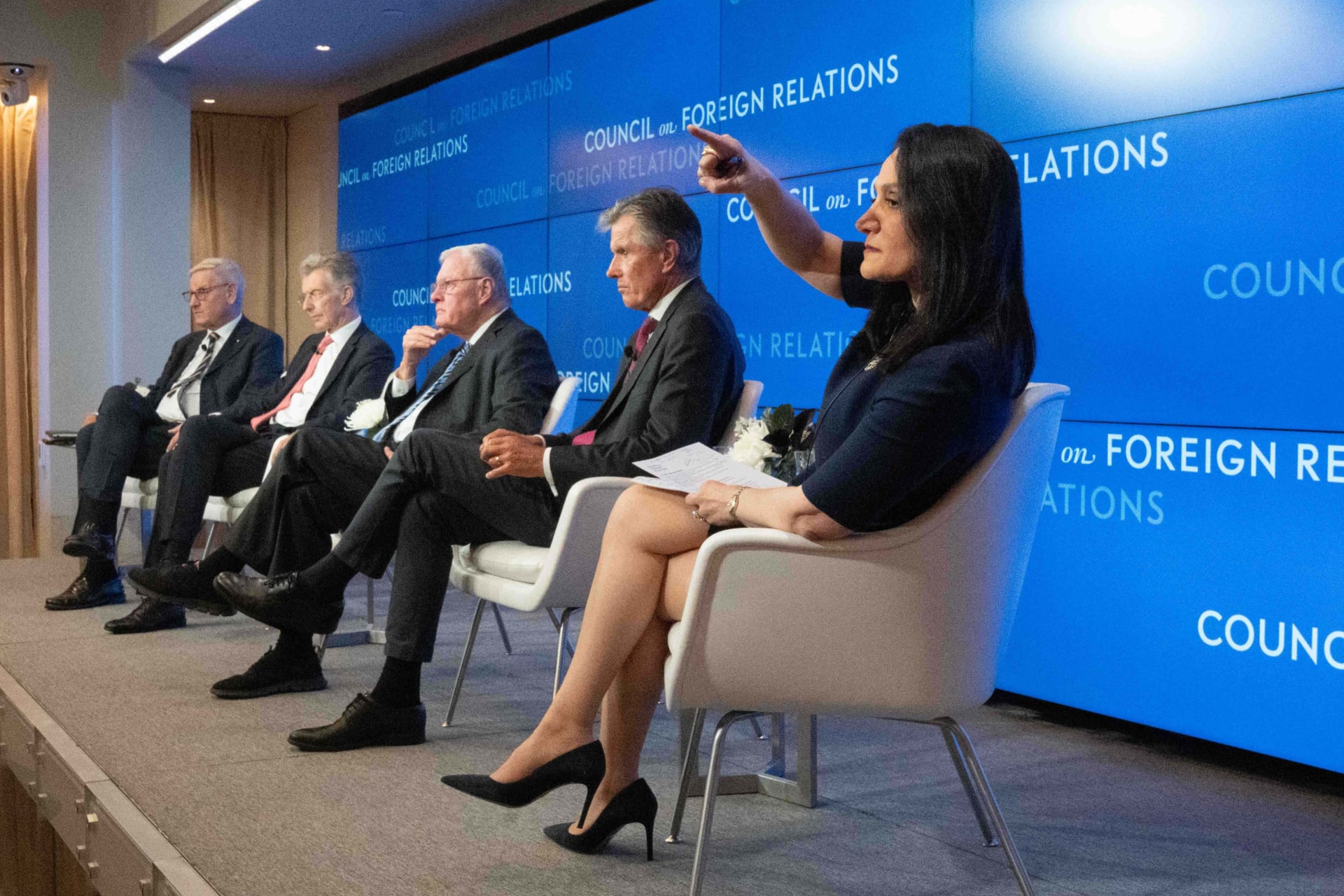
For two-and-a-half centuries, the United States has faced a challenging world. Some of its responses have bolstered U.S. interests and values. Others have not. CFR asked members of the Society for Historians of American Foreign Relations what they considered the best and worst U.S. foreign policy decisions. This event will discuss the results of the project. To mark the 250th anniversary of the U.S. declaration of independence, CFR is dedicating a year-long series of articles, videos, podcasts, events, and special projects that will reflect on two and a half centuries of U.S. foreign policy. Featuring bipartisan voices and expert contributors, the series explores the evolution of America’s role in the world and the strategic challenges that lie ahead. The CFR Young Professionals Briefing Series provides an opportunity for those early in their careers to engage with CFR. The briefings feature remarks by experts on critical global issues and lessons learned in their careers. These events are intended for individuals who have completed their undergraduate studies and have not yet reached the age of thirty to be eligible for CFR term membership. We are pleased to extend this invitation to you through the recommendation of a CFR member. For those attending virtually, log-in information and instructions on how to participate during the question-and-answer portion will be provided the evening before the event to those who register.
-
CFR experts assess the United States and Israel’s strikes on Iran, examining the implications for the region and U.S. policy. Ahead of the briefing, read analysis from Elliott Abrams, Max Boot, Steven A. Cook, Elisa Catalano Ewers, Linda Robinson, and Ray Takeyh on the impact of the February 28 operation.
-
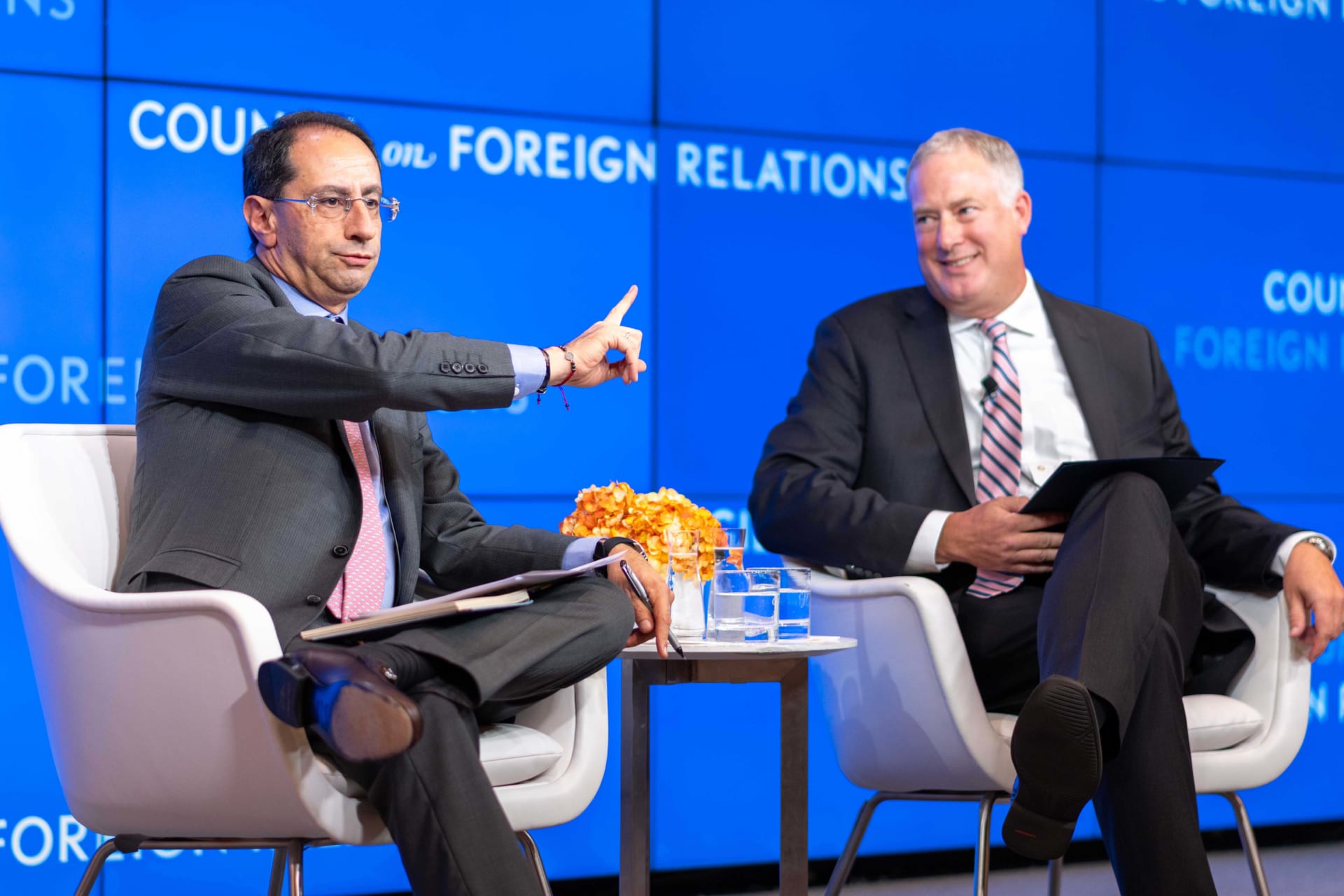
President and Chairman of EXIM Bank John Jovanovic discusses advancing the interests of American exporters and manufacturers abroad while securing domestic supply chains. Please note there is no virtual component to the meeting.
-
As the war in Ukraine enters its fifth year, the international context is changing rapidly, including the prospects for a negotiated settlement. Much is at stake, and it is essential that the challenges ahead be fully appreciated. Panelists will explore three critical issues for securing Ukraine's future: achieving a just and durable peace, ensuring its long-term security, and helping it rebuild and recover from the ravages of war. This event is part of the Council’s Special Initiative on Securing Ukraine’s Future which provides timely, informed analysis and practical policy recommendations for U.S. policymakers and the American public. Click here to view the full agenda. Please register for all the sessions you wish to attend. For those attending virtually, log-in information and instructions on how to participate during the question-and-answer portion will be provided the evening before the event to those who register. Members may bring a guest to this symposium. This event is part of the Wachenheim Center for Peace and Security which is made possible by the generous support of the Sue and Edgar Wachenheim Foundation.
-
CFR experts discuss the impact of the Supreme Court's decision on Friday and President Trump’s policy options with a deep dive into the legal aspects of the ruling and other authorities at the president's disposal. For additional resources on tariffs, read CFR polling conducted with Morning Consult, “What Americans Really Think About Trade and Tariffs.” BEHBEHANI: Welcome, everyone, to today’s Council on Foreign Relations briefing on tariffs, our second since the Supreme Court ruling on Friday. This will be a deep dive into the legal aspects of the ruling and other authorities at the president’s disposal. The contents of this discussion and Q&A will be on the record, and a recording will be posted online at the conclusion of this event. This briefing is a part of the Council’s ongoing mission to inform U.S. engagement with the world, work that also includes the analysis and resources posted across our channels including ForeignAffairs.com and CFR.org, where you’ll also find the results of recent polling CFR conducted with Morning Consult on what Americans really think about trade and tariffs. Let me now hand it off to Inu Manak, a senior fellow for international trade; and Jennifer Hillman, senior fellow for trade and international political economy who’s joining us in London. Over to you, Inu. MANAK: Thanks so much, Lilly. And thank you, everyone, for joining us this afternoon for this media briefing on trade and tariffs. On Friday, the Supreme Court struck down the sweeping tariffs that President Trump had imposed on most U.S. trading partners, starting with executive orders on Canada, Mexico, and China, the fentanyl orders; and then the reciprocal tariffs in a different executive order that relied on the International Economic Emergency Powers Act. By a vote of six to three, the justices ruled that the tariffs exceed the powers given to the president by Congress under IEEPA, and this means that he can no longer use IEEPA to levy tariffs. So there’s a lot to unpack in terms of what that ruling says, how the justices fell on a number of different issues, and we want to take the time to break that down. So, with that, I want to turn to Jennifer and ask you to sort of explain to us sort of what the central reasoning was of the Court in applying their ruling of striking down these tariffs. HILLMAN: Well, thank you very much. And I, too, am delighted to be here, so I welcome all of you joining us. You know, I think the good news for all the lawyers, if you will, is that this is a pretty clean and straightforward opinion. I mean, the bottom line is that the reasoning of the Court starts with the Constitution. And Article I, Section 8 of the Constitution gives the power to impose taxes and tariffs, and the power to regulate foreign commerce, to the Congress, not to the president. And therefore, the only way in which the president can impose tariffs ever is if the Congress has delegated that authority to the president in some way or in some form in legislation. So the question before the Court was simply a straightforward one: Did IEEPA—did the Congress when they enacted IEEPA, did they hand over tariff authority to the president? And you know, again, Chief Justice Roberts said very clearly in the opinion the answer to that question is no. And I’ll quote you just one line from the opinion. What he said is, “Our task today is to decide only whether”—and again, he’s speaking of a specific phrase in the statute—“the power to”—quote—“‘regulate’ importation”—end quote—“as granted to the president in IEEPA embraces the power to impose tariffs. Answer: It does not.” So what the Court did is simply look at the statute and say, what does the statute say? And the only part of the statute that the administration or anyone argued could even arguably apply is the part of the statute that gives the power to the president to regulate importation or exportation. And so, again, the question before the Court is, can you read that word “regulate” to mean tariff? And in the end, the Court said no. And I would add that, you know, the real basis for the Court’s determination in terms of saying, no, regulate does not mean tariff or tax is that they really did draw this line between what is a regulatory power and what is a taxing or tariff power. And they said that regulating means something very different from—you know, from tariffing or taxing, and that because the IEEPA statute does not use the word “tariff” or “duty” or have any other indicia or any other words that describe something like a tax, that it cannot be read to provide this tariff authority. So it’s a clean, straight-up answer of does IEEPA permit any tariffs at all ever, and the Court in essence said no. MANAK: Right. And you know, they did look at all the other verbs that were in the statute, right, and found that none of them said tariff or duty of any kind. So it really showed that they were looking at that clean statutory interpretation. But there’s another point here, too, and I kind of want to get your thoughts on this too, because Roberts invoked the major questions doctrine as well in writing his opinion, and that requires executive branch officials to identify sort of a clear congressional authorization when they seek to exercise some sort of major power that has some significant political or economic consequences. So could you kind of explain to us the reasoning here on major questions and then, also, why only three of the justices relied on this in that opinion? HILLMAN: So the major questions doctrine is something that has been to some degree codified, if you will, or at least described more specifically by the Supreme Court only in the most recent years. And it is, again, as you say, this doctrine that if it is something that involves a major question, major impact in terms of the U.S. economy, the Congress has to have been very clear about its delegation of that authority. And so the question before the Court as Roberts saw it in this opinion was, was it very clear that the Congress actually delegated tariff authority to the president in IEEPA, and obviously looked at the language and said, absolutely not, how could it possibly be clear if, you know, the Congress never even used the word “tariff’ or “duty” anywhere; put in no language about how you would determine how much is the duty, for how long would it be in place; no process for any comment or notice from anybody; that it doesn’t look like or read like any other tariff statute, so how could it possibly be clear that the Congress intended to give the president this big power to impose tariffs? So that was pretty much walking through the major questions doctrine to say just it’s not here. I mean, this is—there’s no doubt—nobody disputes that imposing this high tariffs across all goods from all countries is a major question, so there was no debate about that. You know, this is well beyond any of the other prior major questions doctrines. That was not the question. The question was, OK, then once you apply this doctrine, do you see this kind of clear indication? And the reason I think that the—that the three, if you will, liberal justices—I mean, Sotomayor and Ketanji Brown Jackson and Elena Kagan—did not include the major questions doctrine is two things. One, they started out by saying you don’t need it—you don’t need the major questions doctrine; just a straight normal statutory interpretation under any regular form of interpretation would get you to the result that this statute does not provide for tariffs, so you do not need to reach the major questions doctrine. That was their first argument. And secondly, I think they don’t want to embrace the major questions doctrine because it has been used in the past, again, by the conservative justices to strike down a lot of the initiatives that President Biden, President Obama, and others have invoked that would allow them to address things like climate change, or environmental measures, or health-care measures, or others. Again, Biden, again, had struck down his efforts to try to cancel student loans during COVID because of an argument that under major questions it was not clear that the Congress was giving that authority. A number of the powers to shut down coal-fired power, again, under the Clean Air Act, it was—it was ruled, no, you know, there’s not this clear delegation. So I think for some of the justices—and again, for many Democrats—they don’t like this major questions doctrine and they think it’s creating an unrealistic standard to expect the Congress to have anticipated all kinds of things that could come up every time they pass a piece of legislation, to specify every single time the statute can be used, how it can be used, when it can be used—that that’s really asking too much of the Congress; we won’t get there. And we certainly won’t get there with a lot of older laws that are not going to be updated or amended, you know, in the near term. And so I think there is in that sense a real reluctance to embrace in any fulsome way the major questions doctrine unless you really have to, and they said you don’t have to. MANAK: Yeah. I found that all very interesting. And I thought Justice Gorsuch’s opinion was really fascinating because it showed that there were disagreements in the reasoning, and not just with those justices that thought the ruling didn’t need to address major questions and that the statutory interpretation, as you mentioned, was enough, but also with the justices that invoked major questions for previous cases with less economic significance and didn’t do so in this instance. So I kind of want to turn a bit to the dissents, then, too, to unpack those, you know. So how did the justices come to a different conclusion than the majority opinion on this one? What were some of the things that you found and that could highlight for that? HILLMAN: Yeah. So, again, it was Justice Kavanaugh writing the dissent, joined by Justices Alito and Thomas—writing, I would say, the main dissent. And I think he started out by saying I don’t think you apply the major questions doctrine in this instance because he perceives that there is effectively a foreign affairs exception to the major questions doctrine, and that whenever the matter involves the foreign affairs that there should be great deference to the president; that you simply should not expect, you know, again, the Congress to have given out every little—you know, to have been very precise in their—in their statutory language; in general, basically saying that if it falls under this broad—what he would describe as a very broad umbrella of foreign affairs, as long as you’re under that foreign affairs umbrella that the president should be given significant discretion and significant deference, and that if you require the imposition of this major questions doctrine you’re not giving the president the deference that I think Justice Kavanaugh thinks he should have gotten. So a lot of his opinion was really all about saying, you know: This is different. This is foreign affairs. This is national security. This is exactly the area in which we should not be second-guessing the president. We should allow him to do what he has done in this instance because, again, it fits within this broader umbrella. MANAK: And he also mentioned something else that I thought was interesting where he talks about IEEPA’s power to block imports includes a range of options, right, so there’s the lesser tool of tariffs, that that should be allowed. And so I think this is really the idea that Trump talked about, too, in the press briefing—you know, basically, why would IEEPA allow him to ban trade but then not impose, like, a 1 percent tariff? Can you explain that, just like what’s the reasoning here? HILLMAN: Yeah. And this was an interesting one because it was actually even brought up during the oral argument, where during the oral argument the argument was made that you—you know, all of these other powers of IEEPA to nullify, to void, to block, to embargo, to do all of these things form this kind of doughnut, and then in the hole in the middle you have tariffs; why would you take out a tariff authority? And again, I think Justice Kavanaugh is addressing that issue in saying, you know, look, if you’re going to allow all these much harsher, you know, penalties, all of the—you know, to go all the way to embargoing imports or banning them altogether, why wouldn’t you allow this lesser power of tariffs to be imposed? That makes no sense that you have sort of two ends of a continuum and yet you don’t allow a power in the middle. I mean, I personally think that Justice Roberts did a very good job of answering that question in the majority opinion by saying tariffs are simply different in kind. You know, it is not a matter of degree and it is not a continuum; that tariffs, because they are taxes and involve revenue, you know, are simply different in kind in terms of what they do, and different in terms of where they fall in the Constitution. They fall as a straight-up power of the Congress, not any power of the president. There’s not even a hint of shared power with respect to tariffs; they are solely the power of the Congress. And therefore, they’re different in kind than these other authorities given under IEEPA. I would only personally add my own sense is, you know, I do think there’s also a big difference in saying that the IEEPA gives a power to regulate imports, to ban imports, to embargo imports, et cetera, because that still remains a power in the power of the president to decide when and what the embargo applies to. But when you think about tariffs, the decision about whether or not to import or not rests with the importer. I mean, if they’re going to choose to spend the 50 percent, you know, additional cost to bring something in with a 50 percent tariff, that is then giving the power to the private importer. It’s no longer a regulatory power by the government because it is not the government that is, in that sense, enforcing or controlling anymore. So, again, I think there is—there is reason to say that there is a distinction in kind. But that is clearly what the—what the Kavanaugh dissent was trying to say, is: No, they’re not. They’re just on a continuum, and that it doesn’t make sense to give the president only the sort of nuclear option without giving him something less than that. MANAK: Yeah. And I also found that really interesting. I thought he did a good job of explaining sort of why there wasn’t this continuum in that regard. And you know, there were other things that he addressed, too, that we saw in the—in the dissent as well, though, so a few other claims that were made, really Justice Thomas’ additional dissent and what he wrote there. So maybe could you tell us a little bit about that as well and those other issues. HILLMAN: So, yeah. So, yeah, Justice Thomas wrote his own dissent, you know, again, meaning no one else joined him in this, which to me I think was quite, quite striking, I mean, and went very, very far in the direction of saying there should be a very significant amount of power given over to the executive branch. What Thomas’ solo dissent really goes through is, again, among the other powers that the Constitution gives solely to the Congress is the power to legislate. Article I, Section 1 of the Constitution, you know, gives the Congress the power to pass all—to make all laws, to do all legislation. And what Thomas said is, yes, but that really means that the Congress can still delegate a lot of its authority, even its legislative authority, and that the only aspects that remain solely with the Congress are ones that he refers to as core legislative authorities, which is those that threaten life, liberty, or property. And again, he tries to justify this on the basis of a number of, you know, old historical texts. But I will say to me this is breaking really new ground. I mean, most people would say, you know, they don’t see anything in the Constitution that would suggest that somehow the powers of the Congress are limited to only those things related to life, liberty, or property. When the Constitution uses the word all legislation, you know, it has historically been presumed to mean all. But Thomas is clearly trying to start down this road of saying, you know, you can cut back significantly the amount of power that belongs to the Congress to only this narrow lane of life, liberty, and property, and everything else falls to the president. Obviously, he didn’t get any other justices on that opinion, but I think he’s putting down some markers. MANAK: Yeah. I thought it was a really interesting read and one where it seemed like he was saying that Congress can delegate its tariff powers away completely in his reasoning. But that’s not the majority view, certainly in what we saw in the ruling. So I guess maybe stepping back, if we were to, you know, make sense of all this in one big-picture way, and not just in terms of the page count—because this was a big ruling, and I think we all spent all of Friday combing through it, and again all weekend—if you’re just, you know, talking to someone and explaining to them, what should they take away from this? What’s the big takeaway at the end of reading those 170 pages and what it means for the Congress in particular? HILLMAN: Well, when I step away from it, I would say this is a huge victory for the Constitution of the United States. It’s a huge victory for the Congress. It’s a huge victory for the notion of a separation of powers. It’s a huge victory for the rule of law. I mean, it is, again, the Court saying that the Constitution still matter(s), and when the Constitution says tariff power belongs to the Congress that’s what it means. It means tariff power belongs only to the Congress. And so the fact that the president has already, you know, signed an executive order that says they will no longer collect any of these IEEPA duties—as of today they’re no longer collecting IEEPA duties—says to me that, you know, when the Congress—I’m sorry, when the Court speaks like this, very clearly, and makes it really clear—there’s no ambiguity in this decision; it is straight up you do not have the authority to impose tariffs under IEEPA ever—it to me is very important to say that there is still this notion of a separation between the powers of the Congress and the powers of the executive branch, and it is clearly still the Court saying and we, the Court, get to decide where that line is drawn between what is a power that the president has and what is a power that the Congress has; and we’ve drawn the line, and tariffs fall on the side of the line that belongs to the Congress. MANAK: And I guess importantly, you know, this decision only applies to IEEPA. So then what does it mean, stepping back, for trade policy overall? HILLMAN: Right. Right. So I will say, again, I think this is an extremely significant and important decision from a political, legal, constitutional separation-of-powers standard—very important, very significant. From a trade law standpoint not so much, because at the end of the day with respect to trade and tariff policies because the ruling here is a narrow one—you know, does IEEPA, just IEEPA, provide for tariffs—you know, it in the end of the day has a much more limited reach. And in this context that we’re sitting in with all of these tariffs on all of these goods all over the world, I think it is important to understand that the only thing that was eliminated by this decision is the tariffs that were applied pursuant to IEEPA. So left in place are all of the tariffs that have been applied under the national security statute Section 232. So that’s the 50 percent tariffs on steel and aluminum and a number of their—or their derivative products, 50 percent on copper. It’s the 25 percent on autos and auto parts. It’s the tariffs on wood, and underneath that kitchen vanities, and bathroom vanities, and other wooden furniture. Again, it’s—the whole series of those 232 tariffs remain in place. They’re not touched, not impacted in any way by this ruling of the Supreme Court. Similarly, the Section 301 tariffs that we’ve had since the first Trump administration on about $360 billion worth of goods being imported from China, those tariffs, again, are not touched by this IEEPA ruling. Nor would any future 232, or 301, or antidumping, or countervailing duty, or Section 201. So nothing in this opinion changes any of those other trade statutes, the way in which they’re implemented, the way in which the investigations are conducted under them. None of them are impacted by this IEEPA ruling. So in that sense from a trade standpoint a much more narrow decision. MANAK: And IEEPA itself was left untouched in other ways, right? So there are other applications for IEEPA that the president could essentially use for different actions entirely. HILLMAN: Yeah. And a part of me thinks that this may have been one of the reasons why the Court went down this very clean, you know, sort of just know there is no power to do tariffs, because one of the things that I think might have been very problematic is if they’d actually gone into IEEPA and started rendering an opinion that would try to define some of the prerequisites that are part of IEEPA. So, again, the president, whenever he invokes IEEPA, can only invoke IEEPA if he has made a declaration that there is a national emergency that has as its genesis outside of the United States, with that emergency being described as unusual and extraordinary—an unusual and extraordinary threat to the United States. And then whatever he does once he’s declared that emergency must deal with the particular emergency that he’s declared and nothing else. And so before the Court even in this IEEPA case was a lot of argument about can you really say that our trade deficit, which is one of the—one of the bases for a huge number of the IEEPA tariffs, is, in fact, you know, subject to that unusual and extraordinary test? If we—because we have been running a trade deficit in this country for fifty years in a row, every single quarter for fifty years. So, again, a big argument before the Court is: How can you describe that as unusual or extraordinary? An event that’s happened every single quarter for fifty years is not unusual and is not extraordinary. Ditto the fentanyl tariffs. There was a huge argument—so these were tariffs that were put on Canada, Mexico, and China in theory because they weren’t doing enough to deal with the fentanyl problem. But again, it begs the question before the Court: Well, what does a duty or putting a tariff on a T-shirt, or a teddy bear, or, you know, sort of anything else actually have to do with fentanyl, that that is not dealing with the issue? The Court, I think, did not want to go down that road, because as soon as you go down that road it also affects how the—how the Court would define unusual and extraordinary when it comes to imposing an embargo, when it comes to imposing sanctions, when it comes to imposing the other measures that are routinely imposed under IEEPA. I mean, IEEPA is routinely used when we impose sanctions. When Russia invades Crimea, we put on sanctions. We use IEEPA as that authority. Et cetera. So I think the Court wanted to make sure that the rest of IEEPA and the authority for the president to engage in those kind of emergency actions remained completely intact, and they achieved that. They did not make any effort to try to define any of these terms, or to put any guardrails around them, or to try to create any lines within IEEPA itself. And so in that sense I think the IEEPA statute really was left very much in place for what it has traditionally been used for. MANAK: And one other issue that the Court did not bring up was that of refunds, and this seems to be the big issue that a lot of folks are asking about. What is going to happen with all these refunds? Do we know anything yet, or are we still waiting for more information? HILLMAN: I don’t—I don’t—I personally don’t think we’re waiting for anything, and I think the Court did not have to address it. Again, what the Court said is just these IEEPA tariffs are illegal. And to me, then, you just revert to, then, what is the law? And the law to me is very well-established: Once a duty has been declared illegal, you are absolutely entitled to a refund because, again, the collection of the duty from the very beginning was never lawful. So it is an unlawful exaction of money, you know, from the importer of record. So to me, this is a really straightforward question. Yes, it will be hard, in the sense that there’s going to be a lot of requests, you know, for refunds. But there is a well-established process by the customs service to do these refunds. They’re going to end up going down two different lanes depending on what’s the status of the actual import. So, again, for all of the entries—so, again, just to back up and, you know, sort of see where we are, when any import comes into the United States right now the importer of record has to file a customs declaration that says, this is the good that I’m importing. This is its value. This is the amount of tariffs that I owe. And they put all of that into their customs declaration. And they pay the duty. And then Customs has up to 315, really 314 days is what they really generally use, to basically close the books, to check it all, to make sure did you really declare correctly, did you declare the right amount, did you pay the right amount of duties? So there is this period where the entry has come in, the goods are out there in the U.S. economy somewhere, but the books, the accounting, has not been finished. In customs parlance, this is called liquidating the entry. So during any of that period until the entry is liquidated, the importer also has the right to go back in and correct their declarations. So I think what you will see in the vast majority of cases is the importer of record is going to go in and say, I want to correct. This is, you know, a post-entry correction. I want to correct my entry. I made a mistake. I included IEEPA duties. There are no IEEPA duties. I’m correcting my record. And then Customs will liquidate the entry, and will see that too many duties were paid, and will have to immediately pay a refund with interest. And I think the vast majority of transactions, that’s what’s going to happen. If, on the other hand, the books have closed, the entry has been liquidated, the paperwork is done, it’s over, then you do have to formally protest. And you have 180 days from the time that the—that the entry was liquidated to protest. And you’re basically saying, Customs, you made a mistake. You charged me IEEPA duties. I don’t owe IEEPA duties. I want a refund. Those may be a little bit more complicated. And, again, it absolutely requires you to file a protest. But, again, importers are entitled to these refunds. Technically, when that happens, you know, Customs has to, what they call, re-liquidate the entry. But I think there is a lot of certainty there. The Justice Department, the Trump administration Justice Department, in cases before the Court of International Trade, said, we promise if these IEEPA duties are deemed to be illegal, we will allow reliquidations. We will not object to reliquidations. And we will pay refunds. So the Trump administration is on record in court pledging to the judges of the Court of International Trade that they would allow these reliquidations and that they would be paying refunds. So I think legally it is very straightforward and there’s no ambiguity. It’s now a matter of getting the kind of—just the mechanics working, and working as quickly as we can. MANAK: Great. So I’m going to sort of shift gears a bit to sort of the reaction to the ruling as well. But before I do that, just want to remind everyone, if you do have questions please do raise your hand, because we’ll make some time to get to as many questions as possible. So, Jennifer, Trump was quick to respond to the court ruling and put new tariffs in place. Announced new tariffs under Section 122. A different tariff statute that a lot of people had to quickly learn, and many of us had said is something that the president would definitely use if he had to revert back to something. So could you walk us a little bit through Section 122 of the Trade Act of 1974? What does this this law allow the president to do? What are some of the constraints around it? And is there a possibility that this may also face a legal challenge? HILLMAN: Yeah. I mean, thank you. I mean, part of it is I think to me it was not surprising that the president chose Section 122, because it is the only statute out there that would allow the president to impose duties on all goods from all countries in one go. All of the other tariff authorities that he could use—232, 301, 201, anti-dumping, countervailing duty—are going to be country specific or product specific, or both. And all of those statutes are going to require a fairly extensive investigation, findings of fact, hearings, and a whole lot of process. So they could not be done quickly. So the one statute that would allow this kind of quick across-the-board tariff is Section 122. So what it does—when 122 was drafted, you know, way back in the early ’70s, when, you know, as the United States was beginning the process of coming off of the gold standard. As many of us might remember, you know, the dollar used to be pegged to the value of gold. And we had a lot of, you know, bricks of gold at Fort Knox that when, ultimately, you know, anyone holding dollars wanted to exchange for gold, they could do that. When gold got very tight, Richard Nixon finally decided we can no longer do this and took the United States off of the gold standard. When we did that, then our currency was allowed to float. And when it was allowed to float, there was a concern that if there were to be a huge shift in the value of the dollar, you know, very quick depreciations of the dollar, or a significant balance—international balance of payments problems, given the pegging of the dollar, that there needed to be a remedy. And one of the ways in which you fight back, if you will, on these currency depreciations or on runs on the dollar is to stop imports. So Section 122 was drafted to say that if the president finds that there is a fundamental international payments problem facing the United States, and that fundamental international payments problem can come from, you know, a concern over an imminent, you know, crashing of the dollar, an imminent falling of the dollar, or from trade—I’m sorry, not trade—deficits, balance of payments deficits where the United States has trouble making its payments in dollar currency, or where we’re trying to get an international agreement around stabilizing exchange rates—if one of those three things is happening and there needs to be restraints on imports, including tariffs, the president is authorized to do them. So it’s a statute that comes out of kind of older history related to the dollar and the value of the dollar. It’s never been used because as long as the dollar has been floating, you know, many would say that, you know, you’re never going to need this. There’s sort of no such thing anymore as the same idea of—that we were—that we were in, you know, many years ago when the dollar—when the dollar was floating. So again, it’s an old statute, but they’ve clearly picked up on it. This is what they’ve done. They’ve announced—they’ve put out an executive order for a 10 percent tariff across the board on, again, all goods from all countries, except for a list of goods that they are allowed to take out that are items that are either not, you know, in significant supply in the United States, or are in other ways critical for supply chain management and other things. So they have excluded certain critical minerals, currency, metals and bullion, energy products, natural resources, you know, fertilizer, and then certain other agriculture products, beef, tomatoes, oranges, et cetera, pharmaceuticals. So, again, there’s a list of products that are exempted from this tariff. These were announced on Friday, shortly after the Supreme Court’s decision. The next day, the president posted on social media that it was not going to be a 10 percent across the board tariff, it was going to be 15 percent. That I know of, we’ve not yet seen an executive order implementing that 15 percent. So I don’t know whether we’re going to stay at the 10 percent which is—which, again, is in an executive order, or whether the president’s social media post is going to be realized and they’ll soon issue a new executive order raising the tariff. MANAK: Yeah, we’re still waiting to see that come through. I was checking the Federal Register. I had not seen anything yet. So waiting to see whether it’s 10 or 15 percent. One thing I will say about those exemptions too, they clearly track on exemptions that were already granted to the IEEPA tariffs, and some exemptions that were noted in the deals that were negotiated—both the frameworks and then the reciprocal trade agreements. HILLMAN: Yeah, and I should note, I mean, they, for example, exclude goods from Canada and Mexico if they meet the U.S., Mexico, Canada Agreement, the USMCA, rules of origin. Those are exempted. So, yes, you’re correct. I think that’s exactly where this list came from is the goods that were exempted from the IEEPA tariffs or were agreed upon in these deals to be exempted from the tariffs. That’s the list that is not going to have these new Section 122 tariffs applied. You asked about a challenge. You know, and this one to me—you know, again, I think you are hearing a lot of talk of people that may want to challenge these tariffs. I mean, obviously for the importers, you know, you can imagine that if you’re going to get your tariffs back—you’re going to get your refunds back from IEEPA, you might want to challenge for the same exact reason. So even if it takes a year to litigate the case, if at the end of the day you get all of your tariffs back again in the form of a refund, you know, there may be some value to the importers in doing that. There are others that I think want to litigate this case, again, to make this point about the separation of powers, and/or to make the point that the president cannot just invoke Section 122. He has to actually make the requisite factual findings. And for some, their view is you can’t make this finding, that the United States is currently experiencing a fundamental international payments problem. I mean, everybody else’s debt is denominated in dollars. I mean, we don’t have the same kind of problem that countries that are desperate to actually be able to exchange their currency for dollars—we don’t have that. We are the world’s primary currency. So there are some that would argue, you know, we—you know, the president has not and cannot make the required showing. And that therefore, this statute should be challenged because it, again, is the president, you know, bringing on powers that he does not have. You know, from my perspective as a lawyer, I think this is a harder case to litigate because it’s asking the court not just to read the statute and figure out whether the power is there. There’s no question there’s a power in 122, if it’s properly invoked, to impose tariffs. The issue is whether a court is going to second guess the president’s judgment that there is a fundamental international payments problem. And that’s what he’s declared. And the question is, I think the courts are going to be more deferential to the president with respect to that determination. MANAK: That’s an excellent point. And it is time limited, so 150 days might be something that companies are considering as well in the challenge, that this could be potentially over in that time period. I want to sort of turn to some of the participants who have their hands up. Maybe, Lilly, if you can help me figure out how to bring these folks online, that would be great. OPERATOR: We will take our first raised hand from Kelly Malone. Q: Hi. Thank you so much for taking the time today. The president and then, through Scott Bessent, has indicated that obviously 301s are going to be instigated for separate countries. Can you talk through how that might play out? Obviously, coming from a Canadian standpoint, what would Canada see in a 301 investigation? (Laughs.) But, you know, when you’re looking at this from a global 301 investigation standpoint. HILLMAN: Yeah. I mean, I do think I would not be surprised to see them initiate Section 301 investigations against basically all of the countries that we have these deals with, because I think they’re looking for a legal basis under which they could keep in place those deals, including the tariffs that were imposed under those deals. And the only basis on which they have to impose tariffs on, again, whether it’s Canada or whether it’s any of the other trading partners, is through some other authority, because the Section 122 tariffs are going to go away in 150 days. So, again, Section 301, just to review for everyone else, again, requires an investigation done by the United States Trade Representative’s Office. And there’s two roads within Section 301. One is what is referred to as the mandatory road, meaning you must take action if you find that your trading partner is violating the terms of a trade agreement that they have with the United States, and that that violation is burdening the United States. So, again, I think the vast majority of the agreements are not going to be down that road. They’re going to be down the other road, which referred to as the discretionary road, which is to say that, you know, there’s an investigation to determine whether or not any practices by any of our trading partners are unreasonable or discriminatory, and burden U.S. commerce. And if they make those findings, then, again, the president has the discretion to impose trade measures, including tariffs, on that trade partner. And, again, just to remind everyone, that is the authority that was used by the first Trump administration against China, where the finding was that China engaged in a number of intellectual property theft as well as technology transfers, you know, that were taking U.S. technology. To the result of, you know, causing a burden on U.S. commerce of $50 billion. The Trump administration started out by imposing tariffs on $50 billion worth of Chinese imports, and then China retaliated, and the whole thing escalated. But they used that core Section 301 finding and kept amending and amending and amending to get to the point where we are right now with tariffs on about $360 billion worth of goods from China. So it’s my understanding that that’s what they want. They want to get that grounded, you know, 301 determination against all of the significant trading partners where they can then amend it once it’s been found to be the core bedrock of a legal authority to impose tariffs. Then you—then you amend it, you change it over time so that it can adjust to the various things that may happen under a trade agreement, again, because we have to remember whatever the countries may or may not agree to in terms of a tariff level, the president does not have the authority on the U.S. side of the table to charge those tariffs unless he’s got a 301 investigation, you know, once the 122 tariffs expire. MANAK: Yeah, and I would just add for those looking for information on what might be in those 301 investigations I think the National Trade Estimates report is always a good guide to see what some of those unfair trade practices are that USTR is concerned about and has been bringing up for the last year now as the basis of some of the negotiations that have been ongoing as well. So let’s take another question from the audience. OPERATOR: We’ll take our next question from Sea Winter (sp). MANAK: Please go ahead. OPERATOR: They’ve lowered their hand. We’ll go to Caroline Atkinson next. Q: Hi. Thank you very much. Incredibly clear and helpful description. I’m not a trade expert so I particularly enjoyed it. Thank you. I have two questions. One is how do you place one of these 301 findings, and is it just something that can be done by USTR? It’s not something that is subject to a court ruling or anything like that. And then the second point is, is there any way that Congress has a role in what will be happening next or are all of the—is the administration able to continue to act under its—under previously given authorities? Thank you. MS. HILLMAN: Two excellent questions, so maybe I’ll take the second one first, which is the Congress’ role and, again, because I think at this point it’s a fairly, in some ways, contested issue. Clearly, the issue with respect to the existing statutes is not contested. I mean, the statutes are what they are. The president has the authorities that he has under those statutes. The issue always becomes did the president actually do both procedurally and substantively what the statute requires. So even on the Section 301—your sort of other question was can it be done by USTR or are the courts involved—I mean, the courts are involved in 301 if there is a challenge that says you didn’t do this right. Either you didn’t do the process, the procedure right, you didn’t respond to comments, you didn’t give enough opportunity, you didn’t actually listen to the comments, you didn’t take them on board, or, substantively, you know, 301 limits you to these findings and you didn’t make them or, you know, again, there was something that was wrong. The role for the Congress is an interesting one because I think whatever else we’ve seen is, you know, Congress is starting to try to find ways to push back on what the Trump administration has been doing. I think you saw that. I mean, the Senate three different times passed resolutions to try to get rid of one or more of the IEEPA tariffs by terminating the underlying emergency. You saw, again, pretty rarely, enough House Republicans break from the Trump administration and also vote in the House against one—you know, the tariffs being imposed on Canada. So you are starting to see the Congress kind of break away a little bit because, by and large, these tariffs are very unpopular and so they’re generating a lot of political pushback. You also are starting to see the Congress more and more say, we’ve got to restrain the president. We’ve got to rethink this approach where we hand over this authority and then don’t have enough ongoing say in it. And the third area where the Congress is increasingly saying, you know, we do have a role and you’re—and you’re not abiding by it is whether or not any of these deals that are being negotiated, do they have to be approved by the Congress. I mean, it used to be the case that, you know, trade agreements were supposed to be approved formally by the Congress. USMCA, you know, all of the various FTA agreements, all of them have gone through a significant congressional process to be adopted. And so the issue is these agreements that they’re negotiating, they’re not in that sense full-on free trade agreements but are they nonetheless agreements that will require some, you know, approval process through the Congress? And what you’re seeing is, you know, across the board the Democrats saying, oh, yes, they do require a formal agreement, you know, by the Congress and the—and the Republicans at this point are still more or less saying, no, the president can do these on his own. So I think the role of Congress is something to watch. There’s a lot of, you know, ideas out there to start amending these trade statutes in order to give back more power to the Congress over trade. In terms of 301, there are—there are requirements for reexaminations and for updating. But, by and large, the answer is once there’s been this fundamental finding of, you know, again, unfair discriminatory practices that burden U.S. Congress—commerce, I’m sorry—those 301 findings can hold. I mean, we’re seeing now that we’re still having these 301 tariffs applied to China even though that investigation was done in 2017. So, again, once they’re in place, there is—there is times at which they have to be reviewed. But, fundamentally, those tariffs can stay in place for a very significant amount of time. MS. MANAK: Thank you, Jennifer. And, you know, to round off the discussion on 301, too, I was looking back at previous investigations and typically they take from five months to a year. The China investigation started in August 2017, didn’t conclude until March 2018, so that was seven months for that one to play out. Now, Ambassador Greer said there would be expedited 301s so I would imagine within the next five months of that 122 tariff expiring we probably will have those 301s completed. But you’re right to point out about Congress as well having maybe some role. One thing I will add, and I encourage you all to take a look at our recent survey on what Americans think about trade where we found that a plurality of Americans think that the president should not be allowed to impose tariffs without approval from Congress, so there certainly is this desire for some sort of guardrail on that action and the growing concerns over affordability may sort of moderate what the president does on tariffs after this hundred fifty days is over. So let me just thank you, Jennifer, so much for taking your time to share with us today your thoughts on this really important issue. We all at CFR will be covering this in detail in the coming days, weeks, months, and years so please tune in. And let me turn it back to Lilly to close. BEHBEHANI: Thank you all for attending today’s media briefing. If you have any questions, please email communications at CFR.org, and I’ve put the report in the chat that Inu was talking about. It’s great. And as a reminder, this event was on the record and will be posted to our event shortly—our website shortly, excuse me. Thank you all. (END)
-
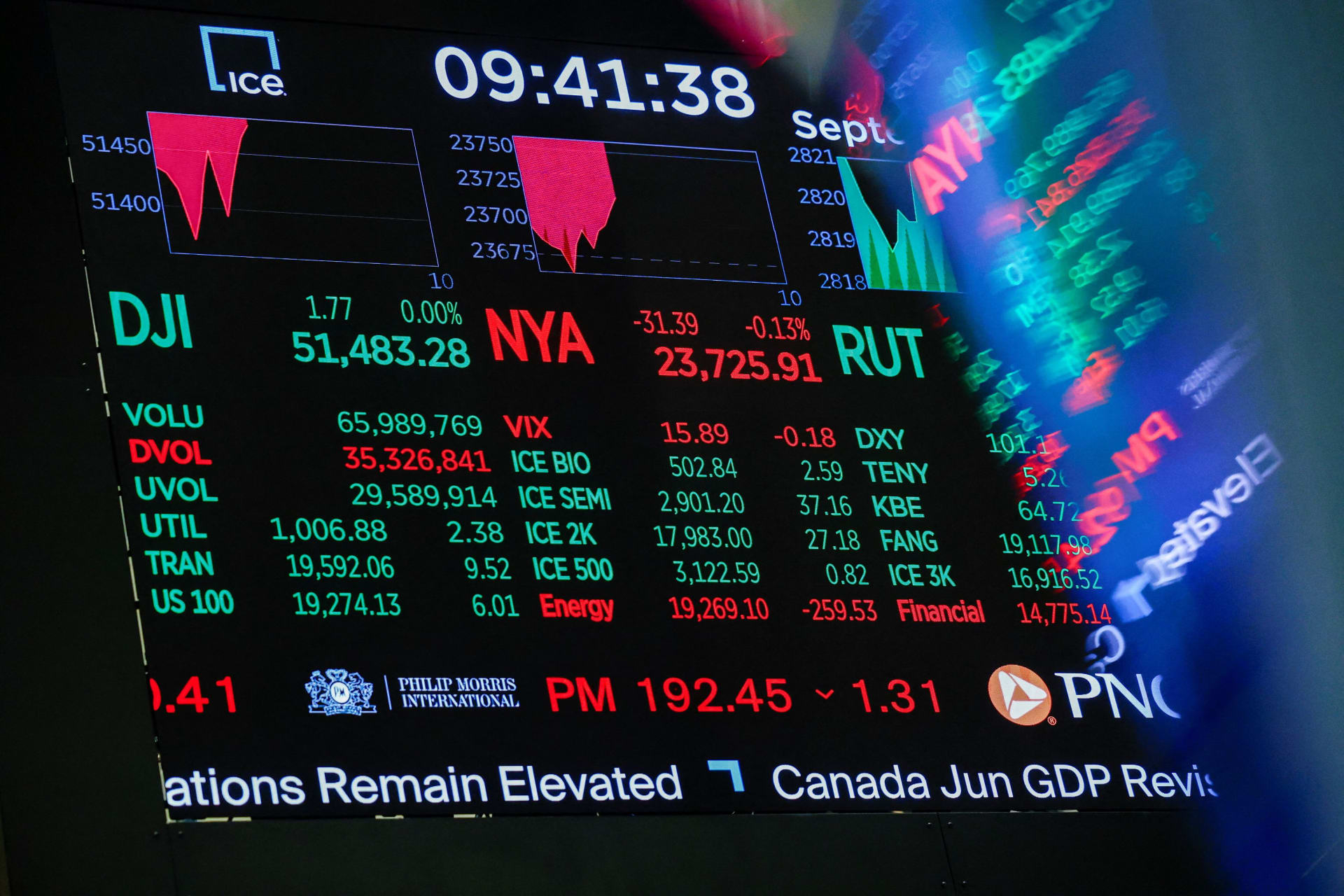
**Please note that this symposium will take place FULLY VIRTUALLY due to inclement weather.** This symposium will feature a fireside chat with Andrew Ross Sorkin on the lessons from the 1929 Wall Street crash, followed by a panel discussion on the present-day risk of a bubble, and how policy makers should respond. Copies of 1929: Inside the Greatest Crash in Wall Street History will be available for purchase during the symposium. The Robert B. Menschel Economics Symposium, presented by the Maurice R. Greenberg Center for Geoeconomic Studies,was established in 2014 and was made possible through a generous endowment gift from Robert B. Menschel while a senior director at Goldman Sachs. Since Menschel’s death in 2022, the symposium continues in his honor and memory. This symposium is also part of CFR’s America at 250 Series. To mark the 250th anniversary of the U.S. declaration of independence, CFR is dedicating a year-long series of articles, videos, podcasts, events, and special projects that will reflect on two and a half centuries of U.S. foreign policy. Featuring bipartisan voices and expert contributors, the series explores the evolution of America’s role in the world and the strategic challenges that lie ahead. Please register for all the sessions you wish to attend. Log-in information and instructions on how to participate during the question-and-answer portion will be provided the evening before the event to those who register. Members may bring a guest to this event.
-
It has been nearly a year since the Trump Administration informed Congress of its intent to fold some functions of the U.S. Agency of International Development (USAID) into the U.S. State Department, and to discontinue the rest. Please join our speakers, Andrew Natsios, executive professor at George H.W. Bush School of Government at Texas A&M University and former administrator at USAID, and Mark Dybul, senior advisor at Georgetown Center for Global Health Practice and Impact and former executive director at the Global Fund to Fight AIDS, Tuberculosis and Malaria for a discussion of the year without USAID, and what might come next on U.S. engagement on global health and international development.
-
CFR Experts discuss the Supreme Court's decision on President Trump's tariffs and what comes next. CHANG: Welcome to today’s Council on Foreign Relations media briefing on the Supreme Court’s ruling on tariffs.The contents of this discussion and Q&A will be on the record and a recording of this will be posted online at the conclusion of the discussion. This briefing is a part of the Council’s ongoing mission to inform U.S. engagement with the world, work that also includes the analysis and resources posted across our channels, including ForeignAffairs.com and CFR.org, where you will find the results of recent polling CFR conducted with Morning Consult on what Americans really think on tariffs. So I encourage you to go to CFR.org to see that piece, among others. Let me now hand off to Eddie Fishman, senior fellow and director of CFR’s Center for Geoeconomic Studies. Over to you, Eddie. FISHMAN: Thank you, Ben. And thank you all for getting on this call on relatively short notice. I know that the Supreme Court decision today really upended all of our calendars, but hopefully we can spend good time together over the next thirty minutes talking about the issue. So I’m going to just give a few comments at the top, and then I’m going to turn to my colleagues. And we’re all sort of going to discuss our own reactions to what happened. So I think, as everyone knows, earlier today the Supreme Court delivered a pretty clean decision saying that IEEPA, the International Emergency Economic Powers Act, does not authorize the president to impose tariffs. I think that’s a very important development because many of the tariffs that Trump has put in place are under IEEPA, although, as I think Brad probably will talk about, Section 232, which is a very important part of the tariffs as well, has not been affected by this decision. It sounds like what President Trump’s strategy is right now is invoking Section 122 of the Trade Act, which allows him to impose a 10 percent across-the-board tariff for 150 days. But critically, that can only stay in place for 150 days. And so the administration is very likely to use that time to initiate a multitude of additional investigations under Section 301 and 232 as well, to try to resurrect a lot of the tariffs that are in place now. The one point I’d like to make before I turn it over to Brad to talk about some of the implications from his angle, is that I think almost no matter what the administration does in terms of reviving these tariffs under different authorities, I think that this does represent a sea change for how President Trump conducts foreign policy. Over the last year, Trump has used tariffs not just as a way of raising revenue for the government or protecting domestic industries from foreign competition—which is obviously another use case of tariffs—he’s really used tariffs as a catch-all geoeconomic weapon. He’s used tariffs as a stand in for sanctions and export controls, a way to pressure countries to do what the United States wants from a foreign policy standpoint. This is what we’ve seen with secondary tariffs on India for buying Russian oil, or threatening tariffs on trading partners of Iran or Venezuela. That is no longer possible. He can no longer credibly threaten to impose tariffs at the stroke of a pen on a country because they’re not doing what he wants them to do. And I think this has really substantial implications, because no matter what happens with the 232s or 301s, they do take quite a bit of time to go through those investigations. And it’s not something he can just do at the drop of a hat. So I think this will very substantially change Trump’s foreign policy. I think it’s quite likely that it means that he starts using sanctions and export controls more than he has in the past, as opposed to tariffs. And I do have some concerns that it makes the use of military force more likely as well, because if Trump doesn’t have his favored tool, which is tariffs, at his disposal, other tools that he very clearly has authority over, like sanctions, like export controls, and like the use of military force, will become more attractive by comparison. So with that, Brad, I’ll turn it over to you. SETSER: Well, thanks, Eddie. I very much agree that this is an important decision that takes away the unique style which Trump has deployed tariffs in his second term, because it doesn’t—you know, the IEEPA statute, as Trump had interpreted it, had become a mechanism for putting tariffs at any rate on any country over a weekend. And so it had become this catch-all tool for leverage. All the other tools that are available limit the president’s flexibility in various ways. So Section 122 doesn’t allow the same scope for exemptions and exclusions. They have to be based on a balance of payments rationale. It’s limited to 15 percent. Not as threatening. And, at least in principle, it goes away after 150 days. Section 301, which is a(n) investigation into countries’ bad trade policies, requires an investigation. And it requires identifying the policies that you would like your trading partner to change. It can’t just be used because of an unrelated foreign policy issue. And Section 232, which is a sectoral tariff, at least in theory there has to be an investigation that shows—not just in theory; I mean, there has to be an investigation that lays the legal basis for arguing that imports in that sector are a threat to national security. So the timing, the cadence, of trade policy will change. *Correction: product categories may be exempted under Section 122 tariffs. I think the structure of the tariffs will also necessarily evolve. There are a set of countries that had substantial tariffs under the IEEPA authority, whether it was a reciprocal tariff or a fentanyl tariff, and those countries that had tariffs way above 10 percent right now will see those tariffs drop even if Section 122 is used to impose an across-the-board 10 percent tariff. Conversely, and I think this is going to be an important question to learn more about, there is the possibility of excluding countries that don’t contribute to a balance of payments problem from the Section 122 tariffs. It’s not clear if you can exclude products, so some of the electronics, some of the pharmaceuticals that have been coming in pretty close to tariff free may temporarily have higher tariffs. That’s, at least, a possibility. I think, you know, serious lawyers will be quickly commenting on that. And then it is possible that it may be difficult to exclude a country like Taiwan, which has a 20 percent tariff, but most of the chips that it produces and electronics it produces are coming in under an exclusion so the effective tariff is much lower. An across-the-board tariff—but Taiwan has a clear surplus with the U.S., a big global surplus. It’ll be interesting to see if you can exclude Taiwan or if some products from Taiwan will face a higher tariff temporarily. So I think there’s a lot of technicalities that are important here, and for many, many countries the reciprocal, the fentanyl tariffs, were the most important, but for some countries the Section 232 sectoral tariffs were equally or as important. That is certainly true for a big auto exporter because the auto 232 was a substantial 25 percent tariff on many countries. They got negotiated down to 15 (percent) for those that did deals, 10 (percent) for the U.K. Those countries like Korea, like Japan, they’re going to breathe a sigh of relief that the reciprocal tariff is gone but they are still under substantial tariff threats and I think that will influence how they view the maintenance of the various deals that have been struck. I would say the same is true with respect to Europe because of the importance of autos and also because there remains an open 232 investigation into pharmaceuticals, which is a huge European export, a huge Irish export, which currently isn’t tariffed but the ability to tariff is there. And then I think it’s significant to talk about how this impacts China because China, on one hand, had, after the Busan deal a 20 percent additional tariff on top of the, roughly, 10 percent effective tariff from Trump’s first term. That now goes down to 10 percent, which is actually 25 percent on a lot of tariffed products and zero on a lot of others. That 10 percent broad effective tariff will be topped up by the 122 10 percent, but the tariff on China will go back down to around 20 percent, which is, I think, significant because China is one of the tariff peaks. And I think it’ll be interesting to see if the Section 301 cases quickly go after China. There is a very strong legal basis for doing so. The 301 from Trump’s first term hasn’t been settled in a legal sense. The phase one deal was never implemented. So it is relatively straightforward to put new tariffs on China. Will those new tariffs just replicate the 122 10 percent after 150 days? Will they try to replicate the 20 percent? And how will China react if it is sort of singled out for additional tariff treatment the first 301 ahead of the Trump-Xi summit? I think these are sort of significant issues that the administration will be forced to clarify in relatively short order. FISHMAN: Thanks very much, Brad, for your always very insightful comments. I’ll now turn the floor over to my esteemed colleague Rebecca Patterson. PATTERSON: Thank you, Eddie. Thank you, Brad. I enjoyed hearing your comments, too. So I guess a couple things for me. One is kind of what do we know, what do we still not know, and, I mean, obviously, now we have the Supreme Court decision on IEEPA. The president doesn’t have the authority to levy tariffs under the Emergency Economic Powers Act. And we know from the press conference that new tariffs are coming, starting with the ones—the balance of payments, Section 122, in the coming days, followed by others. So we have clarity on some things. In terms of areas where I think there’s still a lot of uncertainty that is going to, I believe, continue to cause businesses to tread carefully, frankly, in the U.S. and overseas. One is that the Supreme Court did not mention refunds. That’s something President Trump was very vocally unhappy about during his press conference today. And he, the president, suggested that there could be years of litigation for refunds to come through. I think that is a significant amount of uncertainty. If companies don’t know when or if they’ll get their money back, how should they plan for new hiring, new business investment? So that’s one set of uncertainty that I look forward to having a little more color on, clarity on. Another issue that I think is important to keep watching is what does this mean for all of the agreements that have been put in place over the last year? My perspective would be that countries most likely are going to want to just keep their heads down, see what tariffs President Trump and the White House push forward in addition to the Section 122, which seems a certainty. But, you know, you have to look at things like Japan. In the last week, Commerce Secretary Lutnick announced that the first tranche of Japanese investment, $36 billion in three different U.S. companies. Do all those things still go forward? All this promised foreign direct investment into the United States, which is very important to support jobs in the United States, does that get slow walked? Is it happening on schedule? What happens if companies or countries decide to take a step back? So that’s another area I’m going to be watching pretty closely. And then I guess the third area, which is a little more tangential to what we learned today from the court, is USMCA. So we have another huge, huge trade negotiation going on this year, the review of USMCA, the former NAFTA agreement. That review is expected to be done, I believe, by July 1st. And talks have already started. They’re well underway. And there’s a question whether we get just a full renewal, a renewal with some changes, or if there is not a formal renewal, in which case this becomes basically a zombie deal and you have to have annual approval processes for it and, in theory, it could sunset after sixteen years. Now, to me, it feels like our three economies are so deeply integrated it’s almost hard to believe that anyone would let this deal lapse. But between now and then, and then, again, is going to be July, I can imagine we’ll have some drama in the negotiations. And that could create volatility and, again, feed into uncertainty. So I guess my bottom line is that even though we have gotten clarity today from the Supreme Court on the IEEPA tariffs, we’re far from having certainty on a broader basis on trade. And so while we are seeing the U.S. economy supported substantially by technology related investment in capex and wealth creation that’s happened through a stronger stock market, last year primarily from AI-related stocks, it’s a question today how much support are we going to get from business investment and hiring, given this lingering pool of issues that create uncertainty. So I would start with that. The last thing I’d say, just for everyone here, if you haven’t had a chance to see it yet, we, CFR, partnered with Morning Consult to do a quite in-depth poll looking at affordability issues in the United States, looking at trade issues in the United States. And to me personally, the biggest surprise was the lack of difference between the Democrat and Republicans answering the questions on how they felt about tariffs and affordability. I would recommend you take a look at the research note. There’s a lot of great data in it. But the fact that both parties, a plurality of respondents, saw tariffs as increasing their affordability challenges made me wonder if the administration might try to slow walk new tariffs to try to reduce that perception and help the Republican Party into the midterm. It remains to be seen, but I think that’s an important angle of this trade conversation, is that we do have an important midterm election getting closer by the day. CHANG: Rebecca, we put the link in the chat for everyone to that work that you just cited. PATTERSON: Great. Thank you. FISHMAN: Thanks so much, Rebecca. Really appreciate those thoughts. Chris, over to you. MCGUIRE: Thanks, Eddie. And thanks, Brad and Rebecca. So I wanted to pick up on the point that Eddie made at the top about how this is significant for economic statecraft design generally, which I very much agree to—agree with. Tariffs have been the go-to tool the administration for economic statecraft. They’ve been the easy button, and they have—you know, it’s a chainsaw that has a very significant impact on a lot of countries. But the impacts are also very broad, which makes them very coercive, but also inherently a little bit untargeted. I think it’s just important to realize that I don’t think this means that we’re just going back to an era of, you know, free trade or globalization. I think that the way that the administration sees those issues is not going to change. And they do have other tools at their disposal to effectuate their policy goals. And I very much agree with Eddie’s take at the top that I think it means that it’s likely that we will just see other tools used more so. In particular, I think export controls, also import controls that the administration hasn’t made great use of, but very much could, and sanctions could be used more liberally. Many of these are authorized under IEEPA, but it’s—I think it’s interesting that the decision was very, very clear that licenses are still permitted under IEEPA. It is fees that are not. And the president was explicit about his frustration with this. But the decision was unambiguous that this is—these are still permitted under IEEPA, and actually export controls are separately permitted under a separate statute as well, the Export Control Reform Act. So these controls are more specific, but they do—just to—it’s important for people to keep in mind, they give the administration, like, really massive leverage that, yes, you know, many countries and industries are very dependent on the U.S. market, hence the importance and effectiveness of tariffs as a coercive tool. But there—but countries are also very dependent on U.S. technologies. And they’re also very dependent on the U.S. dollar. And that dependence does, you know, retain the ability to use these. So I think that ultimately I could see this cutting three different ways. I could see the use of these tools, you know, in a kind of broad-based threats to kind of cut countries off from goods as just a kind of equivalently broad weapon. I could see specific threats being used to just influence countries on targeted things. And I could also see a pivot to, especially on the technology front, a move where there’s kind of a real structured regime where actually, you know, there’s a real give and take here, and that countries that are recipients of U.S. technology kind of do make promises on a lot of the economic statecraft fronts. And then that creates a more—kind of a permissive technology regime within a certain set of countries. I think that could be an interesting side effect here, and actually is in line with some of the things that OSTP Director Kratsios said in India just yesterday. So I think much to watch on that front. But I think we are kind of moving into a different era on the slate of these tools, and the secondary effects here will be really significant. There’s one last thing I’d say on China. I think it will be interesting to see—you know, obviously there’s the—President Trump also announced that he’s going to China in the end of March. Those negotiations, I imagine, will persist throughout the year. But what this also means, the ruling, is that if negotiations were to break down we’re not going to see threats of 100 percent tariffs again. What we would see is something else. And when the Chinese rare earth controls went into place, obviously the administration threatened tariffs. But the other thing that they threatened was export controls on critical U.S. software. And that was purposefully very ambiguous and very broad, because critical U.S. software could be anything. And U.S. software is in everything. So I think that’s a little bit of a teaser for where we could go in a world where we’re starting to just pivot to other tools as coercive instruments of statecraft and diplomacy. FISHMAN: Great. So I know we have a handful of questions that we’re happy to take. Does Lilly—do you—do you have who’s raising their hands? OPERATOR: We will take the first raised hand from Farooq Kathwari. Q: Can you hear me now? Yeah, OK. This Farooq Kathwari. I’m CEO of Ethan Allen. My question relates to south of the border. You know, most of our manufacturing is in the United States. Twenty years back we decided to supplement it by establishing manufacturing in Mexico and Honduras, major manufacturing. And now, and in the last few years, we have higher tariffs in Mexico than even in East Asia. How does this, what is now being discussed, going to impact south of the border? PATTESON: I mean, one—I’m sure my colleagues here have additional thoughts, but maybe I can just start off. I think one issue to keep an eye out on with the USMCA negotiations—so that’s separate from IEEPA—is right now the USMCA talks about rule of origin, what country something comes from. I think going forward one possible change that we’re hearing more discussion around is the company it originates from. So, for example, you mentioned Mexico, or Latin America more generally. If something is coming from there but the—but the part, let’s say, coming into the U.S. or the good coming into the U.S. is overseen by a company that originates in China, for example, that might be something that gets more attention than it had in the past. So that is one possible change that could affect how people are thinking about producing south of the border from the United States, that they might be looking more not just at location but also the supply chain, and the specific companies, and where those companies originate. So that is—that is one possible change I would keep an eye out on. But I’m not sure, Brad, Eddie, Chris, if you have other things you’d add to that. SETSER: And I’ll toss in a couple of things because I think—I think Mexico and Canada are one of the biggest sources of uncertainty about the new 122 tariffs that in principle are coming in. Mexico and Canada benefit from the USMCA exclusion, which exempted most—not all; certainly not autos, obviously for your company not all of your goods, I guess. But most of Mexican and Canadian imports were exempted from the reciprocal tariffs and the fentanyl tariffs, so the effective tariff on Mexico and Canada was well below 10 percent. I think it will be interesting to see if the administration maintains that exclusion or if it can maintain that exclusion under Section 122. With respect to Mexico in particular, our bilateral trade deficit with Mexico is now quite big. I don’t think that’s a problem. Mexico’s global trade is balanced. It’s just a function of the way supply chains have developed. But it is the case that there’s a big bilateral deficit. And if the bilateral deficit is defined to be part of the balance of payments imbalance, it would be a little strange to exclude Mexico from the 122 tariffs. Now, there may be legal avenues that allow that to happen, but to me that is the most important uncertainty. And then I think the next question becomes, well, does the 122 10 percent tariff go away after 150 days? During that 150 days, Mexico and Asia may be on pretty close to equal playing. But then for furniture, for example, would there be a furniture 232 that effectively replaces sectoral tariff, the interim balance of payments tariff? And under Section 232, the administration has complete discretion to adjust tariffs up or down inside that sector based on negotiations, deals, preferences, companies’ arguments. So I’d be watching very closely how the structure of tariffs with respect to Mexico evolves. And to Rebecca’s point, this is conceivably laying—you know, it’s the first part of the USMCA renegotiation and how the administration wants to play it. These are—to me, those are some of the most important questions that come up. How are those countries that had the least tariffs—not zero tariffs, but the least tariffs—under the reciprocal IEEPA tariffs going to fare under this new regime? FISHMAN: All right. Let’s go to the next question. OPERATOR: We will take the next question from Tracy Moran (sp). Q: Hello. Can you hear me? OK. Thank you. Well, you’ve already talked a little bit about the Section 122 tariff. I guess my question was whether or not it’s ever been tested, whether the president could revoke its use after five months and then reimpose it even without Congress extending it. SETSER: Incredibly good question. I don’t think so, but I’m not a lawyer. But some people are saying he could. FISHMAN: Yeah. This is—we don’t have a precedent for it. But I’m personally skeptical that that would be viable, but it is an—it is an important question and something to keep an eye out for. Technically, you know, after the 150 days you can’t renew it unless, you know, Congress supports it. But at the same time, could he revoke it beforehand and then reissue it later? TBD. OPERATOR: We will take the next question from Kelly Malone (sp). Q: Hi. So you had mentioned that 122 you might not be able to exempt products—you’d have to exempt a whole country. I am still waiting for a lot of those USMCA questions from the White House today. But it strikes me as interesting to think what would the impact be, say, on the United States having this 10 percent tariff. I think of the Midwest and Alberta’s oil. So if they’re unable to exempt products, do you think this will hold when you have potash, uranium, and oil all becoming 10 percent more expensive? SETSER: I can see Congress trying to find some capacity to grant exclusions for precisely that reason. I think you’ve just highlighted the centrality of that question. You, clearly, can’t exclude countries if they’re not contributing to the balance of payments problem. Beyond that, I think we’re going to find out. Maybe Eddie is—he’s a real lawyer. He will know. *Correction: product categories may be exempted under Section 122 tariffs. FISHMAN: Yeah. No, I don’t have much to say on that other than I do think that you’re hitting on something quite important where a true across-the-board tariff on a country like Canada is not viable from an economic standpoint in the United States. I think if there’s one important lesson about American economic statecraft over the last year it’s that the U.S. has quite a low pain tolerance for even small dips in the stock market or, certainly, inflation and cost of living as we approach a midterm election. So I would—I would imagine that a 10 percent tariff on oil coming in from Canada that is going to come into the U.S. anyway wouldn’t be a particularly politically popular thing in the United States. OPERATOR: Take the next question from Shri Shrivasan (ph). Q: Hi. I would like to just ask about what happens with places like India where they, you know, give all these concessions, and what’s going to happen with that? What do you think is going to happen with that? And this new 10 percent on top of whatever is there, is that—I mean, with Trump we have to often wait to see what’ll happen, but do we have time for that? And I just saw that Pritzker sent an $8.6 billion invoice on behalf of those citizens of Illinois to Trump. SETSER: Look, I actually think India is, relatively speaking, a winner, at least in the short run, because the—you know, first of all, there was the possibility this deal could break down and we go back to the 50 percent tariffs. Second of all, the new tariff was still going to be 18 (percent) and 10 (percent) is lower than that. You know, you have to adjust for exemptions and exclusions, but in some sense the deal for India in the short run got better, and then I think it would be difficult, for example, to launch a new 301 investigation targeting India after India has just done this deal. So the way I would think of it is that India negotiated the tariff down to 18 (percent) and they ended up getting a better deal at 10 (percent). FISHMAN: OK. I think we only have about a minute or two. So Brad and Chris, I wanted to see if either of you have any parting thoughts before we break. SETSER: I’ll just note that Bessent—Secretary Bessent said that he thought that the new tariff structure would replicate the revenue of the old tariff structure; there wouldn’t be a falloff in revenue. There is at least a possibility that in the next hundred and fifty days we would get more revenue if you did a broad 10 percent across-the-board tariff, which is undoubtedly the revenue maximizing tariff. Any exemption or exclusion makes it more politically tenable, but you’re giving up some of the revenue. And then I do think it is important to note that at the end of the hundred and fifty days it is extremely unlikely that we would end up with the exact same tariff structure that we had under IEEPA and the reciprocal tariffs. We may get the same amount of revenue, but it’s not going to be from the same set of products or the same set of—or from imports from the same set of countries. So there is going to be an evolution, and as my colleague Rebecca said, that itself is a bit of a source of uncertainty. MCGUIRE: Yeah, and I’d just say, especially on the China side, that just to note what most of the areas where we’d see the kind of most acute concern on Chinese products—things like EVs, things like legacy semiconductors, things like that—nothing changes on those fronts, right? Those are—those already have 301s. And I think that you’re probably going to see those expand out to a variety of products. Maybe on things like kitchen cabinets and stuff, it’s going to be—your 232s there are going to be a little more—a little more complicated. But I think on the China front they’re going to find a bunch of ways to kind of capture a large number of products and kind of modulate the tariff type. But I do think that the kind of longer-term trend here on economic statecraft tools is really one thing to look at. FISHMAN: I think the final point I’ll make, and then we can break, is if you listen to Trump’s remarks that he gave during the press conference earlier today, it was quite clear that he was kind of incredulous by the fact that the International Emergency Economic Powers Act does authorize him to completely cut off trade with a foreign country, but it doesn’t authorize him to charge a 10 percent tariff. In some ways, Trump—that makes sense, from a logical standpoint. But what—the important take home, I think, is that IEEPA does provide the president with quite sweeping authority on financial sanctions, on export controls, on import controls, as Chris mentioned. And so I don’t think by any means this is the end of Trump’s weaponization of economic power for foreign policy and economic gain, but it does mean that there will be a pivot, I believe, from one tool to others. OPERATOR: Thank you all for attending today’s media briefing. If you have any additional questions for our panelists or any other experts at CFR, please reach out to [email protected]. And, as a reminder, this event was on the record, and a recording and transcript will be posted on our website momentarily. Thank you, again. (END) This is an uncorrected transcript.
-
We invite you to a special screening of the documentary Atomic Echoes: Untold Stories From World War II, followed by a panel discussion on the lasting human, political, and global consequences of the atomic bombings on Hiroshima and Nagasaki. The film follows two friends connected by family histories on opposite sides of World War II as they explore the lasting trauma of the bombings. Through the stories of Japanese hibakusha (survivors of the atomic bombings) who endure lifelong health complications and psychological scars, alongside American atomic veterans who witnessed the aftermath and continue to struggle with radiation-related illnesses and PTSD, Atomic Echoes offers an examination of memory, responsibility, and the lasting impact of nuclear warfare. This program is made possible through the Daniel B. Poneman Meetings Program on Nuclear Energy, Climate, and National Security. Members may bring a guest to this event. Please note there is no virtual component to this meeting.
-
The workshop offers a unique opportunity for college and university faculty to engage directly with CFR experts, delve into pressing foreign policy issues, and strengthen their teaching of global affairs. Participants will explore the extensive teaching and research resources provided by CFR and Foreign Affairs, exchange ideas through expert-led briefings and hands-on policymaking simulations, and share innovative strategies and tools for bringing global issues into the classroom. The full agenda for the workshop can be found here.
-
Panelists discuss the new Council Special Report, America Revived: A Grand Strategy of Resolute Global Leadership, which defines U.S. vital national interests, summarizes the history of American grand strategy, outlines and critiques five grand strategy schools, and advances a new grand strategy—resolute global leadership—which combines military strength with international legitimacy. To mark the 250th anniversary of the U.S. declaration of independence, CFR is dedicating a year-long series of articles, videos, podcasts, events, and special projects that will reflect on two and a half centuries of U.S. foreign policy. Featuring bipartisan voices and expert contributors, the series explores the evolution of America’s role in the world and the strategic challenges that lie ahead. For those attending virtually, log-in information and instructions on how to participate during the question-and-answer portion will be provided the evening before the event to those who register.
-
In a collaboration between CFR and Open to Debate, panelists examine the legal, strategic, and diplomatic implications of potential U.S. control over limited territory in Greenland. Supporters argue that securing a defined U.S. presence could be a strategic necessity, given Greenland’s geographic position, critical infrastructure, and growing Arctic competition with China and Russia. Critics contend that any expansion of U.S. territorial control would risk violating international law, seriously damage relations with Denmark and NATO allies, and erode norms the United States relies on for global stability. As Arctic competition accelerates, would limited U.S. territorial control in Greenland strengthen American security—or ultimately weaken it? Open to Debate is the nation’s only nonpartisan, debate-driven media organization dedicated to bringing multiple viewpoints together for a constructive, balanced, respectful exchange of ideas. Open to Debate is a platform for intellectually curious and open-minded people to engage with others holding opposing views on complex issues.
-
Panelists discuss recent trends in federal science investment, how a range of organizations are helping bridge funding gaps, and what is needed to keep the United States at the forefront of global innovation. Established in 2024, the Norman E. Alexander Family M Foundation Forum on Science and Foreign Policy is an endowed annual event that explores the interconnections among the natural sciences, emerging technologies, and foreign policy and national security. It was made possible through the generosity of the Norman E. Alexander Family M Foundation in recognition of Mr. Alexander’s lifelong engagement in all manner of discourse for the betterment of humanity. The forum provides a unique platform for interdisciplinary knowledge-sharing among scientists and foreign policy experts.
-
The Council on Foreign Relations invites you to a special offsite event in partnership with the 9/11 Memorial & Museum. Twenty-five years after the September 11, 2001 attacks, the aftershocks of that day continue to shape U.S. foreign policy, domestic security, and global affairs. Panelists examine the lasting implications of 9/11 and the national security challenges facing the United States today. Drawing on their extensive experience in government and policy, the speakers offer a historical perspective as we approach the twenty-fifth anniversary of the attacks. The program will be preceded by a private tour of the Museum exclusively for CFR members.
-
Foreign Minister Gerapetritis discusses Greece’s approach to evolving U.S. foreign policy, NATO’s role in ensuring stability in the region, and Greece’s broader engagement across the Eastern Mediterranean and the Middle East.
-
Panelists discuss the state of the U.S. economy and consumer sentiment, the impact of innovation in advanced technologies on markets, and the global economic effects of geopolitical uncertainty. PATTERSON: Thank you very much. And thank you everyone for joining us today. I’m absolutely thrilled to have three amazing economists here joining me to discuss the outlook for the year ahead: Fabien Curto Millet, the chief economist at Google; Phil Mackintosh, chief economist and a senior vice president at Nasdaq; and certainly last but not least, Michelle Meyer, the chief economist at Mastercard Economics Institute. So, as you just heard, we’re going to spend the first thirty minutes, the four of us, having a conversation about the outlook. I should mention I’m Rebecca Patterson. I’m a senior fellow here at the Council on Foreign Relations. And I’ve spent the bulk of my now nearly thirty-year career studying the intersection of financial markets, economics, policy, and geopolitics. We’re going to talk for about a half hour, and then we’re going to open it up for your questions. And, as you heard, you can submit those verbally or in the chat by writing. And we’ll try to take as many of those as we can. Whatever is on your mind. And just finally, as a reminder, we are on the record today. So let’s jump right into it. I personally have found it interesting that just in the last several weeks we’ve seen, as expectations for the U.S. economy—and I’m going to be a little U.S.-centric here, because the U.S., for now, at least, is still the biggest economy in the world and has a dominant role driving the global economy. So with the U.S., we’ve seen economists’ expectations continue to tick higher. In December, the Bloomberg consensus was about 2 percent GDP growth for this year. Now it’s up to 2.3 percent GDP growth this year. I’m curious, from each of you—we’re just going to start at a high level here and then we’ll get into the weeds. But, at a high level, do you expect 2026 to be basically a repeat of 2025? Where we have resilient growth, maybe some decoupling with that growth with the labor market, a big AI and consumer factor driving it? Or is something different, in your mind, this year? And if there is something different, love to hear what it is. Michelle, let’s start with you. Again, let’s start high level and then we’ll drill down. MEYER: Sure. Of course. Thank you, Rebecca. And it’s a pleasure to be here and to spend some time talking to you all. It’s interesting in how you kicked off the conversation around the upper revisions, because they have been quite stark when you think about how forecasts have shifted so rapidly. And I think the big reason for that forecast change was actually what we experienced at the end of 2025. It was the handoff from a strong end of ’25 more so driving the forecast change in 2026 than it was around a considerable change in expectations for what will evolve in 2026. And a lot of that came from, frankly, what we witnessed firsthand at the institute is very strong consumer spending at the end of the year. It was a robust holiday shopping season. It was a persistent holiday shopping season. And it started early, but still managed to end on a powerful note. And I think that speaks to the fact that the consumer has continued to be engaged. You have the headlines that are scary. You have a lot of risks. But consumers have maintained their purchasing power. And they have, if anything, gained more choice and more flexibility in a world where technology is moving so quickly, particularly when it comes to AI. So I think that was a critical factor in terms of revising up 2026 forecast is simply what we learned at the end of ’25, which was in this economy that was continuing to move forward, and continuing to see that powerful spend. When you think about some of the drivers and the potential similarities of ’25 I think, you know, 2025—and Fabien will talk much more about this—but 2025 was certainly a year where we had a lot of dollars poured into the economy to invest in AI, to invest in the digitalization, to invest in technology. I think 2026 can perhaps be more a story of how we adapt, how we absorb that, how we try to actually take that technology, take those investments, and put it into the economy. And there’ll be a lot of learnings along the way in terms of how businesses embrace that, how consumers embrace that, and how the labor market evolves. And then I think in terms of the headlines in geopolitics, there was—I mean, when we were sitting here this time last year we were facing what felt like an impossible situation from forecasters. I think today we have learned more. We have learned how uncertainty shocks impact or don’t impact parts of the economy. So while uncertainty will remain high, while these headlines are not going away, I think that we’ve kind of found a new—a little bit of a new baseline in terms of how to evolve in a world where they is still going to be heightened uncertainty. PATTERSON: Fabien, Michelle mentioned AI and tech. And I think that’s probably a perfect segue to you, my friend. And I’m going to come back to you on AI specifically because it is the elephant in the room. But first, just high-level overview of the U.S. economy. What’s your perspective as we’re looking at the year ahead? CURTO MILLET: So you both rightly called out, Rebecca and Michelle, the upward revisions in sort of the forecast out there. It’s also nice to sort of open the bonnet and sort of look at the distribution underneath. And you’ve got some notable forecasters who are way ahead of consensus. So Goldman is at 2.9 percent at the moment for the year. And some people go higher. I think I saw Nomura at 3.1 (percent). So definitely you’ve seen that trend, and people are quite bullish. From where I stand, definitely sort of technology is going to remain a tailwind for us. So, you know, to take the big picture, we are living through the most exciting technological shift that I certainly have observed in my professional career as an economist. So AI is a sort of multiyear endeavor as a transformation. You look at serious scenarios, from the OECD to Goldman Sachs, and essentially the potential there is 10 percent uplift in U.S. GDP over a period of ten years-plus. The potential is not a guarantee, of course. If we sit on our hands it does not translate. But it just shows how tantalizing, you know, the price is. And in terms of immediately for next year how will this manifest, so there’s the AI CAPEX story that we can come back to that was a big feature of 2025. And there’s also what Michelle called out, which is more and more green shoots of productivity uplifts as the technology gets successfully implemented through the economy. So I’d be very excited in tracking all of that. Other things that I’ll be sort of watching closely. Consumer spending. So Michelle has called that out as being robust. Curious to see where that goes next year because, of course, about 68 percent of GDP right there is consumer spending. You know, we’ve had a lot of talk about a K-shaped economy. How will the distribution of spending evolve? And, of course, behind all of this, you still have stock market wealth and you have tech. So many, many roads lead to tech. And finally, Rebecca, you called out the labor market, where we had that low hire, low fire feature. Bit more of a melancholy note in the economy these last few years. Curious how that evolves as well. PATTERSON: Thank you. And, Phil, I feel like what Michelle and Fabien just said, where they intersect is your world. You know, at the Nasdaq you’re looking at the whole economy, of course, but obviously you have a great seat, a perch if you will, to understand how the equity market, how banking, IPOs, M&A, how all that feeds into this. And, again, we’re going to go a little more in the weeds in a minute, but let’s start first with what is your overview when you look at 2026? And anything you disagree with, with Fabien or Michelle, or you’d want to highlight? MACKINTOSH: I mean, it’s kind of interesting. It feels like this year all the economists are actually coalescing around consensus. No one’s calling for recession. And no one’s really calling for an inflation spike that’s going to require rates to go back up dramatically either. So largely I agree with guys on the call. What’s interesting is I think we will get slow but positive growth. Which is just like last year. But I think the reasons why are different. So in the past couple of years the real surprise has been that consumer. As Michelle said, they just kept spending and they kept spending much more than the inflation was actually accounting for. And part of that was because they had real wages growth. Now that we started to see the jobs situation kind of more normal, with one job for every one person looking, wages are slowing, companies are mentioning that to me and that’s sort of helping them manage their profit and loss and their margins. But I think that’s going to, to Fabien’s point, play out in the K-shaped economy, where you’ve got wealthy people with an income effect and sort of—you know, their houses are worth more, their shares are worth more. Low-income people are starting to see their wages growing more slowly. So I think that’s kind of turning into a bit of a headwind for the economy. But then the tailwind, I think AI has been a massive tailwind for the stock market for the last couple of years. I think in the last six months we’ve started to see it’s actually a tailwind for the economy as well. And when you look at the GDP growth last year, it was half consumer, half AI spend. And that’s basically it. So I think we’re starting to see AI spend coming through into the economy as a tailwind. And the other tailwind that I see is the Big Beautiful Bill. We’re going to get tax cuts. I mean, it’s an investment stimulus for companies as well. So kind of mixture, like, of headwinds and tailwinds, which I guess at the end gives us a positive result, but not necessarily a superheated economy. PATTERSON: Well, thank you for that. And while I get the narrative and it resonates, at the same time—and I’m sure we all would agree with this—it always makes you a little bit anxious when everyone agrees. When the consensus gets so far on one side of the boat it’s worth peering over the other side of the boat just to make sure there’s not a large shark or something equivalent there. Let’s go into each of these pieces because I think all of these are going to be so critical for the economy this year—the technology, the consumer, and, frankly, the financial markets, and how they’re all intersecting with each other. And, Fabien, I want to start with you and keep digging in a little bit on tech. So I think around the end of last year we’ve started in the financial market seeing a little bit more dispersion, people taking a bit of profit off some of the tech companies, and maybe because of this bullish consensus moving into other types of companies, stocks, looking for that cyclical tailwind to help, I think, at the margin. But there’s also some anxiety. Will we see that productivity boom? Will we see revenue generation from Ai quickly enough to help mitigate some of the fears about financing? So I’d love for you to share your perspective on, you know, the timing of the AI productivity. I know it’s an impossible question. And also maybe if you could a little bit the labor markets. I mean, the estimates for how much and how quickly this will affect the labor market are as diverse as the productivity hopes. So how do you see it playing out? CURTO MILLET: Thank you, Rebecca. Lots of questions there. PATTERSON: I know. I know. CURTO MILLET: Gosh. Let me try to unpack impact them as concisely as I can. So, as I mentioned, the AI transformation is a multiyear narrative arc. So it’s a powerful rewiring of the economy. So we’re in this for a while. But let’s sort of focus on the short term, AI CAPEX. So 2025—and Phil alluded to this already—so we had estimates that—you know, from Barclays—that half of GDP growth for the first half of a year was essentially AI CAPEX related. The Federal Reserve Bank of St. Louis looked at the first three quarters, I think this was just published this month, and found 40 percent was AI CAPEX related and adjacent. So in essence, very, very material estimates differ depending on how you adjust for imports, but we’re at that level of materiality. And looking forward this year, I saw Bridgewater Associates again forecasting that AI CAPEX will be half of GDP growth. So it’s a big deal. That’s in terms of just the investment. But then you’ve got how it’s flourishing across the economy. And we get to your question about productivity. So productivity takes time to unlock, because you need to move from point solutions to system solutions. We know that AI is transformative. If you look at the rigorous microeconomic studies in the literature you’ve got uplift on average of 24 percent in terms of productivity. And if you survey anecdotes of firms that are implementing—so, Goldman came to an average of 32 percent. So when it works, it works really well. But then adoption does take time, as I said. The Census Bureau, in terms of its latest reads, estimates that 17.7 percent of firms in the U.S. have adopted AI. So there’s a long way to go. And the other thing to bear in mind is that it’s very uneven adoption. So my CEO Sundar Pichai, said last year that we’re going to get AJI, artificial jagged intelligence, before we get AGI, artificial general intelligence. And, yes, if you look again at Census figures, the information sector is at 35 percent adoption. Construction is at 10 percent adoption. So you’ve got that unevenness across the economy. It’s going to be very interesting to see how it plays out. But then, turning to the labor market—which was also in your question—what is happening there? So in essence, lots of debates as to how jobs are going to be impacted. The right framework, generally speaking, here is jobs gained, jobs lost, jobs changed, you need to think about all three categories. And the lessons from history are broadly reassuring. I mean, technology is routinely a net creator of jobs. My excellent colleague James Manyika, when he was at the McKinsey Global Institute, he looked at—in detail at the personal computing transformation and found that it destroyed three and a half million jobs—typewriter manufacturing, you know, clerical jobs—but it created over nineteen million jobs in tasks like computer manufacturing, obviously, but also analyst positions. So you’ve got that sort of dynamic going. So the equilibrium to equilibrium effect is good. The transition is where you need to pay a lot of attention to make sure that people have the right skills to catch the upside. And so there’s a big, big discussion there. But so far not a lot of evidence of AI impacting jobs. Whether in the labor market as a whole—there’s a great Yale budget lab study from October last year that looked at that writ large—or even in pockets. People worry a lot about early career workers. My great colleague, Zanna Iscenko, and I put out a paper—self-advertorial here—a couple of weeks ago, via the Economic Innovation Group, where we looked at the early career worker story in particular, and found that that was basically macro driven as opposed to AI driven. So that’s the story to date, to catch us up. In the future, what will happen? Well, you know, reassurance in the past does not preclude vigilance in the future. So we need to be careful here. But in essence, I expect upside from new creation of work. And the faster it comes, the better. I’ll end with one stat. David Autor, the voice of the American worker, MIT professor, and actually a technology and society fellow at Google now. So he’s—one of the best stats in his work is that 60 percent of employment in the U.S. economy today is in roles that did not exist eighty years ago. So that’s how the economy changes. And that’s the dynamism that we need to favor so that things are OK. So I hope I answered all of the various things in your question, Rebecca. Happy to deep dive further later. PATTERSON: Thank you. No, that was perfect. Thank you, Fabien. And, Michelle, so we’re looking at a glass half-full from Fabien, although acknowledging that there’s still uncertainty out there. I want to take a glass half-empty for a minute. If we see AI hit a constraint this year—it could be energy supply, it could be access to needed materials other than energy, it could be a DeepSeek moment, a Chinese LLM that surprises people and just hurts the stock market, and so you see that wealth effect hurting the consumer. If you don’t have that tech-led push can the consumer hold up? Can we continue to see that 68 percent of the economy holding up so much of the growth, if we don’t have that tech piece of the puzzle? MEYER: Well, I think you have to consider the transmission from tech, from AI, into the consumer. So, yes, one of the paths is through the wealth effect, through the stock market. So the extent to which there is a turn in terms of the AI-driven wealth gains and stock market-led rally, there will be a shock to confidence. Consumers will see some of their wealth be reduced. Obviously the wealth effect, as we all know, happens with longer lags. It’s not immediate. But just from a perception, you could start to see consumers become a little bit more cautious, perhaps, if it proves to be persistent and they believe that it’s going to be, again, a more significant and lasting issue. So, yes, that’s something to watch. We always think about these linkages, in terms of what the market’s saying versus what the economy is saying, and how they will reinforce one another. But in terms of the technology, as Fabien mentioned, it is transformational. And it’s not going to go away overnight. And, if anything, it is clearly going to continue to move forward. And consumers are feeling that. They’re feeling that in terms of their ability to access information more quickly. They’re feeling an ability to shop more quickly, something that we spend a lot of time thinking about in terms of agentic commerce. They’re seeing it in the sense of, you know, having just in general more choice, more information. And all of that tends to be somewhat disinflationary, which is helpful for the stability of the economy and the path forward for technology. So I think consumers in general are, at the moment, benefiting from the implementation, adoption of AI. And I think it’s happening at an increasing rate across the globe. So, yes, obviously you have to pay attention to the rhetoric around it. You have to pay attention to markets in general, as you would with any type of market move that can matter for consumers. But I don’t know that the market moves will necessarily stop the transformation that’s happening from AI. The stats—I just jotted down a bunch them from Fabien—they’re meaningful. They’re amazing. And they’re long term. PATTERSON: Yeah. I mean, I am a party of one here so I’m not a good sample, but it I use LLMs every single day as a research tool. And they save me hours and hours a day. This last weekend in the snowstorm here in New York City I decided to install Claude Code and created my first website ever in my life in about ten minutes, which—it’s not very good, but the fact that I could even do it is kind of extraordinary. And I just keep wondering, as more and more people with all the different companies products start adopting them, how our lives are going to change. It reminds me of my first PalmPilot. Phil, I want to turn to you. And, you know, just as we have a pretty bullish consensus on the U.S. economy this year, there’s also a bullish consensus on the equity market. And we know they’re not the same thing, but they definitely influence each other. You know, if people are hopeful on growth they might buy more small cap stocks, for example. Or if people are bullish on equities, companies see their equity price go up, they might have more confidence to hire more people or invest more. So I would love to get your thought on, you know, the pushes and pulls on the markets this year, in terms of how you think about them with your economic forecasts, how you net them out. You know, on one hand we see a pretty radically, surprising interventionist, Republican president, who is going into different companies, threatening things, buying shares, changing how much buybacks a company could do. We haven’t—I don’t think anyone had that on their bingo card. At the same time, we also have a backdrop that’s, you know, deregulation, opening up that window for M&A and IPOs. Again, how do you net all those influences? And how does it affect your economic view? MACKINTOSH: Yeah. I mean, to be fair, the last three years has been all about the Nasdaq 100 index, and just U.S. large cap companies generally. They’ve completely thrashed every other kind of equity market. But in the last six months that is starting to change. And I think Fabien might have mentioned that, like, the valuations of those mag seven companies have started to sort of stall a little bit at the levels—not falling, but stalling at the levels they got to. And you’re starting to see a broadening out. Last year, Europe and Asian equities actually did even better than the Nasdaq 100, which I think a lot of people missed. So we’re starting to see a broadening of earnings growth and a broadening of performance across equities completely, which I think just speaks to an investor appetite for stocks kind of coming back as well. We’ve seen that in another area, which is in the IPO market. So we kind of struggled out of COVID in the IPO market. Last year was actually the second-best year for what I call the IPO pop. So that day-one return of the companies that come to public markets was better than it had been in any time since 2014 at least, except for that COVID year. So I think of that as sort of an investor appetite metric that’s really interesting. And obviously in 2026 there’s a lot of press about some really big private companies that might IPO, some centicorns, as people talked about. In terms of M&A, we’ve seen a little bit of an uptick in M&A. Partly that’s because of the pro-merger policies, I think, of the administration. Partly it’s lower rates. But actually it’s a lot of AI deals and it’s actually quite a lot of private equity buyouts. So it hasn’t been your typical M&A cycle across the whole economy yet. But that’s sort of helping—it always ends up helping when the M&A cycle picks up as well. The third part of your question, like, the policy shifts and all of the sort of, I guess, spanners that got thrown in the works last year, I think what’s interesting there, from my job talking to issuers and the companies that are listed on Nasdaq, really the most disruptive thing this year was tariffs. A lot of companies saw the news in April and the market sell off in April, and kind of panicked that maybe they wouldn’t be able to run their businesses anymore with tariffs as big as, you know, 15, 20, 25 percent. As the deals started to come through and as people really started to analyze their supply chains, though, we saw in the economic data tariffs didn’t matter anywhere near as much as people worried about. The stock markets recovered. And when I go and talk to customers, a lot of the time customers have realized, you know what? The only thing that gets tariffed is imported goods. So if I’m services company, I don’t really care at all. If I’m a mostly domestic producer of goods, it’s actually probably a good thing because it helps me against somebody who’s an importer. And so it’s not universal that everybody actually has been badly impacted by tariffs at all. And when I talk to companies, a lot of them say they’re looking at supply chains and trying to work out where to resource goods more cheaply, but when you look at the import data it’s really not changing that much at all. So it doesn’t look like companies have massively restructured their supply chains. There’s no countries—maybe Germany and Canada, which have kind of expensive labor on the fringe—that have started to see their exports fall to America. But really, all of those tariffs have been much more easy to digest than people thought. The one thing that does seem to come up when I’m talking to particularly smaller companies is tariffs have introduced a lot of complexity and a lot of uncertainty. And so a lot of them are kind of struggling to work out, like, how to plan through what’s happening now, what might happen in the next six months. And if you look at the jobs data, and you break it down by company size, pretty much as soon as the tariffs in April were announced you saw small companies net losing employees, even though the larger companies were net still hiring. So there may be a little bit of a dislocation where smaller companies have been particularly affected by things like tariffs, but actually the larger economy is much less affected than I think we all thought we would be go, back in April. PATTERSON: Yeah, I’ve seen similar data on the smaller companies. And, you know, they’re both—they overall—I’m generalizing, but they’re more exposed to tariffs than large companies. They also generally are more exposed to foreign-born labor. So they’ve gotten hit a couple ways. And have fewer resources to manage the complexity, which you mentioned. So that will definitely be an interesting one to watch this year when we have the Supreme Court decision on the reciprocal IEEPA tariffs. How hard is it to get refunds? What replaces them? So tariffs might not have been as bad as feared, but I don’t think the tariff uncertainty and question marks are gone yet. But we’ll cross our fingers that this year is an upside surprise on them, as it was last year. I want to switch gears now. We have a Federal Reserve meeting kicking off today. An announcement coming tomorrow. I think the broad consensus is that we’re not going to see any change in policy interest rates tomorrow. I think the Fed signaled that pretty clearly. But we still will have comments and a statement to parse. And I think there is a lot of attention on the Fed right now, if not for this meeting to both what will they do this year overall. Will we get—right now it’s not quite two twenty-five basis point cuts priced in, but almost two twenty-five basis point cuts priced in. Do we get the two cuts? Do they worry more about labor or inflation? Inflation is still quite a bit higher than they’d like. And then, I guess the second question—so you guys can pick and choose what you want to answer here—is Fed independence. We have a lot of possible risks around that this year. And how worried are you, or not, and why? So I’m going to play jump-ball on this. Actually, you know what? Fabien, I’m going to start with you, because I keep starting with Michelle. So let’s start with you on this one, and then we’ll go to Phil, and then Michelle on the Fed. CURTO MILLET: Super. So I don’t, as a rule, commentate on Fed policy. But they will zoom in on a sort of narrow aspect that’s interesting and to watch. Last year we had Austan Goolsbee of the Chicago Fed give a speech near here, at Stanford, where he remarked on something. He called it “weird and lovely” when it comes to productivity growth. Which is that when you look at productivity growth in the last couple of years, we are above the pre-COVID trend. And so, you see I’m going to bring this back to AI. Because the question, is this AI related? And so he looked at the productivity surge, industry by industry, and found that seven out of the top eight, you know, industries was at such a surge so were either AI or tech intensive. So seven to eight out of ten. And this is confirmed now. There was a paper by the Federal Reserve Bank of St. Louis in back in November, where they saw that industries with higher AI adoption are also showing higher productivity growth. Why am I mentioning this? Because if this is confirmed and enshrined, as I think it will be, it’s wonderful news for the economy and for the Fed. Because a central banker’s dream is growth without inflation. And so this is changing the engine of the economy, not pumping the gas to get more speed. And so let’s see this trend closely, but, you know, definitely the Fed is hoping that some of these supply constraints don’t bite as hard as they have in the past thanks to technology. PATTERSON: And I think that’s a great thing to watch for after tomorrow’s meeting, if we get any commentary on that. Yeah, Phil, anything you want to add on this? MACKINTOSH: I think if I was a Fed governor and I got to vote, I would be voting for at least two more cuts. And there’s probably three reasons why. One is, the small companies, again, have very high interest costs right now. If you look historically, going back two, three decades, they’re close to 50 percent of their EBIT is being paid in interest expense. It’s just starting to come down. But basically, a lot of small companies’ margins and profitability has been really hurt by these higher interest rates. So I think lower interest rates can be good for small companies, which is going to be good for employment. I think demographics is something that people don’t talk enough about. We are barely growing our population now. So compared to the ’70s, when we had three-odd kids per family and a lot of household formation and extensions and extra houses and, you know, people buying more white goods, there’s just not going to be that kind of demand going forward with an aging population. So look back at Japan in the ’90s. And I don’t want to say we’re exactly that, but that’s kind of the demographics that everybody in the developed world is in right now. So that’s not going to keep the economy hot on its own. And I think in terms of the inflation, I talked a little bit about how wages pressures have come down, which is good for companies. But I just don’t see an upside risk to inflation. And maybe even Fabien’s point is, you know, if we can have productivity we’re not going to have inflationary pressures, even if we have reasonably hot GDP growth. So personally I think there’s a good reason to get rates quite a lot lower. I would probably say three would be my vote, if I was a Fed governor. PATTERSON: All right. That’s great. I appreciate the thoughts on that. And, Michelle, anything you want to add briefly? I want to try to get two more quick questions in before we go to Q&A, but if you have a thought on the Fed we’d love to hear it. MEYER: I mean, I think it all is around where you assume that steady state equilibrium is. And if it is the case that we have productivity, we have low potential growth, we have disinflationary structural forces, then lowering interest rates can be quite credible and makes sense. So that’s what I’ll be listening to Fed Chair Powell tomorrow, is trying to get a better sense of where they think that star is, where they think they’re shooting towards, and how they’ll be able to determine whether or not they feel like they found it and have that optimal level of interest rates. Because they’re not cutting necessarily to provide easier monetary policy. They’re cutting to get to that optimal rate. PATTERSON: OK. Great. While we’re still on the Fed, I know one thing this administration has talked quite a lot about is having some sort of new Fed-Treasury accord. Secretary Bessent from the Treasury Department wants to see some reform of the Fed. And we know that Chairman Powell is going to step down as chair. We don’t know if he’ll leave the Fed completely in May. And we might get a new nominee to succeed him as early as this week. President Trump has suggested it’s coming shortly. I’m curious. You know, all of you are talking to a lot of corporations around the United States and even overseas. Borrowing costs. You know, Bessent’s North Star, if you will, is getting that ten-year yield lower. And we know that that’s a critically important yield for the housing market, because it anchors mortgage rates, for corporate borrowing, and certainly, as we try to finance our large and growing budget deficits here in the U.S. What are you hearing from your clients on borrowing costs? And how do you see that flowing through to the economy, or not? Am I making a mountain out of a molehill? Anyone who’d like to jump on that. MACKINTOSH: Let me start, because I get a lot of questions from corporates because they don’t understand how the federal government can be so blasé, I guess you’d say, about the level of deficit they’re running. And I think that’s because corporates have to borrow money. And they realize that their leverage is really important and they can’t just increase taxes to cover it. But the corporates have been kind of wrong for a long time, right? I mean, you look at a lot of economies around the world—Japan stands out, but even some of the European economies—you can keep borrowing as long as you can control your interest rates and you can grow your GDP. So as a country, like, being able to afford debt and deficits is different than for companies. PATTERSON: Anyone else want to jump on that? Otherwise real quickly I’d love to turn to the global economy. So we’ve—again, we’ve been quite U.S.-centric, I think for good reason, so far today. But I don’t want to ignore the rest of the world. Again, the global GDP picture is looking decent this year as well. We’re expecting some stimulus from China. We are seeing more infrastructure and defense spending coming out of Europe. Most of the other emerging markets are looking decent, in some cases because of AI exports. Any concerns you have? Or do you think it’s pretty smooth sailing when we look at the rest of the world in 2026? MEYER: Well, I can jump in. I mean, I think it’d be nice to say it’s all smooth sailing, but obviously we have to stay really vigilant here as we think about all these different dynamics. So, yes, I think the baseline is, as we talked about, somewhat comparable to last year in that we will continue to see expansion, we will continue to see resilience. And that’s what we’ve seen for the past few years. But, obviously, we have to be on watch. I think you alluded to one that’s important, which is fiscal tailwinds. You are seeing that certainly when you think about China and supporting the domestic economy, being really mindful about bringing a new type of consumption, a new type of domestic growth. Germany expanding its fiscal spending, what that means for the longer term, but certainly even what it means for this year. And then around technology and the race to adapt and invest in technology, it’s not happening at an even pace, as I’m sure Fabien will talk about more. And that’s going to also see some real differentials across the globe. Trade will be another one. How do we consider—you know, we’re just getting started—we just got started last year in terms of the trade realignment. That will continue into this year, and it will continue thereafter. So how does that show up in terms of relative growth, where some of the acceleration or deceleration might be based off of how supply chains move? PATTERSON: Fabien, from a technology perspective, from your seat are there any countries you’re trying to keep a closer eye on than others in terms of technology outside the United States? CURTO MILLET: I mean, obviously all eyes outside the United States are on China, with the sort of AI race that’s, you know, in full swing. Demis Hassabis , our excellent CEO of Google DeepMind—so recently, I think it was with CNBC, it was a podcast, where he said that China is actually closer to the U.S. frontier than is generally anticipated, maybe just a few months behind. But being closer to the frontier you have to take that with a pinch of salt, because imitation is easier than, you know, pushing the frontier forward. And that we have not yet seen evidence from China of that ability to push the frontier forward. Nevertheless, closer on the heels than many anticipated. So, you know, DeepSeek, everybody paid attention to that. But if you zoom out from tech, I mean, China is a powerhouse, right? You look at—the World Intellectual Property Organization has this great index of a global innovation index, which looks at innovation in the round. So not just outputs, patents, et cetera, but also inputs into the innovation process. China was forty-third in 2010. It’s now overtaken Germany, and it’s now in position ten. And just for context, the U.S. is in position three. So, I mean, they’ve got a rocket booster there. So definitely U.S. policy will need to keep, you know, China, because the rearview mirror shows them as large and growing. PATTERSON: Thank you. I’m going to pause us here and ask my CFR colleague to just remind our viewers, listeners how to ask questions, and see if we have any questions in the queue at this point. Otherwise, I have lots more on my mind. OPERATOR: (Gives queuing instructions.) We will take the first question from Peter Trooboff. PATTERSON: Hi, Peter. I think your mute might be on. OPERATOR: Mr. Trooboff, please accept the unmute now prompt. Looks like we’re having technical difficulty with that line. We’ll take the next question as a written question: How do you see the GENIUS Act affecting the payment space? What is your outlook for growth and innovation in crypto and stablecoin, while still protecting the U.S. financial system? PATTERSON: Michelle, would you like to kick us off on that one? MEYER: Sure. So it’s obviously something that, at Mastercard, we spend a lot of time thinking about in terms of the digitalization of the payment space. And I think the general view is the more that we can digitize it, the better we will be as a global economy. The more that we can enhance and support financial inclusion, the better we will be. So, you know, I think across the board there’s a lot of innovation happening in this space. There’s a lot of thought and work being done in terms of how to expand access to credit, how to expand access to overall payments, particularly digital payments. And, ultimately, that leads to more growth, greater growth, broader growth. So in general, it’s a net positive in terms of supporting more liquidity and growth in the economy. PATTERSON: Maybe I can take a little bit of the glass half-empty side, just for completeness’ sake if nothing else. But when I think about the GENIUS Act, and I think about what we’ve gotten and where we’re going, maybe two quick comments. One is that while I think having any regulatory guardrails is incredibly helpful, protecting consumers, letting people just know what the rules of the road are—so that’s good news—you know, there are still some questions around the degree of regulatory safeguards. Do we have enough in place at this point? And I think you’ll hear different people with different views on that. I think another interesting angle of this gets back to those borrowing costs and managing deficits. And, you know, the greater the adoption we see of a specific type of crypto, called stablecoin, which just mimics, in the United States’ case, the basic one is the dollar of stablecoins, who are mimicking the value of the dollar. And doing that largely by having risk free short-term government assets, T-bills, et cetera. And their hope is that by getting more adoption of stablecoin you’ll have more demand for these short-term treasury instruments. And that can help, all else equal, in terms of financing the deficit and keeping borrowing costs low. Of course, these are all short-end instruments, but they’re seen as part of a solution. Also protecting dollar dominance globally if you can have a dollar stablecoin out there in the world. And there are places that would rather have dollars than their own local currency, or have it for other reasons, that could also increase adoption. Which, again, would help on the budget side. One last thing I’m watching is, do some of these companies that are offering some of these digital assets—do they get access to the Fed window? How are they categorized by regulators? Do they have to play by the same rules as the banks, or slightly different rules? And if they get into trouble, do they get bailed out by the Fed? And I think that’s something to watch because as these assets get bigger and bigger and more integrated with the traditional banking system, there’s a greater risk of actual contagion. When FTX, Sam Bankman-Fried, happened a few years ago there was almost no contagion because it was still pretty siloed. And I think that’s quickly changing. So the contagion channel becomes something more important to watch as these things become more mainstream and more developed. I don’t know, Phil or Fabien, if either of you had thoughts you wanted to share on this. Otherwise, we can go to the next question. OK. CURTO MILLET: Nothing to add. I think you guys have covered it super well. PATTERSON: OK. CFR folks, do we have another question at this time? OPERATOR: We will take the next question as a written question from Frank Brown at General Atlantic, who asks: How do you see potential rebuild of Ukraine and Gaza impacting the global economy in the near to midterm? PATTERSON: Well, I’m happy to take a lead on that. You know, we have no idea on timing. And we have no idea what the settlement—I’d love to say peace, but I think that’s optimistic—what the settlement could look like. And what it looks like I think will give us a lot of insight into what the rebuild looks like, right? Is Russia allowed back into the global financial system? Are sanctions lifted? How much energy are they allowed to export over what time frame, for example? Is this going to be U.S. driven? How much will Europe have a role? So there’s, to me, more questions than answers in terms of the reconstruction of Ukraine, both the timing, who does it, and what are the conditions under which it happens, where the money comes from. That said, we know there’s going to be a huge amount of reconstruction ahead. And, all else equal, it makes me continue to be modestly bullish on the upside in terms of infrastructure spend, fiscal spend out of Europe. Now, the question and the challenge with that, of course, is what fiscal space? You know, Germany has quite a bit of fiscal space right now, but we’ve seen the—you know, the baby Liz Truss fiscal crisis moments out of France over the last year or so. We saw them a little bit last week in Japan. Of course, it all kicked off in 2022 in the U.K. So for the countries with less fiscal space, if there is a Europe push to reconstruct, where is the money coming from? How is it financed? How is it absorbed by financial markets? So I’m optimistic that it’s going to be a big stimulus for Europe but depending on how it’s financed I think we have to be a little careful how easily the bond markets absorb it. I don’t know if any of my colleagues here on the webinar have anything to add. I know you all probably are not focusing on Ukraine reconstruction as much as some other economists out there, but in case you have been talking to companies that might be involved. MACKINTOSH: I mean, my view on all this—I mean, there’s so many risks out there that we haven’t talked about, it kind of goes completely against how we started talking this afternoon. Like, everyone’s got a consensus. I think everyone’s also aware that there are lots of risks. But what is possible is not necessarily what’s probable. And to your point, Rebecca, like, in the next twelve months, like, this might not actually happen for twenty-four, or thirty-six, or—like, we just don’t know so many things. And so I think generally, at least the economists that I get to read, aren’t looking far enough ahead to start thinking about that because it’s not necessarily immediate enough or probable enough to start factoring into models. PATTERSON: No, I think that’s a great point, Phil. And, you know, when I’m talking to companies around the world, more of the questions I’m getting—some are on the year ahead, but an equal number are on if we’re making a strategic investment for the success of our firm down the road, how do we get through the noise? What should we be focusing on? And that takes me back to a point, Phil, you made earlier on demographics. It takes me, Fabien, to what you’re talking about with technology. Michelle, it takes me to who has consumers. So will the Chinese consumer ever recover, or do we need a complete sea change in Chinese policy? Fabien, will technology be dispersed broadly around the world, or is it winners and losers, and if you don’t have AI and AI adoption you’re left behind? And, Phil, to your point, you know, if you are a declining-population country without immigration, you’re even more dependent on that technology or something to boost productivity. I’d be curious, I’m sure you all are looking out beyond 2026. Let me start with what I think is an easier one, so is the U.S. still going to be the relative winner, the exceptional one, in five years’ time? When you think about, we have the technology, demographics aren’t as bad as some places but they’re not looking great these days, we do have the debt overhang. Are we still the nicest house on the block three to five years out? MACKINTOSH: I think that’s probably the right way to look at it. What’s interesting—I mean, the reason the Nasdaq 100 has out-performed so many other equity markets in the world is a lot of the AI technology and IP and build is coming from American companies. And so I think that’s going to help America going forward. There is a few companies in Asia—I mean, Taiwan Semiconductor is obviously a classic example that is exposed to AI and is not an American company. But we have so much more of the intellectual property, even Fabien talking about like whether we’re ahead of the models from coming out of China or not. So I think that’s going to help us going forward. To your point, you can’t stop the demographics but you can improve the productivity. And AI is probably one of the better ways to do that. CURTO MILLET: I mean, jumping on this since I heard AI. So I’m bullish on America. I mean, we’re at the frontier. We have the talent. But we need to play our cards right. I mean, you know, AI is not something that just falls from the sky like manna from heaven. You need to actually take deliberate actions for it to happen. And those deliberate actions are an all-of-government affair, from energy policy to, you know, supporting people through training and the transition. And the competition is certainly, as I mentioned, hot on the heels. Research and development, for example, China is now out-investing us. And R&D is something that has huge multiplier returns. I’m thinking of research by Ben Jones over at Northwestern. There’s a multiplier effect of 5X. It’s money very well spent. And for the first time, you know, China is outspending us on something like that. So let’s be, you know, very, very careful, because we have, you know, all the cards in our hands, but they will need to be played right as a society. PATTERSON: Yeah. I couldn’t agree with you more. I mean, I think there’s a lot of good things going on right now, AI being pretty much the top of my list. But then, even if we want to have stronger border controls, if we’re making it harder to get skilled immigrants in the country, or maybe it’s not harder but we’re having a chilling effect on them wanting to come here right now, that’s not working in our favor. Taking money away from research and development at universities that tend to be commercialized and monetized, and leading to some of that innovation, that works against us as well. And the job training. We don’t know when and how many jobs will be displaced by AI. I completely agree with you, Fabien, that over the longer term we will be net positive jobs. But in that interim period, how are we training it? Who’s training? I think your company is doing quite a lot of training. And I’ve seen others too. The government has announced that it has a million job training program. I think it was an executive order last year. But I haven’t seen anything rolled out yet. And I hope—if someone’s on this call and knows something happening, let me know. Because I’m trying to follow it and I haven’t seen anything happen yet on that. So I think there is a positive story here but, as you said, it’s not risk free. And we shouldn’t take anything for granted. Michelle, longer-term view from you. MEYER: Yeah. I would say, in addition to the sentiment already shared, it would also be around having, you know, a healthy and open financial system, capital markets, a flow of credit, to help make sure that we have continued liquidity that’s smartly regulated. You know, and then I suppose another question, particularly in terms of how the markets think about it, is the role of the dollar going forward as well. U.S. is the reserve currency. That helps us tremendously in terms of keeping borrowing costs low and keeping us quite relevant and dominant when it comes to global financial flows. So keeping an eye on that, monitoring where that goes over the next few years, will be absolutely critical as well. PATTERSON: Yeah. I mean, the dollar is definitely one of the reasons we saw a lot of overseas markets outperforming the United States equity market, and, frankly, bond market, last year. Some markets gained even without taking the dollar and foreign exchange into account, but that was definitely a kicker for some markets. I think we have another question on the line, if I can go back to my CFR colleagues. OPERATOR: We will take the next question as a written question from Paul Maidment, who asks: How vulnerable is the U.S. economy to AI-powered cyberattacks? What are the highest risk points? And how well are companies and the government preparing defenses? PATTERSON: Fabien, you know we’re going to turn that to you. CURTO MILLET: Yes. It’s a natural one to lob in my direction, although as a humble worker in the vineyard of Adam Smith I’m no cybersecurity expert. So I do not have a gage on the sort of level of securitization of our sort of U.S. infrastructure, other than to know that Google, as a company, proposes the frontier solutions in this space, and this is a critical area. But I don’t have a benchmarking, if you will, that I can offer. PATTERSON: The only thing I would add on that is I think it’s critically important for the government and private sector to continue communicating on this. And I think there’s been a lot of strides made over the last five, ten years, versus where we were, where companies almost saw it as a stigma to let anyone publicly know that they might have gotten hacked, or even a possible hack. And so there wasn’t enough communication. And I think we’ve seen a lot of change, even under the last administration with the AI Safety Institute at Department of Commerce. It’s been reshaped a little bit today, but there’s still a lot of effort going on. And I think to make sure we know within the government, within the Defense Department, within all the agencies, how to play offense, we also need to understand what’s happening at the frontier by our private companies. If we don’t understand, we don’t know how to protect. So I think that communication is pretty critical. And I’m hoping it’s happening to a sufficient degree. My understanding is it probably is, Michelle, anything you want to add—jump in? Yeah, please. MEYER: It also—yeah, I’d also offer that’s another area of innovation, the need for innovation, right? So we’re doing so much as a country, as a globe in terms of driving forward the AI technology, AI investment, and now AI adoption. But at the same time, to make sure that the innovation is happening in terms of cybersecurity and fraud, especially in a world where technology is moving so fast which could facilitate some of that cybercrime. So, you know, for us at Mastercard it’s a big part of our investment strategy is to make sure, within the payments world, that there’s the highest degree of security in terms of payments fraud, and trying to reduce—actively reduce cybercrimes as well. So it’s something that I think is happening in many different industries in terms of trying to make sure that that’s minimized in a world where technology is moving so fast. So the innovation should absolutely be happening there as well, just as fast as the innovation is in terms of AI. PATTERSON: Yeah. No. Agreed. Agreed. Well, thank you. Listen, I don’t think we have any more questions at this point and I want to be respectful of everyone’s time. I’m going to give a quick plug. I just published a research note, this afternoon actually, on CFR’s website, looking at some of the economic policies that might be ahead of us this year. And I was referring to Stephen Miran’s research paper from 2024, which I found—whether it’s coincidental or not—but a significant amount of the policies he talked about in his original paper became reality last year, from restructuring global trade to getting countries to pay more for their own defense, et cetera. And so I took a look at it again over the last few days, trying to say, OK, if this is more than coincidental, what could be next? And I’ll tell you a couple things he discussed were currency intervention to weaken the dollar. And we’re now seeing the dollar at, I think, multiyear lows after some intervention discussion in the last few days with Japan. He talked about that Treasury-Fed accord and what that might look like. And then he also discussed in his paper more possible government intervention when it comes to foreign capital flows. And there is a regulation that’s in a comment period now that would affect some sovereign wealth fund and foreign pensions in terms of capital flows, which even though it’s marginal it’s a signaling effect that I think is worth noting. So for those of us listening today who care about the U.S. economy, U.S. economic policy, and what it means for our companies, for the financial markets, some more food for thought for you on our website, in addition to this call. And I just want to thank my panelists so, so much for their insights today. Michelle, Fabien, Phil, great to have you joining us here at CFR. Thank you so much. And I hope everyone who was able to join in today, you found it equally useful. But I’ll just say thank you here. Best of luck for the year ahead. And to my CFR colleagues, I’ll let you wrap us up. (END)
-
Bipartisan members of the Senate Committee on Foreign Relations, U.S. Senators Christopher Coons and Pete Ricketts discuss the role of Congress—relative to the executive branch—in formulating, resourcing, and creating the institutional basis for China policy. This event is co-organized by the Council on Foreign Relations’ China Strategy Initiative and the 21st Century China Center at UC San Diego’s School of Global Policy and Strategy, as part of the annual Washington China Forum.
-
Judy Malana, chaplain and captain in the U.S. Navy, Anna Page, chaplain and captain in the U.S. Army, and Sarah Schechter, retired chaplain in the U.S. Air Force, discuss religious engagement within the U.S. military. Wayne MacRae, retired chaplain and captain in the U.S. Navy, moderates the discussion.
-
Panelists discuss the outlook for key commodity markets, examining the factors driving energy, industrial, and precious metals prices, and exploring the implications for the global economy and broader financial markets. For those attending virtually, log-in information and instructions on how to participate during the question-and-answer portion will be provided the evening before the event to those who register.
-
Panelists discuss renewed U.S. interest in Greenland and what it means for Arctic security, alliance cohesion, and great power competition, as the Trump administration argues the island is critical to U.S. security in an increasingly contested Arctic. To register for this virtual meeting, please click the Register or Decline button or reply to this email. Please make note of the log-in information listed in this invitation so you may access the meeting.
-
Join Gideon Rose for the 2025 Arthur Ross Book Award ceremony honoring this year’s medalists: Steve Coll, Jonathan Blitzer, and Sergey Radchenko. The program will feature the award presentation and a conversation with Steve Coll on the intelligence failures and strategic misjudgments that shaped the origins of America’s invasion of Iraq. CFR’s annual Arthur Ross Book Award recognizes books that make an outstanding contribution to the understanding of foreign policy or international relations. The prize, endowed by the late Arthur Ross in 2001, is for nonfiction works from the past year, in English or translation, that merit special attention for: bringing forth new information that changes the understanding of events or problems; developing analytical approaches that offer insights into critical issues; or introducing ideas that help resolve foreign policy problems.
-
This event will explore the results of the 2026 Preventive Priorities Survey which polls hundreds of foreign policy experts every year to assess thirty ongoing or potential violent conflicts and their likely impact on U.S. interests. For those attending virtually, log-in information and instructions on how to participate during the question-and-answer portion will be provided the evening before the event to those who register.
-
CFR Military Fellows discuss their career pathways and how U.S. defense policy has evolved through their years in service. The CFR Young Professionals Briefing Series provides an opportunity for those early in their careers to engage with CFR. The briefings feature remarks by experts on critical global issues and lessons learned in their careers. These events are intended for individuals who have completed their undergraduate studies and have not yet reached the age of thirty to be eligible for CFR term membership.
-
For two-and-a-half centuries, the United States has faced a challenging world. Some of its responses have made Americans proud. Others have not. CFR asked members of the Society for Historians of American Foreign Relations what they considered the best and worst U.S. foreign policy decisions. This event will discuss the results of the project. To mark the 250th anniversary of the U.S. declaration of independence, CFR is dedicating a year-long series of articles, videos, podcasts, events, and special projects that will reflect on two and a half centuries of U.S. foreign policy. Featuring bipartisan voices and expert contributors, the series explores the evolution of America’s role in the world and the strategic challenges that lie ahead.
-
Panelists explore opportunities for the United States to develop and deploy emerging energy technologies to better compete with China and other global rivals, as well as discuss pragmatic ways to expand federal investment in energy innovation and maximize its impact. For those attending virtually, log-in information and instructions on how to participate during the question-and-answer portion will be provided the evening before the event to those who register. This meeting is presented in partnership with CFR’s Climate Realism Initiative.
-
John C. Williams of the Federal Reserve Bank of New York discusses monetary policy and the economic outlook for the year ahead. The C. Peter McColough Series on International Economics brings the world’s foremost economic policymakers and scholars to address members on current topics in international economics. This meeting series is presented by the Maurice R. Greenberg Center for Geoeconomic Studies.
-
Panelists discuss the latest unrest in Iran, the economic pressures that have sparked nationwide protests, and the implications for U.S. policy amid ongoing regional tensions. This is a virtual meeting through Zoom. Log-in information and instructions on how to participate during the question-and-answer portion will be provided the evening before the event to those who register.
-
Panelists discuss the role of nuclear energy in emerging economies, including its potential to reduce energy poverty and lower emissions, and consider the key challenges facing its adoption. Please note there is no virtual component to the meeting.
-
The World Economic Update highlights the quarter’s most important and emerging trends. Discussions cover changes in the global marketplace with special emphasis on current economic events and their implications for U.S. policy. This series is presented by the Maurice R. Greenberg Center for Geoeconomic Studies and is dedicated to the life and work of the distinguished economist Martin Feldstein. Please note there is no virtual component to the meeting.
-
Panelists discuss the impact of recent refugee and immigration policy developments on the U.S. economy. The Silberstein Family Annual Lecture on Refugee and Migration Policy was established in 2019 through a generous gift from Alan M. Silberstein and the Silberstein family. The lecture provides CFR with an annual forum to explore emerging challenges in refugee and migration policy in the United States and around the world. For those attending virtually, log-in information and instructions on how to participate during the question-and-answer portion will be provided the evening before the event to those who register.
-
State and Local Governments (U.S.)
Joseph Glauber, senior research fellow at the International Food Policy Research Institute, discusses the economic impacts of federal policies on U.S. agriculture and international commodity markets. -
Panelists discuss the status of the conflict in Sudan, including the deteriorating condition of civilians, the prospect for regional stability, and the options for an international response. This is a virtual meeting through Zoom. Log-in information and instructions on how to participate during the question-and-answer portion will be provided the evening before the event to those who register.
-
Sergei Chapnin, director of communications at Fordham University's Orthodox Christian Studies Center; Katherine Kelaidis, director of research and content at the National Hellenic Museum; and Andreja Bogdanovski, freelance journalist and analyst, will discuss the role of the Russian Orthodox Church (ROC) in global affairs. Timothy Snyder, senior fellow for democracy at CFR and Richard C. Levin professor of history at Yale University, will moderate the discussion.
-
David Miliband, president and chief executive officer of the International Rescue Committee (IRC), presents the new IRC Emergency Watchlist report, highlighting the countries at highest risk of humanitarian crises in 2026 and examining where the international community has made progress or fallen short. For those attending virtually, log-in information and instructions on how to participate during the question-and-answer portion will be provided the evening before the event to those who register.
-
From the ongoing spill-over of the conflict in Sudan into Chad to the resurgence of military coups in countries such as Niger and Burkina Faso, and to the democratic election in Senegal, the Sahel region of Africa has remained in the news. The EU Special Representative for the Sahel Region discusses the forces shaping the region’s sociopolitical and demographic transformation, and the steps taken by the European Union to address these challenges and support long-term regional stability.
-
Panelists discuss how youth-driven protest movements are shaping global political change and examine how these movements work to sustain momentum after major political transitions.