Tariffs Sour Public Opinion on the U.S. in Chile and Peru
Neither country is likely to become a U.S. priority soon, although closer partnerships with both could help Washington address some of its concerns over critical mineral supply chains.
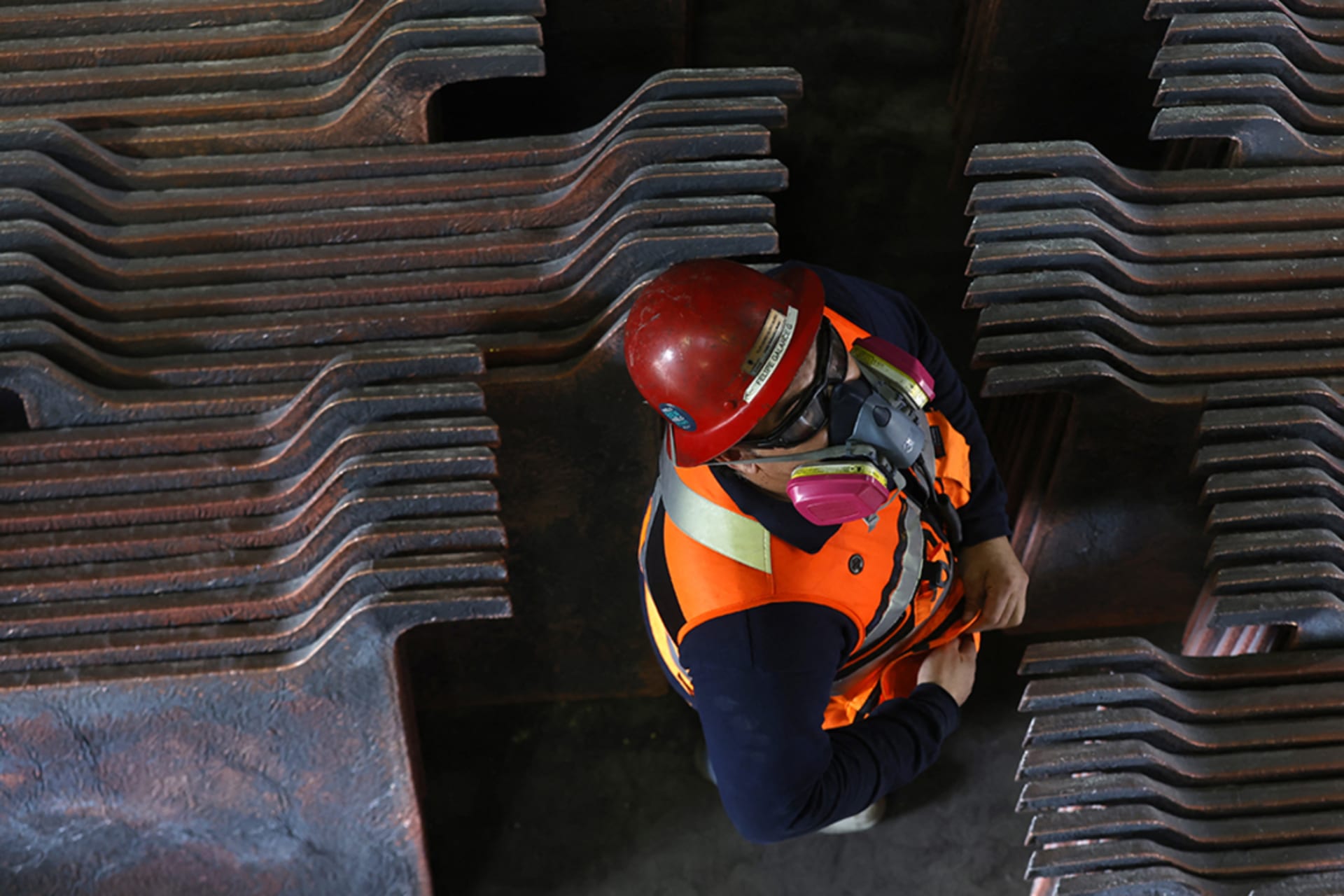

This piece is part of a Council on Foreign Relations analysis series assessing the geopolitical effect of the Trump administration’s tariffs policy on select countries in the Asia-Pacific Economic Cooperation ahead of the trade bloc’s summit. Will Freeman, the author, is a fellow for Latin America studies at CFR.
Chile and Peru have not been a major focus of President Donald Trump’s foreign policy—especially compared to Argentina, Brazil, or Mexico—and both have felt little economic impact from his administration’s tariffs. Still, the optics of Trump’s policies are shaping public opinion, souring both countries on the United States.
That should concern Washington, even with the longstanding diplomatic and security relationships that Santiago and Lima have with the United States. Together, Chile and Peru account for roughly 30 percent of the world’s copper reserves and 71 percent of the United States’ refined copper imports, and both countries are major suppliers of natural resources to China, their top trade partner.
Trade
Trump’s Section 232 tariffs on copper have had a minimal economic impact on Chile and Peru. Both countries primarily export refined copper to the United States, a class of copper goods which is exempt from the new tariffs—unlike the semi-finished products and derivatives that Canada, China, and Mexico send in larger volumes. Just 0.1 percent of Chilean copper exports to the United States are subject to the new tariffs. In Peru, the share is about 36 percent (although Peru sends less than 5 percent of its total copper exports to the United States any given year, so the total volume affected is small).
Other factors contribute to cushioning the blow: both countries export far more copper to China than the United States, and both are currently diversifying their trade ties in Asia. Peru is leveraging its new Chinese-built megaport and has recently signed trade deals with Indonesia and Thailand, while both Chile and Peru are negotiating new trade deals with India.
U.S. Commerce Secretary Howard Lutnick’s recommendation to implement a phased universal tariff on refined copper imports, beginning at 15 percent in 2027 and rising to 30 percent in 2028, would seriously and negatively impact both countries. But actually adopting and implementing this tariff is a long shot given limited U.S. refining capacity. Agricultural sectors in both Chile and Peru are harder hit by the Trump administration’s flat 10 percent “reciprocal” tariffs instituted in April, but they account for smaller shares of gross domestic product (GDP).
Public opinion
Where Trump’s tariff policies are having an impact is on public opinion. The majority of survey respondents in both countries believe tariffs will negatively impact their economies. In Chile, nearly 40 percent believe tariffs will hurt their personal finances. Approval of Trump has fallen quickly in Chile, where only a minority now approves of him. (There is no comparable data for Peru.)
Meanwhile, majorities of Chileans and Peruvians favor deepening trade ties with China and see Beijing as having a positive influence on world affairs; smaller shares now say the same of the United States. Although Trump seems to pay little to no attention to Peru, Peruvians see Trump as the foreign figure with the most power to destabilize their country (superseding Venezuela’s Nicolás Maduro and China’s Xi Jinping).
Bilateral relations
Neither government responded to Trump’s protectionism with any retaliatory tariffs. While Chile’s left-wing President Gabriel Boric offered muted criticism of Trump and defended free trade, Trump has said nothing publicly to suggest that he noticed. Both governments are actively in trade talks with the United States (Chile’s talks are advancing faster than Peru’s). Both countries maintain close and growing ties to China—in trade and digital and physical infrastructure—but the Trump administration has made no major bids to deter this, at least publicly, beyond occasional warnings.
The October 10 impeachment of Peru’s president and the formation of a new interim government are likely to slow U.S.-Peru trade talks further. The U.S. State Department is working to deepen defense ties with Peru to counterbalance increased Chinese commercial influence. In September, it approved the sale of F-16 fighter jets to the Peruvian Aair Fforce, which has traditionally a boughtuyer of Russian warplanes, though the deal has yet to be finalized.
Elections
Chile holds two-round general elections from November to December; Peru, from April to June. U.S. relations are unlikely to bear heavily on either race—which will pivot around domestic issues including crime, corruption, and immigration—but the ideology of the winner will matter for bilateral relations. A win for far-right Chilean candidate José Antonio Kast, which is likely, could put Chile on the map for the Trump administration and foster closer relations. Alternatively, a win for Communist Party candidate Jeannette Jara—while less probablelikely—would strain U.S.-Chile relations and likely lead to closer ties between Santiago and Beijing.
In Peru, a win for far-right presidential contender Rafael López Aliaga, previously the mayor of Lima, or conservative politician and Popular Force party leader Keiko Fujimori—the two current frontrunners, albeit with only 10 and 8 percent support, respectively—could spur closer relations with the Trump administration. But Peruvians are deeply angry at establishment figures such as these, who have used their sway over Peru’s powerful congress to quash corruption investigations and dismantle law enforcement, contributing to a surge in organized crime activity. Barring efforts by these figures to restrict competition, Peruvians are more likely to elect an anti-system outsider who could defy easy right-left categorization.
Regardless of who wins the upcoming elections in Chile or Peru, China will remain the main trade partner, requiring any new government to remain on good terms with Beijing. Geographically far from the United States and without politically consequential U.S. diasporas, neither country is likely to become a U.S. priority soon, although closer partnerships with both could help Washington address some of its concerns over critical mineral supply chains.
This work represents the views and opinions solely of the author. The Council on Foreign Relations is an independent, nonpartisan membership organization, think tank, and publisher, and takes no institutional positions on matters of policy