How I Got My Career in Foreign Policy: Sam Vigersky
Sam Vigersky has spearheaded humanitarian response efforts around the world and led policy negotiations at the United Nations. He sat down with CFR to talk about the importance of field work and how some of the best career opportunities can come unplanned.
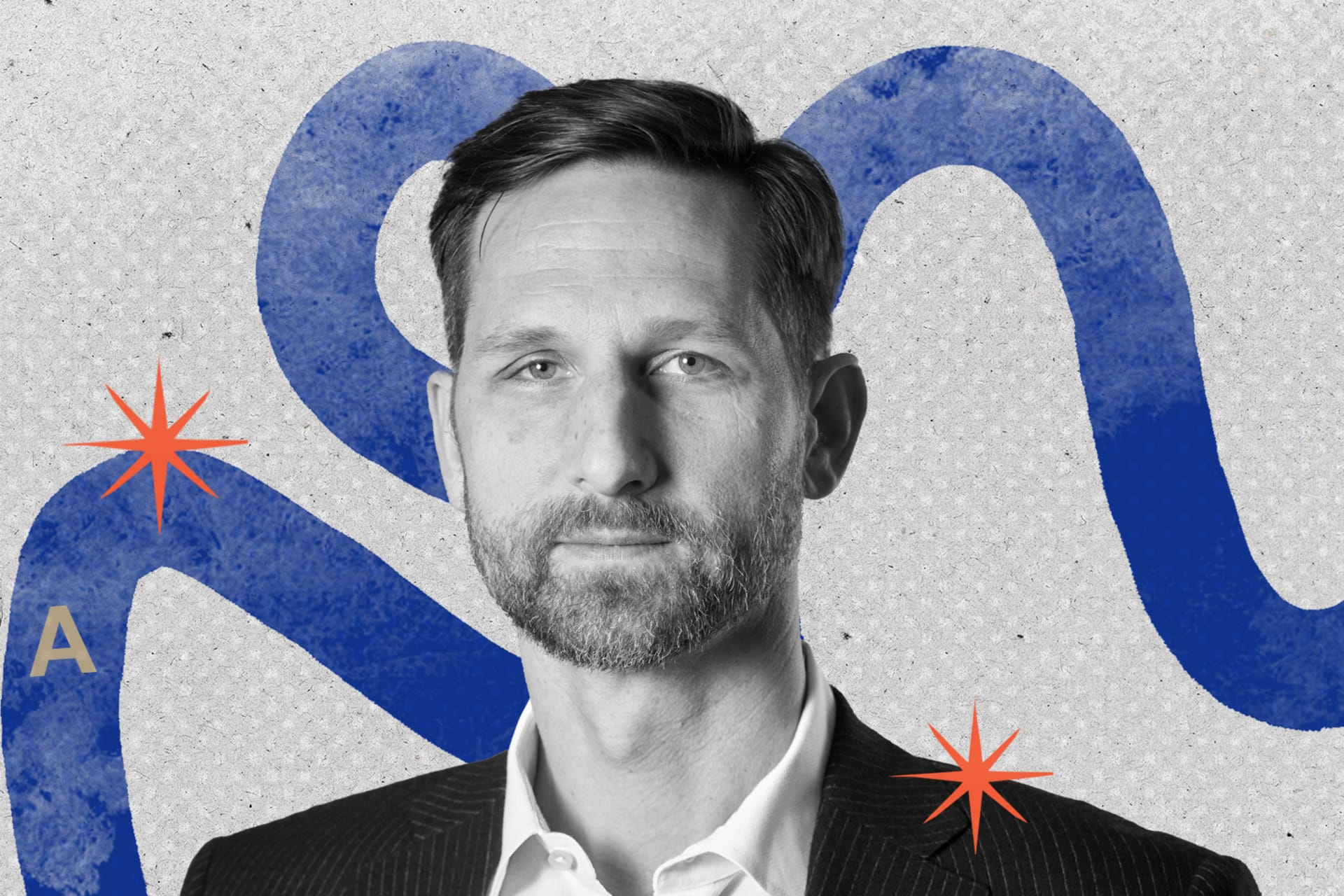
Sam Vigersky’s career in humanitarian response efforts and policymaking began over twenty years ago while volunteering with the Red Cross after the onset of Hurricane Katrina. Over the ensuing years he has worked at the Pan American Health Organization (PAHO), the U.S. Agency for International Development (USAID), and the United Nations, and organized response efforts in Haiti, Ethiopia, and West Africa. Now, he is an international affairs fellow at the Council on Foreign Relations. Read more about how many of his career transitions happened serendipitously, why he remains hopeful about the United Nations, and why field experience is key for would-be policymakers.
Here’s how Sam Vigersky got his career in foreign policy.
To kick off, what did you want to be when you were little?
Well, when I was really little, I wanted to be shortstop for the Baltimore Orioles. That obviously didn’t work out. When I got to a place where I was thinking about a real career—later in high school—I was really interested in civil rights law and social justice issues, so that’s where I thought things would go for me.
So when did you know you wanted to pursue foreign policy as a career? What made that pivot for you?
The short answer is it’s been iterative over my career. Around 2005 to 2006 was really an inflection point for me. I had thought I was going to go to law school. I spent some time working at a big corporate firm in New York, and really didn’t think it was for me. I decided I had to find out what I didn’t want to do with the rest of my career, so I just jumped into all the opportunities that presented themselves.
Right around the time I was leaving New York in 2005, a huge disaster unfolded in the United States—Hurricane Katrina. I remember very distinctly being in my apartment and hearing this narration over the radio of New Orleans flooding and this catastrophic disaster unfolding, and thinking, “What could I do?”
I ended up back in Washington, DC, where I’m from, and a friend suggested that I go to the American Red Cross and volunteer. I walked down the road, literally, and said, “How can I help?” And that opened up this career that I’ve now been in for twenty years. First, I did some relief work for residents of New Orleans who had been displaced and ended up in Washington, DC, at the DC Armory. Then I was deployed down to Gulfport, Mississippi, where I was doing a lot of direct relief work with the Red Cross. That was the beginning. Although it was domestic, it really gave me a window into what this profession that I’m now in could look like.
I’m curious about your schooling, because I was really struck to see that you studied social work, rather than international affairs or political science or one of the fields that people typically do before they go into foreign policy. Do you think that changed how you approach the field?
Yeah. When I left Gulfport and was thinking about what I was going to do next, graduate school was in my future, but it was really unclear. Those programs you’re talking about were all on the option list. But what I really saw in Mississippi and in New Orleans during that time was the collapse of a social safety net—the needs of people being really acute and having a very small window to help them transition from a disaster that was no fault of their own into something more sustainable long term.
The programs that were really addressing these issues were in social work, actually. When you’re looking at populations that are the most vulnerable, the poorest communities in our country and in the world, social services are often the difference between people being able to recover or not. I thought that paradigm for approaching both domestic policy and foreign policy really made a lot of sense, even if it was unconventional.
The other part to keep in mind is that twenty years ago, when I was looking at this decision, there really weren’t programs in international humanitarian aid. It was a nascent field. And that was ultimately what drove me into it. When I was doing this work on the Gulf, it was very clear that the American public had enormous generosity when it came to supporting disaster relief programs through financial means or donating stuff in kind. But there really wasn’t any type of modern architecture or professional training around this. That just seemed like a huge opportunity, because the trend line, which has continued since then, is one of mega disasters—millions of people being impacted by these terrible situations and the need for intervention from people who really have thought about what the response package should look like.
Yeah. And as we know, with climate change, all the more frequent.
Yeah. And the other programs in foreign policy felt a little more academic to me, but the skills that you learn in a social work setting are hands-on. When you look at the things I’ve done over my career in foreign policy, I would make the case that what I learned there has been hugely helpful in negotiating big diplomatic resolutions at the UN Security Council and getting groups of people in West Africa to think through strategy on how to tackle Ebola. That’s just not a traditional roadmap, but I think it encourages a lot of creative thinking and innovation.
That makes sense. Actually, to make a long story short for our readers, I’m going to just briefly summarize: after school, you went to the PAHO before ending up at USAID. Over those years, you dealt with several major humanitarian response efforts—the 2010 earthquake in Haiti, the Ethiopia famine, the Ebola outbreak in West Africa. I’m curious how your experience with the Red Cross prepared you to tackle these efforts, and if there’s something that surprised you about moving into these larger international organizations?
The through line between all these organizations and this type of work is that you have to be fast if you want to be effective. You have to really be creative, because the problems that are coming at you often don’t have much of a playbook to lean on. And you really need a team. In all of these places, domestically, it’s a little easier because the laws and the cultures are much more familiar to you. The international setting is different in that way.
For starters, when I was at PAHO, a UN agency, the role that you play as an American in an international organization is very different than when you’re in the State Department. And the people you’re working with have just vastly different backgrounds than you. So you get to the table, and to be effective, you need to be aware of who’s across from you or next to you, how they think about these problems that you’re trying to solve, where there might be very subtle or nuanced cultural differences between how you see something and how they do. And then really calibrating the way that you’re integrating these different elements of personalities and thoughts into a solution—that’s a big difference.
Because here in the United States, I think it’s just intuitive to most people. These are still important elements of being successful as part of a team, no matter where you are. But it’s just not as likely that you might have worked with someone from a country in East Africa until you get into a meeting with them and really are thinking about how to team up.
From there, you went on to become the senior humanitarian advisor to then-U.S. Ambassador to the United Nations Linda Thomas-Greenfield. How did that opportunity come about? Did you have a personal relationship with her before?
I did not. After I left PAHO, I ended up at USAID, mostly overseas, and then I came back to Washington in 2017. I did a lot of work programming humanitarian money to NGOs and the United Nations through the Washington office in a role that was for global programs. That really gave me exposure to a lot of humanitarian policy. It was still linked to what some of the global operations looked like, but there was a longer time horizon to the way you were thinking about strategically spending this money. There were tie-ins to larger U.S. foreign policy initiatives that you could sequence these into.
And there was this position that I knew about at the U.S. Mission to the United Nations—the senior humanitarian advisor to the ambassador. During that time, I really thought a natural step for me was to end up at the United Nations, because I’d worked with all these people as a grantee and policy shaper, but I hadn’t been in the mix where the binding resolutions were being passed. That job opened up—it was actually open before Ambassador Thomas-Greenfield was there, under her predecessor—and I was fortunate enough to compete for it and to be given that position.
Do you have a most memorable moment or achievement while you were working with her at the United Nations?
Syria was front and center for our first few years working together. And this story actually begins prior to her arrival. In 2019, when I had just arrived at the U.S. Mission, there was a resolution that the Security Council had passed authorizing cross-border humanitarian assistance into areas of Syria that were not controlled by the government. There were four entry points—two from Turkey, one from Iraq, one from Jordan—and they allowed populations that were being either cut off from aid or given limited aid supplies to have a lifeline to food, medicine, and clean water that they otherwise wouldn’t have.
The tricky part about this is the sovereignty of the country is a central part of the question here, about whether the United Nations is authorized to do this. And they will not do this on their own unless the Council uses its authority to override that and give them access. So that was a resolution that passed in 2014. It had been unanimously readopted on an annual basis, and in 2019 they had this vote coming up. Russia really began to hone in on this resolution as an area of disagreement with the Council. So they decided that they were going to kill this resolution.
In December 2019, the United States was president of the Security Council. It was the final day of the Security Council presidency for that year, this resolution was going to be adopted, and Russia vetoed what was on the table and threw the whole process into turmoil. Eventually, in January, there was an extension, which led to another showdown in July of 2020 where there were a series of four vetoes over a week that eventually led to an adoption of a resolution that was much scaled down—two crossings instead of four. But really the narrative that Russia was putting forward was “this is coming to an end.”
So when Ambassador Thomas-Greenfield arrived, we put in place a really robust strategy to think about how we would extend what was still a lifeline for over three million Syrians at that point. Over the next six months—of her first year at the United Nations—we traveled out to the border between Turkey and Syria to bring media attention to this. President Joe Biden actually met with Russian President Vladimir Putin in Geneva, and this issue made its way onto the agenda as a confidence-building measure between our two sides that could open up further dialogue. We ended up getting a win in July, where Ambassador Thomas-Greenfield and the team negotiated this resolution that kept this pipeline of aid open.
It was just a wild ride for a year-and-a-half, to be on the edge and to see how the politics of this issue that seemed pretty straightforward to most people became extremely difficult and high stakes.
So many people are jaded about the United Nation’s pace of work, its effectiveness, and as you alluded with Russia, the sort of endless politicking amongst members. How do you think about maintaining urgency in a humanitarian response or initiative, when you have all these other bureaucratic elements to contend with?
The United Nations, I think probably fairly or unfairly, takes a lot of heat for being bureaucratic and slow and maybe just a place where people talk. But I think in this space of humanitarian aid, it’s actually extraordinarily effective and remains really important to solving some of the most complicated problems. My experience with aid issues is people are always willing to engage if there’s an emergency, whether it’s conflict-driven or a natural disaster.
One unique function of that institution in New York in particular is you can put an issue—like Syria cross-border aid, or the Black Sea Grain Initiative for Ukraine, or the situation in Sudan, or the war in Gaza—on the table and get an idea of where every country in the world stands on this issue within a few days. If you decide to call a meeting, everybody will go back to their capital, get instructions about what they should say. That’s just incredibly helpful, if you want to size up, from a foreign policy perspective, who you can work with, where people are on the fence that you might need to bring along with you, and how you would do that.
That’s actually an incredibly efficient thing for the United States, if you think about it, because the alternative might be—you want to know where somebody stands, the State Department in Washington demarches all the capitals, they ask somebody to go into their foreign ministry, you wait a few days, you get an answer. Somebody has to catalog all that information back at Main State, and then several weeks later, at best, you get limited response from some capitals, maybe not an entirely straightforward one from others. It’s not on the record. That still makes the United Nations a great place and a great asset.
On humanitarian issues, I think you have parts of the United Nations that do this exclusively, that have been incredibly effective at identifying, months in advance, how a drought scenario in a certain country might lead to a famine. Or what the overall needs look like, within a matter of days, after a sudden-onset earthquake takes place, and telling countries how they can support some of their programs with money. I guess I feel lucky in that sense that that was always the part of the house I was exposed to.
I would also say, for those who are jaded about the United Nations, it still remains a place where most people want to do something. The end product may be much more diluted than you wanted—and that’s natural because it’s politics and it’s a place of compromise—but the instinct that people are really excited about meeting and talking about progress on a certain humanitarian issue is unique. When I arrived there, I didn’t expect that. I thought it would actually be a lot more like Capitol Hill, where ideas just go to die and you can work on something for years and nothing comes of it. That really is not the spirit—at least when I was there—of the United Nations.
That’s lovely. So, as you know, this series is geared towards young people who want to enter the field. You had a more indirect route to policymaking. What do you think the benefits are of having started off in field-heavy work versus doing the think tank, State Department traditional route?
For the younger generation that’s up and coming, I think they are facing an extraordinary amount of pressure to have everything figured out. I’m very empathetic to that. My advice would actually be to try not to figure out exactly what you want to do at twenty-two or twenty-five or even thirty—to really enjoy the process of discovering what your life could be.
For me, going overseas to East and West Africa, living in Haiti—it was so much about the journey and understanding people, and really being able to have an informed perspective when you get into a windowless room five thousand miles from the conflict you’re talking about or the emergency that’s unfolding. Knowing who those people are that are being impacted by what you’re taking on in a policy debate, and understanding that it’s not an academic exercise, that there are real lives on the other end of this. There are real organizations that have strengths and weaknesses that are going to be where the rubber meets the road, so to speak, on whether this is successful or face-plants.
The advice I always give to people who are coming out of undergrad or graduate school—and maybe I shouldn’t say this to the Council on Foreign Relations—but don’t actually go work at a think tank at twenty-five. Actually, don’t go work in the federal government. You should really get out and go work for an NGO. The value that you’ll add one day is not going to be derived from how well you memorize the lessons of a textbook. It’ll be the expertise you have solving real problems in environments that look much different than what we have here in the United States.
If you look at the twentieth century and who some of the legends of foreign policy are—there was no foreign policy school that [President Franklin D.] Roosevelt went to when he was twenty-five. So much of his foreign policy is informed by his domestic policy during his first two terms. [Winston] Churchill—I don’t think there’s a foreign policy school that is teaching you to go take up residence at the White House for three weeks like he did in December of ‘41. But these are actually the mechanics of how breakthroughs happen, how alliances are formed, and how creative people are able to have vision and put in place structurally transformative policies that can benefit the lives of millions and millions of people.
The United States has just been so influential in that world that maybe there needs to be more people who were in creative writing or in social work. Obviously, a lot of lawyers out there. But I don’t think that there’s actually a pathway any person should lock onto at that age, because there are many roads to being good at this and to being effective.
Right. Things can unfold as you go.
Each part of my career, the most amazing opportunities that happened were totally unplanned. The Katrina experience for me opened up the moment I just allowed it to—not because three months in advance I thought it was going to happen. It was just a whim where I walked up the road and went to the Red Cross, and then next thing I knew, I was in Gulfport, Mississippi.
When I ended up at PAHO, I had actually been applying for a job at the Red Cross. I was interviewing for that job and flew to Washington for the interview. The night before that interview, I ran into an old friend of mine who I’d worked with at PAHO years before as an intern, and she asked me what I was doing. I told her I was interviewing with the Red Cross for a job. And much to my surprise, she told me to come to PAHO after my interview, which was across the street from the Red Cross, because the earthquake in Haiti had just happened, and they were desperate to hire a specialist to work on the earthquake response.
As it happened, I did this interview at the Red Cross, I walked across the street, and I went to PAHO, and they offered me a job on the spot. My career just went into a completely unforeseen direction by chance that I crossed paths with someone.
The third one: I had gone to USAID in 2013, and I’d really wanted to get into the Office of Foreign Disaster Assistance. I’d applied for all these jobs there, and I never had an interview. But I did get an interview in this other office called the Office of Transition Initiatives (OTI). I worked there for a year because they had a very interesting program model that I was keen to see and understand.
After a year, this email came in October 2014 at the height of the Ebola epidemic, and it said, “We’re looking for somebody who can come for four to six months to Liberia to manage a contract that involves building field hospitals across all of Liberia to treat Ebola patients. If you do this, you’re going to be managing $200 million, you’ll have two helicopters, and work directly with the 101st Airborne. They are going to help build this infrastructure with you.” And nobody wanted to do it at all.
I was the only one who raised my hand. People thought I was crazy. Within a matter of days, I was on a plane to Monrovia, and I spent over a year and a half after that in Liberia and Sierra Leone, working through this unbelievable public health emergency. That was totally unplanned, and led to this switch in where I was within USAID and opening everything up from there.
Well, we always want to end on something fun and we always ask the same question. I know obviously you’ve traveled extensively for your work. I was wondering if there is a most memorable work trip or meal that you could share with us.
I’ll preface by saying I love food. I’m a big cook, and I think sitting down and breaking bread anywhere in the world is sort of the essence of what it means to have a joyful life and the opportunity to really get to know people in a way that’s so different from the formality of the work environment. So as a big theory of mine, anywhere I am in the world, I try to sit down and understand the flavors of where I am and take the opportunity to share a meal with whoever I can.
If I had to think of one: When I was in Liberia during the Ebola outbreak, we were funding many partners, and one of them was Partners in Health. Paul Farmer came for a few-day visit, and the team there had me over for dinner with him. For people in this profession who’ve known about Farmer, who’s just an absolute legend and sadly passed away way too young, this was just a surreal moment for me. When you meet people of that caliber, there’s always a chance you might be disappointed—don’t meet your heroes, right? But he was just such a wonderful and personable man. We spent four hours talking about everything from time in Haiti that I had spent, to what he really hoped to see happen in Liberia, transitioning from this horrible outbreak, and also the inequality of the health system.
One thing I remember him talking about was that no American patient who was evacuated from West Africa during that time with Ebola died in American health-care systems. And what does that say about the inequality that the world has? His focus had always really been on every individual, and there was just a level of engagement from him and a passion to treat every single person across from him exactly the same, and to advocate and pursue solutions for some of the most challenging and persistent problems we face in healthcare. It was a night I will never forget.
This interview has been edited for length and clarity. It represents the views and opinions solely of the interviewee. The Council on Foreign Relations is an independent, nonpartisan membership organization, think tank, and publisher, and takes no institutional positions on matters of policy.