The Role of the International Criminal Court (ICC)
Updated
The International Criminal Court was created to bring justice to the world’s worst war criminals, but debate over the court still rages.
- The Hague-based ICC seeks to investigate and prosecute those responsible for grave offenses such as genocide, crimes against humanity, and war crimes.
- Despite its significant global representation, dozens of governments are not parties to the ICC, including China, India, Israel, Russia, and the United States.
- In July 2026, the Trump administration announced a diplomatic campaign to “dismantle” the ICC, escalating long-standing U.S. objections to the court and urging other governments to reject its authority.
What are backgrounders?
Authoritative, accessible, and regularly updated Backgrounders on hundreds of foreign policy topics.
Who Makes them?
The entire CFR editorial team, with regular reviews by fellows and subject matter experts.
Introduction
The International Criminal Court (ICC), which was established in 2002 and boasts 124 member countries (plus the Palestinian territories), seeks to hold accountable those guilty of some of the world’s worst crimes. Champions of the court say it deters would-be war criminals, bolsters the rule of law, and offers justice to victims of atrocities. Since its inception, however, the court has faced criticism from many parties and failed to gain the membership of several major powers, including the United States, China, and Russia. Only two countries have ever officially withdrawn from the court, while three others are currently undergoing the withdrawal process. The court has also faced particular criticism from some African governments, which argue its prosecutions have disproportionately targeted the continent.
U.S. opposition to the ICC hardened during President Donald Trump’s first term. Although the Biden administration took a more conciliatory approach, Trump has revived those tensions in his second term. The State Department announced a campaign in July 2026 to “dismantle” the court, saying it threatens U.S. sovereignty, and urged other governments to take similar action. The announcement raises questions over the court’s future.
What are the court’s origins?
In the aftermath of World War II, the Allied powers launched the first international war crimes tribunal, known as the Nuremberg Trials, to prosecute top Nazi officials. It wasn’t until the 1990s, however, that many governments coalesced around the idea of a permanent court to hold perpetrators to account for the world’s most serious crimes. The United Nations had previously set up ad hoc international criminal tribunals to adjudicate war crimes in the former Yugoslavia and Rwanda, but many international law experts considered them inefficient and inadequate deterrents.
Trinidad and Tobago requested that a UN commission look into the creation of a permanent court in 1989. In the following years, such efforts gained support, especially in Europe and Africa. The African bloc is the ICC’s largest group, though the relationship between some of the leaders of its thirty-three member countries and the court has become more tenuous in recent years. The European Union is also a staunch supporter of the court; it adopted a binding policy [PDF] in support of the ICC in 2011.
The ICC’s founding treaty [PDF] was adopted by the UN General Assembly at a conference in Rome in July 1998. After being ratified by more than sixty countries, the Rome Statute entered into force on July 1, 2002.
Which countries are members of the court?
As of 2026, there are 124 states party to the Rome Statute of the ICC—plus the Palestinian territories—spanning Africa, Asia-Pacific, Europe, and Latin America and the Caribbean. Despite the court’s strong membership, nearly thirty other countries signed the statute but never ratified it. These include the United States, Egypt, Iran, Israel, Russia, Sudan, and Syria. Several others refused to sign the statute at all, such as China, India, and North Korea. In January 2025, Ukraine became the latest addition to the ICC.
Two countries have withdrawn from the ICC. Burundi left in 2017, following the court’s decision to investigate the government’s crackdown on opposition protests. Philippine President Rodrigo Duterte pulled his country out in 2019 after the court launched an inquiry into his government’s war on drugs, saying domestic courts were sufficient to enforce the rule of law. Gambia and South Africa notified the United Nations in 2016 that they intended to exit the treaty, but they later reversed course in the face of political upheaval and legal challenges.
Then in July 2026, the court confirmed that three additional countries—Burkina Faso, Mali, and Niger—had formally initiated the year-long withdrawal process from the Rome Statute after declaring the court to be “a tool of neocolonial repression.”
How does the court work?
The ICC is based in The Hague, a city in the Netherlands that hosts many international institutions, and has field offices in several countries. The court carries out its investigative work through the office of the prosecutor, led since 2021 by British lawyer Karim A.A. Khan, who previously served as assistant secretary-general of the United Nations.
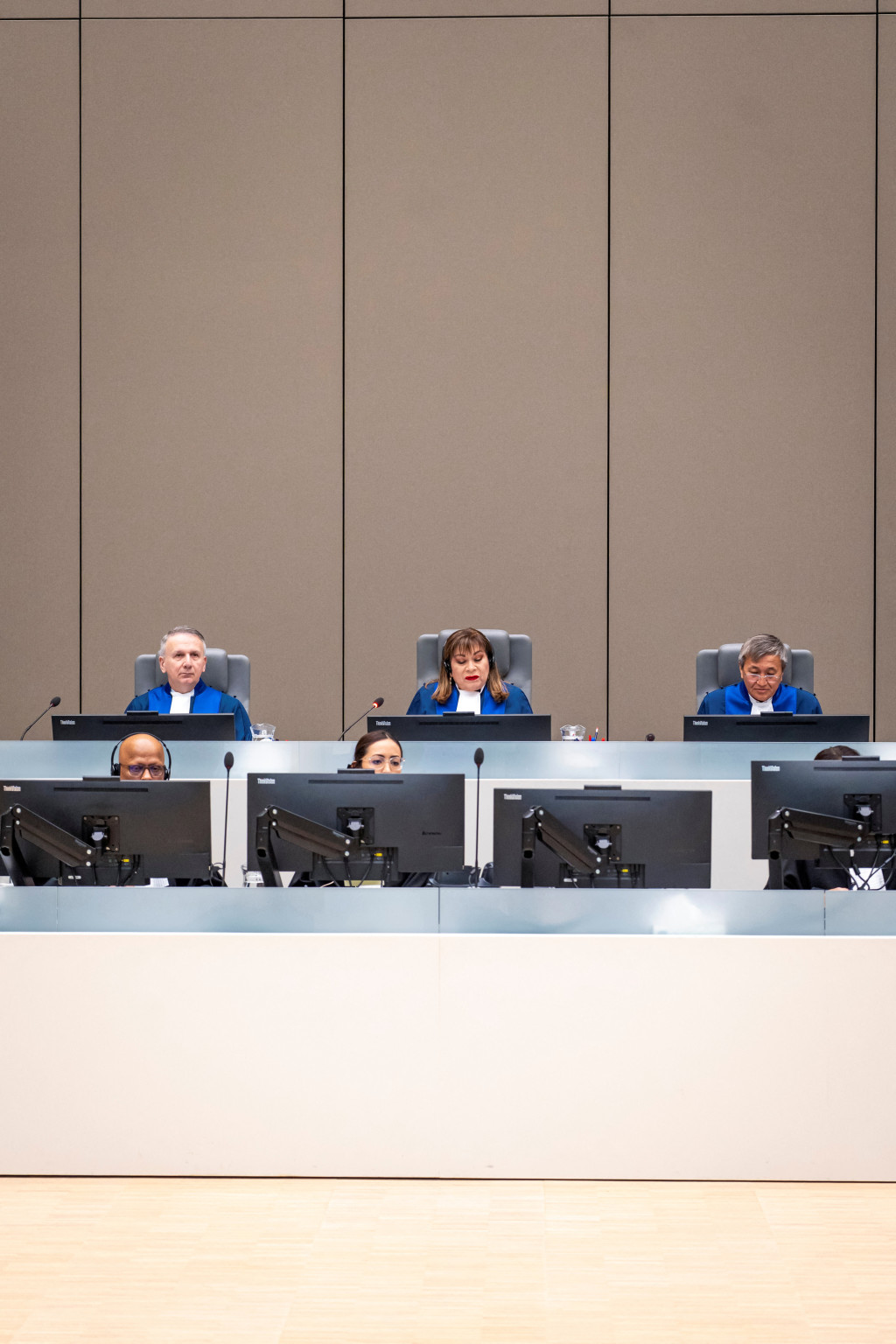
The court has eighteen judges, each from different member countries and elected by the member states. It requires its members [PDF] to seek a gender-balanced bench, and the judiciary must include representatives of each of the United Nations’ five geographic regions. Judges and prosecutors are elected to nonrenewable nine-year terms. The court’s president and two vice presidents are elected from among the judges; they, along with the registry, handle the administration of the court.
The court has jurisdiction over four categories of crimes under international law:
- genocide, or the intent to destroy in whole or in part a national, ethnic, racial, or religious group, as such;
- war crimes, including grave breaches of the laws of war under the Geneva Conventions and serious violations under customary international law, such as torture, taking of hostages, willfully causing great suffering, intentionally attacking civilian populations as such, attacking undefended civilian property, schools, historic monuments, or hospitals, using starvation of civilian populations as a method of warfare, or using child soldiers;
- crimes against humanity, or violations committed as part of a large-scale attack against any civilian population, including murder, rape, unjust imprisonment, slavery, persecution, torture, or apartheid; and
- crimes of aggression, where a political or military leader plans or executes the use of armed force by a state against the territorial integrity, sovereignty, or political independence of another state, or in any other manner inconsistent with the UN Charter.
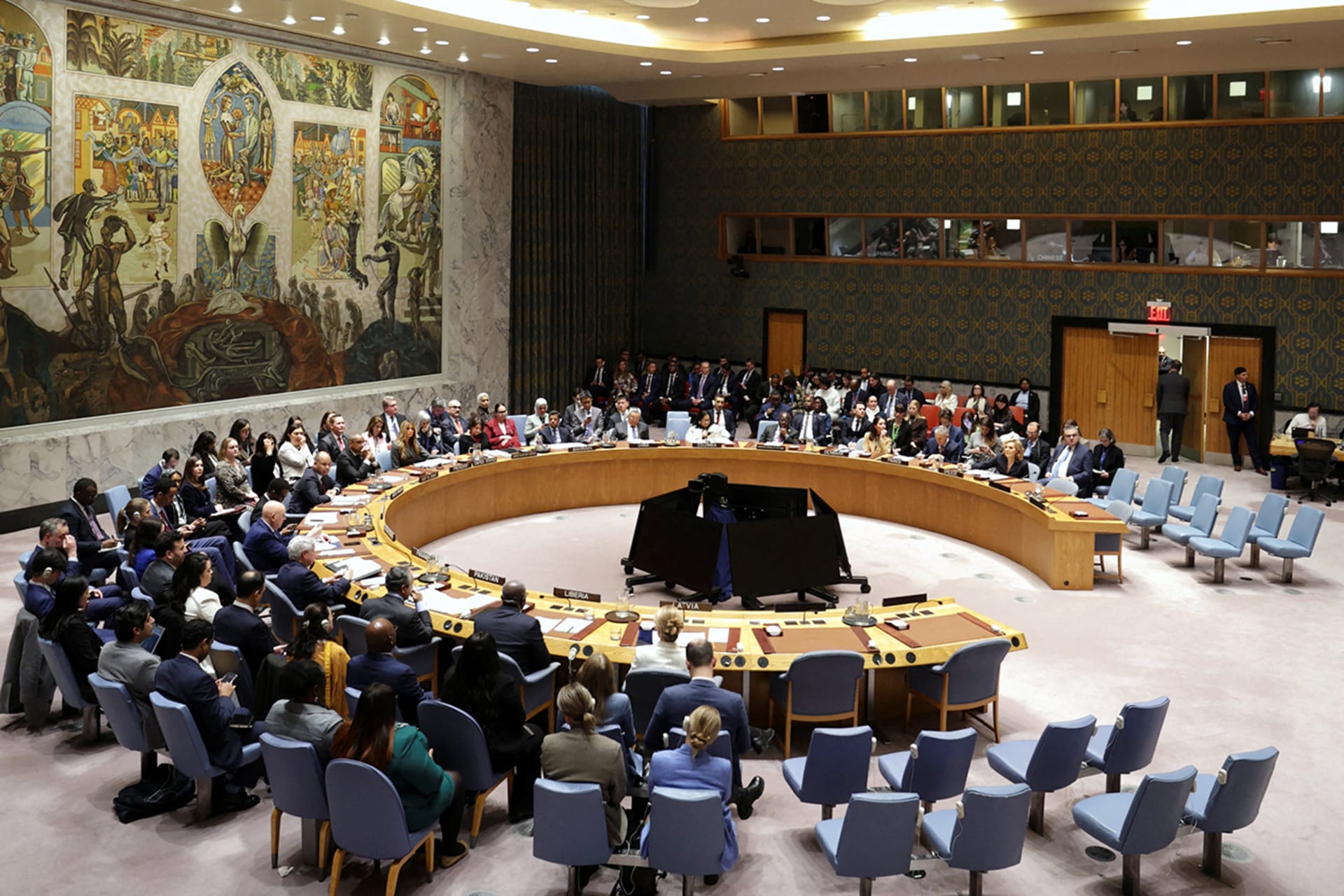
The court can open an investigation into possible crimes in one of three ways: first, a member country can refer to the prosecutor a situation arising anywhere within the court’s jurisdiction; second, the UN Security Council can refer a situation occurring anywhere in the world; or third, with the approval of pretrial ICC judges, the prosecutor can launch an investigation proprio motu, or “on one’s own initiative.” The court can investigate individuals from nonmember states if the alleged offenses occurred in a member state’s territory, if the nonmember state accepts the court’s jurisdiction, or with the Security Council’s authorization.
To open an investigation, the prosecutor must conclude after a preliminary examination that the alleged crimes are of “sufficient gravity.” Once an investigation is opened, the prosecutor’s office typically sends investigators and other staff to collect evidence. Any arrest warrant or summons must be approved by the judiciary, based on information provided by the prosecutor. A group of pretrial judges ultimately confirms whether a case should be brought to trial. Defendants can seek outside counsel to represent them, paid for, if necessary, by the court. Convictions and sentences require the vote of at least two out of the three judges on a trial bench; convicted defendants may appeal to the ICC’s appellate bench, which is made up of five judges.
The ICC is intended to complement rather than replace national courts. It can only act when national courts have been found unable or unwilling to try a case. Additionally, it only exercises jurisdiction over crimes that occurred after its statute took effect in 2002. The court also relies entirely on the cooperation of member state authorities to apprehend suspects, as it does not have a police force of its own. It cannot try individuals in absentia, and a member state is obligated to arrest any individual under ICC arrest warrant who is present on its territory.
The ICC differs from the International Court of Justice—the top UN court that settles disputes between states, also located in The Hague—in that it prosecutes individuals. Its broad geographic reach and continuous operation distinguish it from temporary international tribunals, such as the one that prosecuted the 1994 genocide in Rwanda.
How is it funded?
The ICC approved an annual program budget for 2026 of almost €197 million (approximately $210 million at the time of approval) [PDF], the vast majority of which is funded by member states. Contributions are determined by the same method the United Nations uses to assess dues, which corresponds to the size of each member’s economy. In 2024, the largest contributions [PDF] came from Japan, Germany, France, and the United Kingdom. Some countries, notably Argentina, Brazil, and Venezuela, have run up millions of dollars in overdue payments.
The UN General Assembly can approve additional funding for cases referred to the court by the Security Council, but has not yet done so. Some governments and transnational organizations also offer voluntary contributions.
Some analysts have criticized the ICC as too expensive, and say that it has failed to pursue justice against some types of crimes, such as gender-based violence. Others counter that the court has limited institutional capacity, and its cost effectiveness cannot be based solely on the number of cases it tries or convictions it secures.
What investigations and cases has the ICC opened?
There have been thirty-four cases before the ICC, and the court has issued a total of sixty-one arrest warrants, most for individuals from African countries.
Cases have been referred by the governments of Uganda, the Central African Republic, the Democratic Republic of Congo, and Mali relating to the civil wars and other conflicts that have raged in those countries. In 2021, the court opened an investigation into alleged crimes against humanity in Venezuela based on a referral from half a dozen member countries, mostly in South America.
Recent major investigations include:
Venezuela. In 2021, the court opened an investigation into alleged crimes against humanity in Venezuela based on a referral from half a dozen member countries, mostly in South America. (The probe was initially put on hold by Venezuelan authorities who wanted to take over the case, but in March 2024, the ICC ruled that it would proceed with the investigation.)
Russia-Ukraine war. The court launched an investigation into Russia’s invasion of Ukraine in 2022 after more than forty member states referred the situation. Though neither Ukraine nor Russia were ICC members at the time, Kyiv accepted the court’s jurisdiction for alleged crimes on its territory dating back to late 2013, when the government violently cracked down on mass protests. In March 2023, the ICC issued an arrest warrant for Russian President Vladimir Putin on charges of forcibly deporting Ukrainian children, but has been unable to take the Russian leader into custody to bring him to trial.
Israel-Palestinian territories conflict. The Palestinian territories first asked the ICC to investigate in the Gaza Strip and the West Bank in 2018 for crimes dating back to the conflict between Israel and Hamas in 2014; the court began the probe in 2021. In late 2023, member states Bangladesh, Bolivia, Comoros, Djibouti, and South Africa referred the Israel-Hamas war that broke out in October 2023 to the ICC, and Chile and Mexico followed up in early 2024 with a supplemental referral regarding that war.
Who are some of the court’s other high-profile indictments?
Rodrigo Duterte. In March 2025, Philippine authorities arrested the former president in compliance with an ICC arrest warrant for charges of murder as a crime against the civilian population. During his time as mayor of the city of Davao, Duterte led the Davao Death Squad, which conducted extrajudicial executions of individuals suspected of petty crimes. Subsequently, as president, Duterte continued to kill suspects without due process, with an emphasis on drug offenders.
Hibatullah Akhundzada and Abdul Hakim Haqqani. The ICC issued arrest warrants for the two Taliban leaders in July 2025 for their persecution of Afghan girls and women. They are the first warrants the court sought in Afghanistan since it opened an investigation into potential war crimes there in 2007. Experts note that this is a landmark indictment as it’s the first time a case has been built around gender-based crimes, rather than as an ancillary to other crimes against humanity.
Benjamin Netanyahu, Yoav Gallant, and Mohammed Deif. In November 2024, the ICC’s Pre-Trial Chamber issued formal warrants for Israeli Prime Minister Benjamin Netanyahu, former Israeli Defense Minister Yoav Gallant, and Hamas military leader Mohammed Deif on charges including war crimes and crimes against humanity. The court cited Hamas’s October 7, 2023, attack on Israel and Israel’s military campaign in the Gaza Strip. (The ICC prosecutor originally sought warrants for two other Hamas officials who were subsequently killed in the conflict.) The court wrote in its decisions that there were “reasonable grounds” to believe that Netanyahu and Gallant “intentionally and knowingly deprived the civilian population of Gaza of objects indispensable to their survival,” while Deif was responsible for “murder; extermination; torture; and rape and other forms of sexual violence.”
Israeli officials criticized the allegations as antisemitic, and Israeli President Isaac Herzog said the warrants turned “the very system of justice into a human shield for Hamas’s crimes against humanity.” Israel—and the United States, where Netanyahu often travels—are not members of the ICC, meaning neither one is obligated to arrest him.
Vladimir Putin. The ICC ordered Putin’s arrest on the grounds that he is allegedly responsible for forcibly deporting and transferring “at least hundreds” of children from occupied Ukrainian territory to Russia. The court issued a corresponding warrant for Russia’s children’s rights commissioner, Maria Lvova-Belova. Ukrainian President Volodymyr Zelenskyy lauded the arrest warrants as “a historic decision” by the court. Russia’s government said it does not recognize the court’s jurisdiction, but it acknowledged transferring Ukrainian children to live with foster families in Russia and sending them to attend “rehabilitation” programs, which some Western observers described as a propaganda tool or “political reeducation.”
Many legal experts see Putin’s warrant as symbolic, since he is unlikely to be arrested anytime soon. However, the indictment has limited Putin’s ability to travel abroad and attend important diplomatic forums. Putin was forced to virtually attend the 2023 BRICS summit with the leaders of Brazil, India, China, and South Africa after host government South Africa urged him not to travel there. As an ICC member, the South African government would be compelled to arrest Putin if he joined the talks in Johannesburg. Some observers say that even without Putin’s arrest, the ICC’s warrant furthers Russia’s status as a global pariah; he likewise skipped the 2024 Group of Twenty summit in Brazil. In March 2024, the ICC issued arrest warrants for two Russian commanders for alleged war crimes committed against Ukrainian civilians. The following June, a coalition of about forty countries established a special tribunal to prosecute Russian aggression against Ukraine.
Muammar al-Qaddafi. The Security Council referred the situation in Libya to the ICC in 2011, citing allegations that the Libyan leader and other individuals were responsible for the killing of unarmed civilians during Arab Spring protests. In June of that year, the court issued arrest warrants for Qaddafi, as well as for his son and his brother-in-law, but the Libyan leader went into hiding and was killed before he could be apprehended. Qaddafi’s son, Saif al-Islam, was assassinated in Libya in February 2026.
Omar al-Bashir. The first sitting president to be indicted by the ICC, Sudan’s Bashir faces [PDF] allegations of genocide, crimes against humanity, and war crimes in Sudan’s Darfur region. He is accused of planning mass killings and deportations of members of several ethnic groups. Bashir avoided arrest by traveling abroad with assurances from friendly foreign leaders that they would not turn him in; he returned to Sudan in 2015. In April 2019, the Sudanese military ousted Bashir following months of anti-government protests and placed him under arrest. An ICC delegation visited the country in February 2021 to discuss cooperation with the transitional government, but it remains unclear whether Sudanese authorities will extradite Bashir.
Uhuru Kenyatta. In 2010, the ICC opened an investigation into violence that killed more than one thousand people following Kenya’s 2007 presidential election. It eventually named Kenyatta and five other major political figures as suspects of crimes against humanity. The investigation continued even after Kenyatta won the presidency in 2013, with fellow ICC suspect William Ruto as his running mate. The court dropped the charges against Kenyatta the following year and those against Ruto in 2016, with the prosecutor’s office claiming the Kenyan government was uncooperative and that witness tampering had undermined the case. In 2023, the ICC finally halted the thirteen-year investigation after failing to secure any convictions.
What is the U.S. stance?
Washington has been supportive of the ICC at times and hostile at others. U.S. policymakers originally supported the concept of an international criminal court, and the Clinton administration participated intensively in the UN negotiations over the Rome Statute. However, at the Rome Conference in 1998, it opposed the final draft of the treaty over concerns the prosecutor would have unchecked power and could subject U.S. soldiers and officials to politicized prosecutions, and that the treaty would not permit reservations. President Bill Clinton later authorized U.S. Ambassador at Large for War Crimes Issues David J. Scheffer to sign the Rome Statute, but he recommended that it not be sent to the Senate for ratification until U.S. concerns were addressed. President George W. Bush withdrew the U.S. signature in 2002.
In 2002, Congress passed and Bush signed the American Service-Members’ Protection Act, which required the government to cut off financial assistance to ICC members who would agree to surrender U.S. personnel to the ICC. The law also authorized the president to use all means necessary to free Americans detained by the ICC. The Bush administration struck bilateral agreements with dozens of countries obliging them not to hand over U.S. personnel. To date, the ICC has never issued an arrest warrant for any U.S. official.
Washington has backed ICC efforts on several occasions, however. In 2005, the Bush administration allowed the Security Council to refer the Darfur case, and it later offered to assist the court’s investigation, which legal experts saw as a softening of the U.S. stance. In 2011, the Obama administration voted in favor of the Security Council referral for a Libya investigation. It also helped deliver several fugitives to The Hague and offered to pay millions of dollars as rewards for information on individuals accused of atrocities.
The Trump administration took a harder line, angered by then-Chief Prosecutor Fatou Bensouda’s push to investigate U.S. armed forces and CIA personnel for potential war crimes in Afghanistan, as well as by her preliminary investigation into alleged Israeli crimes in the occupied West Bank and Gaza Strip. In 2018, then-National Security Advisor John Bolton announced that the White House would no longer cooperate with the ICC and would block any efforts to pursue U.S. or Israeli citizens. The following year, after Secretary of State Mike Pompeo threatened to revoke the visas of any ICC staff investigating the United States, Bensouda’s U.S. visa was canceled. The ICC launched a probe in 2020 into crimes in Afghanistan, reversing a previous decision not to investigate the matter. In response, Trump imposed sanctions against individuals associated with the ICC.
President Joe Biden’s approach to the court resembled Obama’s more cooperative stance. Shortly after taking office, Biden lifted the Trump-era sanctions and visa restrictions. In 2021, after the arrival of ICC prosecutor Khan, the court effectively dropped its investigation of U.S. personnel in Afghanistan. Biden was also among many global leaders who publicly hailed the ICC’s indictment of Putin. Still, his administration expressed concern over the investigation into Israel’s actions in the Palestinian territories.
But the indictments of Israeli officials complicated matters. Biden called the May request for arrest warrants of two Israeli officials “outrageous.” The White House also issued a statement rejecting the warrant announcement for Netanyahu.
After Trump returned to office, he quickly reimposed sanctions on the ICC over “illegitimate and baseless actions” targeting the United States and Israel. The announcement came in February 2025, the same week that Netanyahu became the first foreign leader to visit the White House during Trump’s second term.
Then in July 2026, the State Department announced a “whole-of-government” effort to “systematically disable” the ICC. The department called the court an “intolerable threat to U.S. sovereignty” because it claimed the authority to prosecute and even imprison U.S. servicemembers and officials. U.S. Secretary of State Marco Rubio warned that U.S. border agents, soldiers, and elected leaders could face prosecution for defending the United States, and framed the dismantling campaign as a choice of “sovereign states over globalism.” The State Department said it would pursue additional sanctions against court officials and increase scrutiny of allies that rely on U.S. assistance yet decline to reject the court’s authority.
However, some experts have expressed skepticism over the administration’s rationale for the campaign. “The ICC is indisputably a flawed and politicized institution,” John B. Bellinger III, an expert on international law, wrote for CFR. But all of the administration’s rhetoric “makes the ICC sound like an urgent and existential threat to the United States, which it is not.”
With unprecedented cases on the docket and the imposition of U.S. sanctions related to the Israeli-Palestinian conflict, the ICC faces difficult challenges. Nonetheless, CFR Senior Fellow David J. Scheffer noted that the court’s caseload continues to grow largely without U.S. opposition, covering charged perpetrators of atrocity crimes in Afghanistan, Bangladesh, Georgia, Myanmar, the Philippines, Ukraine, and several African countries, as well as an investigation in Venezuela. He added that “jurisdictional arguments and complex issues regarding the law of war (including self-defense) and international humanitarian law (protection of civilians) will arise in ICC deliberations and jurisprudence during the years ahead.”
What are other criticisms of the ICC?
Criticism of the court generally comes from two directions. Some believe the ICC has too little authority, making it inefficient and ineffective at putting away war criminals. Others think it has too much prosecutorial power, threatening state sovereignty, and that it lacks sufficient due process and other checks against political bias. There has also been debate about the qualifications of judges. Meanwhile, some worry that the prospect of international justice prolongs conflicts by dissuading war criminals from surrendering, though the research on that question is inconclusive. Even advocates of the court have admitted it has shortcomings. Additionally, some cases have raised thorny legal and moral questions, such as the culpability of former child soldiers who were pressed into service and themselves victimized.
Several major powers echo U.S. complaints. China and India, in abstaining from the court, argue that it would infringe on their sovereignty. Analysts point out that both countries could face investigations if they joined. Russia pulled its signature from the treaty in 2016 after the court classified its 2014 annexation of Crimea as an occupation, and Moscow is not cooperating with the court’s war crimes investigation in Ukraine. The Israeli government told the ICC in 2021 that it would not recognize the court’s authority to investigate alleged war crimes within Palestinian territories. Netanyahu said in April 2024 that Israel “will never accept any attempt by the ICC to undermine its inherent right of self-defense.”
Many African nations have also accused the ICC of disproportionately focusing on the African continent. Most of the court’s cases have dealt with alleged crimes committed in African states, although recent investigations into the Palestinian territories, Myanmar, Ukraine, and Venezuela seem to be broadening the court’s reach. In 2016, the African Union backed a proposal led by Kenya for a mass withdrawal, though the vote was largely symbolic.
Recommended Resources
CFR’s David J. Scheffer explains the political challenges faced by ICC prosecutors in the Israel-Hamas war.
In 2017, Foreign Affairs interviewed Chief Prosecutor Fatou Bensouda about criticisms levied against the court.
The Just Security blog outlines how to build a more balanced U.S. approach to the ICC.
This 2021 Economist article explores why global powers have rejected the court’s authority.
The Guardian looks at potential alternatives to the ICC, including an African human rights court.
Foreign Policy examines the implications of U.S. support for the ICC investigation in Ukraine.
Colophon
Staff Writers
- Mariel Ferragamo
- Claire Klobucista
Additional Reporting
Diana Roy, Rhea Basarkar, Antonio Barreras Lozano, Jessica Moss, Ariel Sheinberg, and Mia Speier contributed to this Backgrounder. Will Merrow and Michael Bricknell created the graphics. Header image by Bas Czerwinski/Reuters.
 Backgrounder
 Backgrounder
 Backgrounder
 Backgrounder
 Backgrounder