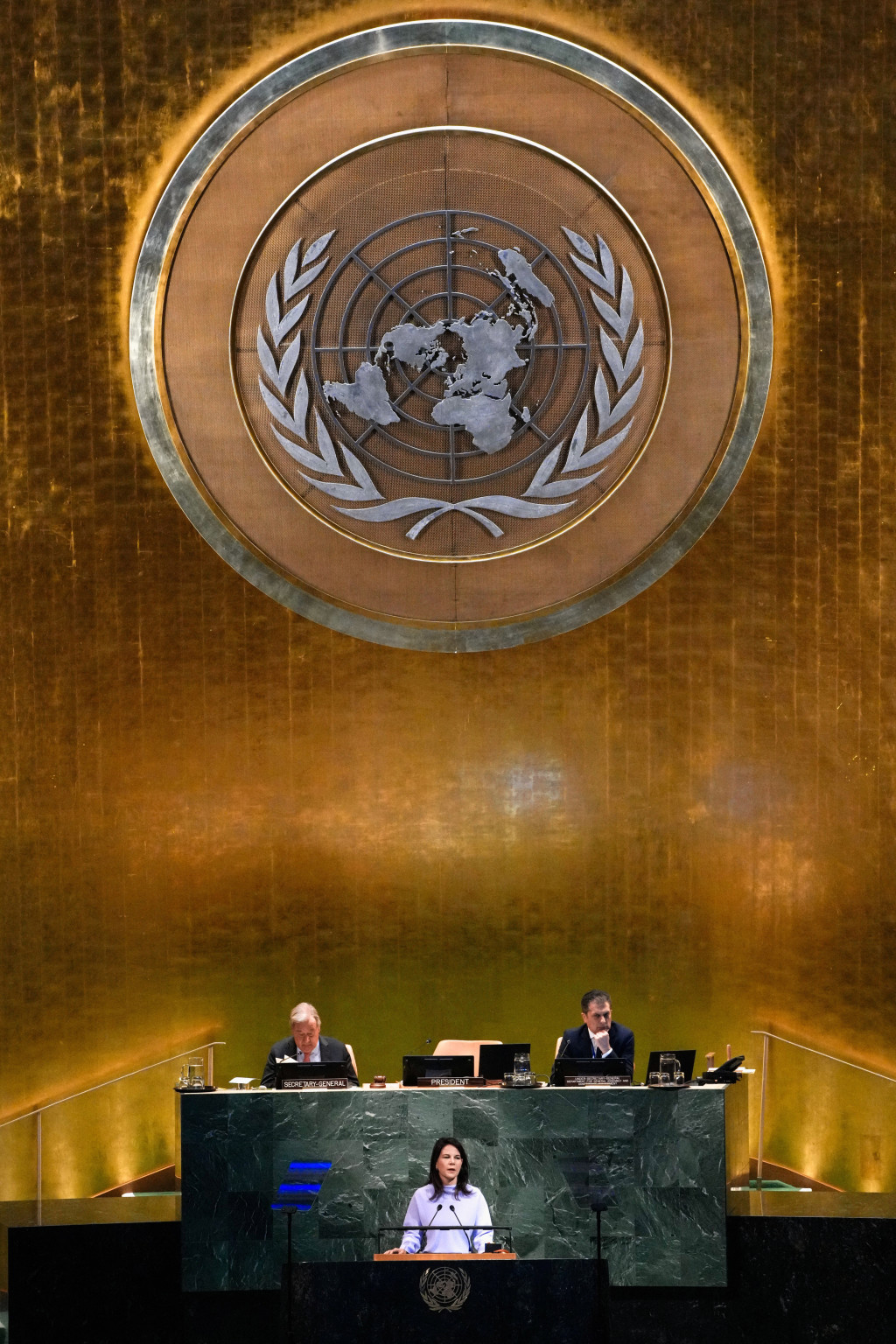
What Is the UN General Assembly?
Updated
Each year, the General Assembly hosts a much-watched debate of world leaders. The 2026 meeting is expected to focus on several critical topics, including climate change, artificial intelligence governance, and major ongoing conflicts in Iran, Ukraine, and elsewhere.
- The UN General Assembly delivers recommendations on many international issues and manages internal UN appointments and budget approval. Each UN member state gets one vote in the assembly.
- For years, the assembly has struggled to make its work more substantive and transparent, and experts say major reform is needed.
- The 2025 debate centered on topics including the wars in the Gaza Strip and Ukraine, global financial reform, nuclear deterrence, and progress toward the Sustainable Development Goals.
What are backgrounders?
Authoritative, accessible, and regularly updated Backgrounders on hundreds of foreign policy topics.
Who Makes them?
The entire CFR editorial team, with regular reviews by fellows and subject matter experts.
Introduction
Since its inception, the UN General Assembly (UNGA) has been a forum for lofty declarations, occasionally audacious rhetoric, and rigorous debate over the world’s most vexing issues—including poverty, development, peace, and security. As the main policymaking and most representative organ of the 193-member United Nations, the assembly holds a general debate in the organization’s New York headquarters each September and convenes special sessions at other times to address a range of issues.
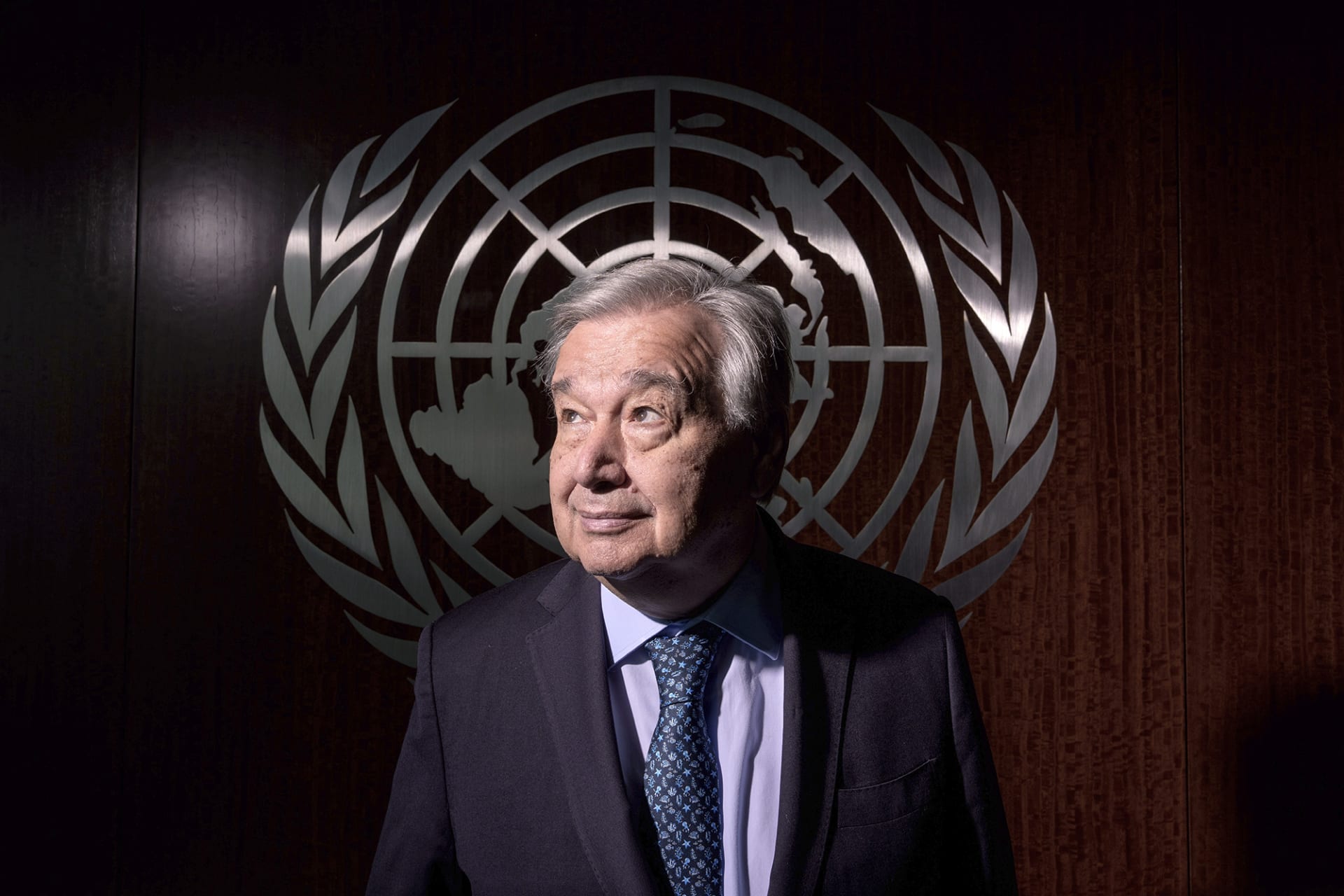
The 2026 session marks the eighty-first anniversary of the United Nations and is centered on the theme “Restoring trust, managing transformation: a United Nations that delivers for all.” During the general debate, member states are expected to discuss the growing number of global conflicts, the rise of emerging technologies such as artificial intelligence, UN reform, and progress toward the Sustainable Development Goals (SDGs)—of which only 36 percent of assessable targets are on track or making moderate progress toward completion ahead of the 2030 deadline. The 2026 session will also likely feature discussion of the UN secretary-general race, as current officeholder António Guterres is stepping down at the end of the year.
What is the role of the UN General Assembly?
The General Assembly is the only universally representative body of the United Nations. It is often referred to as a “parliament of nations” because it provides a platform for all 193 UN member states to participate in global decision-making with equal representation. It is one of six principal organs of the United Nations, in addition to the Security Council, the Economic and Social Council, the Secretariat, the Trusteeship Council, and the International Court of Justice.
As set out in the UN Charter, the function of the General Assembly is to discuss, debate, and make recommendations on subjects pertaining to international peace and security. These include development, disarmament, human rights, international law, and the peaceful arbitration of disputes between nations.
The General Assembly elects the nonpermanent members of the Security Council and other UN bodies, such as the Human Rights Council, and appoints the secretary-general—the chief administrative officer and de facto head of the United Nations—based on the Security Council’s recommendation. The General Assembly also considers reports from the other principal organs of the United Nations, assesses the financial situations of member states, and approves the UN regular budget, giving it significant control over the organization’s purse strings. The assembly also works with the Security Council to elect the judges of the International Court of Justice.
What does membership of the UN General Assembly look like?
There are 193 UN member states, each with a single vote in the General Assembly. The UN Charter specifies that decisions by the assembly on “important questions” require a two-thirds majority of present and voting members, while decisions on all other questions require only a simple majority.
The General Assembly’s presidency rotates with each annual session among the United Nations’ five regional groupings and is elected by the body itself; Bangladeshi Foreign Minister Khalilur Rahman is president of the eighty-first session. The president is empowered to enforce rules of procedure, such as opening debate, setting the agenda, limiting speaking times for representatives, and suspending or adjourning debate.
However, presidents have at times moved somewhat beyond their traditionally procedural role, expanding their influence over discussions within the body. This has sometimes aroused opposition from member states. In 2011, for example, session head Nassir Abdulaziz al-Nasser invited the UN high commissioner for human rights to brief member states on the Syrian civil war, despite opposition from Syria’s backers.
When it comes to participation in the General Assembly, membership can be highly contentious. Taiwan has been repeatedly denied UN membership due to objections from China, which holds a permanent seat on the Security Council and considers Taiwan part of its sovereign territory. (In 1971, Taiwan lost its membership after the assembly recognized the People’s Republic of China, the mainland, as the only legitimate representative of China to the United Nations.) In 2018, Taiwanese officials visited New York ahead of the General Assembly to tout the island’s fulfillment of some SDGs—a move seen as part of broader efforts to join UN agencies.
The status of the Palestinian territories at the United Nations has also been controversial. The 2011 General Assembly session was dominated by discord surrounding the territories’ bid to become a member state, which stalled in the Security Council after the United States vowed to veto such a measure. At the 2012 session, member states passed a resolution granting the Palestinian territories nonmember permanent observer status—the same as that for the Holy See—allowing it to participate in all UN proceedings and maintain a mission at the UN Headquarters in New York. However, it is still unable to vote on Security Council resolutions and decisions.
In April 2024, the United States vetoed the Palestinian Authority’s bid for full UN membership, saying that it should come only through direct negotiations between them and Israel. The next month, the General Assembly backed Palestine’s bid to become a full UN member, recognizing it as qualified to join and recommending the Security Council reconsider the issue. As the humanitarian crisis in the Gaza Strip worsened, several countries—including Australia, Belgium, Canada, France, and the United Kingdom—announced their recognition of Palestinian statehood ahead of and during the 2025 General Assembly. However, many hinged that recognition on a series of conditions, including the exclusion of Hamas from future governance structures.
Regime changes can also present challenges for UN representation. After Myanmar’s military junta seized power in a coup in February 2021, the country’s existing permanent representative, Kyaw Moe Tun, refused to step down despite dismissal by the junta. However, the Myanmar government revoked his status in September 2026, saying that he was dismissed from the civil service in February 2021 and accusing him of unauthorized use of state property and mission funds. (The UN Credentials Committee is expected to discuss Myanmar’s representation to the organization following the 2026 General Assembly debate.) Similarly, the former Afghan government’s ambassador to the United Nations resigned in 2021 after the Taliban took control of the country; the United Nations does not recognize the Taliban’s new pick.
Is the General Assembly in need of reform?
As is the case with the Security Council, many UN experts and leading donor nations to the United Nations believe the General Assembly is in need of improvement. Efforts to revitalize the assembly’s work focus on increasing its power vis-à-vis the Security Council, making the process for appointing UN executives more transparent, and improving the quality of debate within the body. But the assembly has continued to resist deep-seated institutional reforms, a reflection of the rift between its many members from the developing world, who want to retain a strong say in deliberations, and the wealthy nations that serve as the United Nations’ main financial contributors.
In 2005, Secretary-General Kofi Annan presented a report that criticized the assembly for focusing excessively on reaching consensus and passing resolutions that reflected “the lowest common denominator” of opinions. Michael W. Doyle, former assistant secretary-general and special advisor for policy planning to Annan, said the assembly is “an important institution that has never quite sorted out its role” in terms of being a truly deliberative and functional body, and that it has “insufficient deliberation and not enough genuine discussion.” Doyle added that the assembly could enhance its relevance by holding hearings with expert testimony.
The General Assembly has previously made some effort to make its work more substantive and relevant. Adopted in 2005, Resolution 59/313 established a more influential role for the assembly’s president by granting the position the power to propose debates and expanding the resources available to this office. Since 2005, the assembly has also established an ad hoc working group dedicated to revitalizing and reporting on the effectiveness and efficacy of the body; the working group has been reestablished annually since 2007.
At the same time, current Secretary-General Guterres has called for broader action to improve the UN system. During the 2021 session, he presented the Our Common Agenda report, which proposed sweeping actions to improve global cooperation, including by strengthening the United Nations’ capacity in areas like health and digital cooperation. In 2024, the General Assembly held a two-day Summit of the Future that resulted in the adoption of a Pact for the Future, an international agreement seeking to update global cooperation in the face of twenty-first-century challenges, focusing on categories including sustainable development and peace and security.
In early 2025, amid cuts in international aid and growing calls for UN reform, Guterres launched the UN80 Initiative, a sweeping plan aimed at making the United Nations more efficient, effective, and responsive to contemporary global challenges—including climate change and displacement. As part of this effort, the initiative plans to shrink the body’s budget by consolidating various UN agencies that have overlapping roles and merging the “operational responsibilities” [PDF] of major agencies working in humanitarian and conflict settings.
Critics, however, have expressed concern about the UN80 Initiative’s swift timeline and the potential for reforms to undermine focus on areas like human rights, gender equality, and development. A May 2026 progress report [PDF] notes that while “significant progress has been recorded” since the initiative launched, growing gaps between global needs and means are making it difficult for the UN system “to deliver at the level that people rightly expect of it.”
Have members ever been punished by the assembly?
The General Assembly has the power to censure states for violating UN Charter principles. For example, it can bar countries from serving on UN panels and remove countries from the Human Rights Council if they commit egregious human rights abuses.
In 1974, the assembly suspended the South African delegation from participating in its work at the United Nations due to international opposition to the country’s apartheid regime, which violated Security Council resolutions and international law. South Africa was readmitted in 1994, following its democratic transition. In 1992, after the dissolution of Yugoslavia, a General Assembly resolution denied Serbia and Montenegro the automatic inheritance of the former Yugoslav seat, requiring them to reapply for UN membership and forgo participation in assembly deliberations. In 2019, the General Assembly passed a nonbinding resolution condemning human rights abuses against Muslim Rohingya in Myanmar.
Israel was barred for many years from serving on UN commissions and panels because these slots are allotted according to membership in the United Nations’ five regional groups. Arab states had blocked Israel from membership in the Asia-Pacific Group, which includes other Middle Eastern countries. The United States and European allies helped make Israel a temporary member of the Western European and Others Group in 2000, leading to Israel’s permanent membership in that group in 2014.
Regarding Syria, the General Assembly voted in 2012 to denounce President Bashar al-Assad’s regime for atrocities committed since the start of the Syrian civil war a year earlier. Over a decade later, the General Assembly approved the creation of a new UN body to investigate the whereabouts of the estimated one hundred thousand people who disappeared during the conflict. (At the 2025 UNGA debate, Syrian President Ahmed al-Sharaa became the country’s first leader to address the body since 1967, and called for international sanctions on his country to be lifted.)
In recent years, Russia has been the target of multiple General Assembly resolutions, primarily because of its aggression against Ukraine. In 2014, the body adopted a nonbinding resolution declaring Russia’s annexation of Crimea to be illegal. When Russia invaded Ukraine in 2022, the General Assembly called an emergency session and voted overwhelmingly to condemn the invasion and demand that Russia immediately withdraw its forces from Ukrainian territory. The assembly later voted to suspend Russia from the Human Rights Council, the second time such a suspension has occurred. (Libya was the first to lose its seat on the council, in 2011.)
As the Israel-Hamas war continued unabated in 2024, the General Assembly voted on a resolution demanding Israel end its “unlawful presence” in the Palestinian territories. The United States voted against the resolution, which also urged states to consider measures including travel bans and asset freezes against individuals or entities involved in the Israeli occupation of the Palestinian territories.
What are some noteworthy assembly actions?
“The General Assembly is not an action body. It is just that—an assembly,” said Donald McHenry, former ambassador and U.S. permanent representative to the United Nations. General Assembly resolutions are still significant, however, because they serve as indicators of member states’ positions on a given issue. They can also prove useful by outlining organizing principles and proposing initiatives for member states, McHenry said. Some assembly actions have had more influence or incited more controversy than others, including:
Universal Declaration of Human Rights. In 1948, two years after the assembly convened its inaugural session, it promulgated the Universal Declaration of Human Rights, which contained thirty core articles outlining global standards for human rights. A historic act, it proclaimed the “inherent dignity” and “equal and inalienable rights of all members of the human family.” As the first chair of the UN Commission on Human Rights, U.S. First Lady Eleanor Roosevelt helped to draft and pass the declaration, saying that it “may well become the international Magna Carta for all men everywhere.”
Human rights issues remain contentious, however, and the Human Rights Council continues to face criticism for, among other things, including countries with poor human rights standards and focusing disproportionately on Israel. (In 2024, the council adopted a resolution calling for Israel to be held accountable for possible war crimes and crimes against humanity during its war in Gaza.)
“Uniting for Peace” Resolution. In 1950, the United States initiated the landmark “Uniting for Peace” resolution. It states that if the Security Council “fails to exercise its primary responsibility” for maintaining international peace and security, the General Assembly should take up the matter itself and urge collective action.
The assembly has acted on this resolution in a handful of instances, including the Suez Crisis of 1956. UN intervention in the crisis ultimately resulted in a ceasefire, troop withdrawal, and the establishment of the first UN Emergency Force—a peacekeeping force. The 2003 U.S. invasion of Iraq provoked calls from many organizations for the General Assembly to take up the issue and override the impasse of the Security Council, but the assembly did not do so.
Millennium Declaration. For its fifty-fifth session, in 2000, the General Assembly was designated the Millennium Assembly. At a summit that year, Secretary-General Annan unveiled the Millennium Declaration. It set forth the Millennium Development Goals, a collection of “time-bound and measurable” targets for reducing poverty, halting the spread of HIV/AIDS, improving access to primary education, and other metrics of development.
The goals continue to be invoked by many governments and nongovernmental organizations to spur aid to developing countries. In 2015, the General Assembly adopted the seventeen SDGs, which succeeded the Millennium Development Goals as the United Nations’ chief initiative for advancing basic living standards and addressing a range of global issues, including gender inequality and climate change.
“Zionism Is Racism” Resolution. One of the assembly’s most controversial resolutions, passed in 1975, determined that “Zionism is a form of racism and racial discrimination.” The resolution explicitly recalled General Assembly Resolution 1904 (XVIII), adopted in 1963, which proclaimed the UN Declaration on the Elimination of All Forms of Racial Discrimination, stating that “any doctrine of racial differentiation or superiority is scientifically false, morally condemnable, socially unjust and dangerous.” The move was especially striking given that the United Nations had played a pivotal role in the international process surrounding the creation of the state of Israel through its 1947 adoption of Resolution 181, also known as the Partition Resolution, which recommended dividing British-ruled Mandatory Palestine into Jewish and Arab states.
In his address to the General Assembly on the day the 1975 resolution was passed, Israeli Ambassador to the United Nations Chaim Herzog said, “Zionism is to the Jewish people what the liberation movements of Africa and Asia have been to their own people.” He added that, “For us, the Jewish people, this resolution based on hatred, falsehood and arrogance, is devoid of any moral or legal value.” The resolution was repealed in 1991. In 2001, during the United Nations’ world conference on combating racism in Durban, South Africa, similar language on Zionism was introduced but later dropped.
Recommended Resources
For Foreign Policy, James Traub argues that while the United Nations’ power has severely diminished, it’s not dead yet.
This timeline runs through major moments in UN history.
This article unpacks the United Nations’ reform plan, the UN80 Initiative.
In their book, The UN Charter: Five Pillars for Humankind, CFR expert David J. Scheffer and the International Bar Association’s Mark S. Ellis make the case for why the UN Charter is the world’s most important secular document.
This article examines how much funding the United States gives to UN agencies and programs.
These explainers explore the role of the UN secretary-general and how the UN Security Council works.
Colophon
Staff Writers
- CFR Editors
Additional Reporting
Sky Cambron, Kaleah Haddock, Diana Roy, Lindsay Maizland, Nathanael Cheng, Jessica Moss, Carlos Galina, Fatimah Alyas, Sebastian Pellejero, and Chelsea Padilla contributed to this Backgrounder. Will Merrow created the graphics. Header image by Eduardo Munoz/Reuters.
 Backgrounder
 Backgrounder
 Backgrounder
 Backgrounder