New Year’s Special: 2020 Hindsight
At the start of the new year, the Why It Matters team takes a look at some of the best interview segments that didn’t make it into the episodes.
Published
Host
 Director, Podcasting
Show Notes
The interviews for Why It Matters last about an hour, but they are eventually cut down to five or ten minutes. As a result, a lot of great material doesn’t make it in. This episode features the most fascinating clips that were too good to leave behind.
To learn more about these clips, check out the other episodes and their show notes.
Transcript
We’ve officially arrived at the end of the year. Goodbye 2019 and hello 2020!
For anyone who might not know, Why It Matters launched this year. And with a new year ahead, we decided to look back over our first episodes, and include some of the audio that got left out.
Here’s a fun fact - the interviews we do for Why It Matters are each about an hour long. As a result, they get edited down, a lot. And as with all editing, sometimes you have to kill your darlings, losing favorite quotes and comments for the sake of time and story. It’s a tough thing to do!
I’m Gabrielle Sierra, and this is Why It Matters the clip show! Today, some gems from 2019 that we just couldn’t bear to leave behind.
Our first clip is from an episode called Space Jam that aired in December. If you didn’t catch it, this episode looked at space debris and space militarization - two things that could one day make it impossible for us to explore the cosmos.
This clip is part of a much longer discussion I had with Stewart Patrick, a Senior Fellow in Global Governance at the Council. We chatted all about the important things like satellites and GPS and Wall-E. Here, we get into the idea that maybe space could use some better marketing.
SIERRA: Do you think if NASA did something, like, a little more grabby and snazzy, like launch a car into space, that people will start actually following these things and caring about it?
Stewart PATRICK: I think that there’s a lot of people who say, why are we going back into space? Aren’t the unmanned space expeditions—or activities, don’t they tend to be—get more bang for the buck in terms of scientific knowledge, et cetera? I think, unfortunately or fortunately, if you involve flesh and blood humans in this it captures the imagination in ways that nothing else can. Let’s just say that the Matt Damon movie The Martian would have been less interesting if it had been Wall-E.
SIERRA: Planting potatoes.
PATRICK: Exactly, planting potatoes, we just left Wall-E there.
SIERRA: So what do you think space means to people now?
PATRICK: Space used to be a realm that I think was seen as sort of cold and forbidding. And there was, I think, a let-down after the Apollo program. You know, we’d gone to the moon. We had driven our dune buggies around on it. It looked pretty cool. You could jump pretty far. You could even, you know, hit golf balls and they’d go a lot better than any time I’ve ever used a driver. But I think there was a let-down. There also was a—there also was a sense that the one thing that was actually interesting about the space program was that you got to see this image of the Earth. And it actually, in a way, helped push the emphasis back on Earth as this sort of fragile planet in a cold and otherwise dark and seemingly lifeless universe. And here we were, and so let’s focus on Earth.
And I think there are a lot of good things about that. Helped start the environmental movement, et cetera. But I think now, with technological breakthroughs, I think there’s a growing sense that some of the astronomical, literally, distances that we associate with space are not not a barrier to actually understanding it. More to getting pictures of, say, what, you know, Jupiter or Saturn’s moons look like. Even landing on those—on those planets or on those moons. And increasingly, I think there’s a determination that at least when it comes to one of our closest neighbors, Mars, that there is a way to get there. And so I think there’s a certain, you know, restless romance that is part of the human experience that this is tapping into now.
Outer space is a great realm of possibility. And the question is whether or not that realm of possibility will be closed off—the route to it will be closed off by the fact that we can’t overcome our disagreements on Earth.
Stewart Patrick is an expert on global cooperation. Which means he spends a lot of time trying to get everyone to work together. So while I had him in the studio, I also took the chance to ask him about space and cooperation.
SIERRA: So do we need something like an asteroid coming towards us to learn how to cooperate as a planet and face these challenges together?
PATRICK: You know, a lot of times humans don’t cooperate unless there is a major crisis coming towards them. You know, if you think about other areas of internationalism, right, you think about the global financial crisis, right, of 2007-2008. In the aftermath of that, everybody said, wow, we’re in the same boat and the storms are really choppy, and we could have the greatest financial meltdown since the Great Depression. We had - we did have that, and we might have a great depression. So let’s all row together. And so they did. It remains to be seen whether the climate change catastrophe and the looming destruction of biodiversity around the world, and all of the extreme weather, et cetera, is going to have people come together enough to actually deal with that problem.
You know, an asteroid coming towards Earth would actually in a way be an incredibly unifying event, I think. There are already—there’s already a lot of international cooperation on that topic. There have been simulations, believe it or not, in the last couple of years, including in the United States, where people have come together, officials from all around the world from the space agencies have said, OK, this is coming towards us. What can we do? Are we going to try to go deflect it somehow? Are we going to try to blow it up with a nuclear weapon?
I think that one thing that could help is maybe less of an existential threat that brings us all together, although that would. But let’s say that’s not on the horizon, fortunately maybe. But there also is the sort of unifying aspect of outer space exploration. You know, there has been an International Space Station. I don’t want to credit that with, you know, bringing world peace about, right, but if you could come up with an idea of what are some of the amazing things that are in the future in terms of, you know, travel within our own solar system, for instance, the voyage to Mars that everyone’s talking about. If you can make that an international endeavor that would be an extraordinary thing.
Next, a clip from our very first episode, The Big Red Button. In this show we talk about the U.S. President’s unilateral launch authority, or the fact that the president can launch a nuclear weapon at any time, and there’s not much anyone can do to stop it.
Two of our guests on this episode, Abigail Stowe-Thurston and Alexandra Bell, are colleagues at the Center for Arms Control and Nonproliferation. I met with them together, and during our discussion they expressed a worry that people have lost their sense of urgency about nuclear weapons.
Alexandra BELL: Atmospheric testing really scared people, and for good reason. Um, the radioactive particulates that would get into the air from our testing program were ending up in the teeth of children, and mother’s milk, and grass that livestock were eating. It was around us all the time. And in some ways, when we took testing underground, and then we’ve had a moratorium on nuclear testing since the early ’90s, when we went to great lengths to control these weapons, to bring the total arsenal—global arsenal down from about seventy thousand nuclear weapons to where we are today, around fourteen thousand. People were just relieved to get away from it. And the Cold War ended and people were like, whew, glad that’s done. And they turned their focus elsewhere.
And there are a lot of problems. Climate change and global terrorism. All of these things sort of get in front of people all the time. And the nuclear issue seems so big, and so unsolvable, that I think people have just kind of left the conversation because they don’t know how to contribute, what to do. But in fact, public pressure is actually key to making sure that leaders aren’t making dumb decisions and basically putting us in a situation where we just replay the Cold War all over again. And we were lucky to make it out the first time. We might not be so lucky this time.
SIERRA: Do you think that people need to be afraid in order for change to happen?
STOWE-THURSTON: Well, they can’t be too afraid, or then they get paralyzed.
BELL: Yeah.
STOWE-THURSTON: So too much fear is probably not the best educational tool. I do think it’s worth looking at some of the—
BELL: So think Goldilocks amount of fear.
STOWE-THURSTON: Yeah, yeah. (Laughter.)
SIERRA: I mean, people seem a lot more jaded now.
BELL: Yeah. Like, if there’s going to be a nuclear strike, like, what am I going to do?
SIERRA: Right, or, you know, how does this really—
BELL: Particularly in major cities there’s sort of a, shrug, I guess it would all be over. But that’s the thing. This is a preventable problem. We know how to do this. We know how to control these weapons. We know how to bring down these numbers. It’s just persistence, persistence, and patience. And that’s not something that’s in heavy supply right now among a lot of global leaders. But if publics are demanding that, you’ll see more of it. And you’ve seen it work in the past.
Another one of our guests on this episode, the Council’s own Richard Betts, has been in the nuclear security game for a long time - since the Cold War. So while we had him, I wanted to get his take on global nuclear security as a whole.
SIERRA: Who are you most worried about?
BETTS: Well, in the short term I would worry about nuclear proliferation and weapons in the hands of smaller states in smaller numbers, but ultimately I worry in the medium-term perhaps more about the United States and Russia, the danger not so much of premeditated use of nuclear weapons but of a crisis interaction which could lead to inadvertent use.
And over the longer term—although not too much longer—China. The overall political conflict that the United States has to worry about with great powers now, I think even in the near term, China is more important than Russia. But China still has comparatively few nuclear weapons, but that could change. As China grows wealthier and more ambitious, and if tensions between the United States and China grow, we shouldn’t be surprised if they decide, well, it’s time for us to get more nuclear weapons, and then the risks will begin to look larger.
SIERRA: So it seems like in the news we have been told to worry a bit more about North Korea or potentially Iran. What sort of role are they playing in this?
BETTS: Well, in the near term, as I say, nuclear proliferation is the bigger problem. And North Korea is the premiere example of that problem because they are building nuclear weapons and they have a regime that is arguably the worst regime in the world, with a history of what seems like wild and crazy, provocative actions. And the danger of not finding a way to get the North Koreans to climb down from a program of deploying lots of such weapons, the risks that go with not being able to turn that around look substantial because of the danger of conflict on the Korean Peninsula and the danger that if there is any sort of military conflict it becomes harder to ensure that escalation doesn’t occur.
Iran, for many people, has attracted more attention and concern. Personally, I think that’s a mistake. I think if you’re ranking the dangers North Korea far outstrips Iran as what should be the focus of our concern. But not everyone agrees with that.
SIERRA: Because of its instability or because of—
BETTS: Well, I think in terms of a demonstrated tendency to aggression and provocative behavior, North Korea outclasses Iran. Now, many people who are focused on the Middle East and on the security of Israel have some natural reasons to look harder at Iran, but Iran still doesn’t have nuclear weapons. They’re way behind North Korea in that regard. They have the capabilities to develop nuclear weapons, and now could imminently be deciding to move further in that direction because the United States has canceled the deal.
But even if they do develop them, I would argue, while that situation shouldn’t make anybody happy, the way we could handle the problem with traditional deterrence is, while not ideal, probably as reliable a way of dealing with the problem as it has been with other countries we’ve relied on deterrence to prevent from doing dangerous things with nuclear weapons.
Next up, a moment from our STEMinism episode, which aired in November. This episode looked at the global exclusion of women and girls from science, technology, engineering, and math, and what that gap has cost the world.
Here I’m chatting with Megan Smith, who among many other things, was Chief Technology Officer under President Obama.
Megan SMITH: You know, one of the things that is really astonishing if you look at it from different eyes is, an example that comes out is the school lunch program. Today we feed twenty-two million children free and reduced lunch. These kids are in poverty. They’re hungry. But for some reason, in the summer we can only figure out how to feed six million of them. Now, this is a big data problem, right? It’s very complicated. You know, they’re in all different cities, and states, and different programs. And how are we going to find them? How are we going to prove they ate it and, you know, that it wasn’t wasted, and all the different laws? But it’s kind of crazy we can’t figure out to do that, but you can deliver an Amazon package like that, right? There’s no problem tracking exactly where it is.
There’s children on the border, right? Why can’t we track where the children are that are that are in our custody and exactly what’s happening with them, when I can look online, again, Amazon package. So we’re over-indulging certain topics with deep science and technology.
So how do we help our colleagues who have no tradition of including tech, innovation, data science, other people? They think of tech as the help. And yet, the tech people would love to help with this. And in fact, it would help diversify STEM because so many people want to work on these topics who come from all different kinds of backgrounds and don’t realize, because they’ve been taught, oh, STEM is just for these topics, or it’s boring, or you’re not going to be good at it because it’s only for certain people who are magically geniuses about it. That’s just not true. We just teach it in a way that’s interesting to certain people, and we teach it in a way that’s super boring or intimidating to other people. And it’s completely unnecessary.
There’s so much genius in the world. And so getting more of our colleagues to be willing to support and act in that way, the way that others on the planet are doing, would make an extraordinary difference.
SIERRA: And you think that if we go into schools and teach this in a more broad way, applying it to other fields, women would be more interested in STEM fields overall?
SMITH: Everybody would be more interested.
For our next section, we’ve got some moments from China Doesn’t Want Your Trash, which aired in November. If you missed it, this episode explained how China processed more than half the world’s recycling for decades, until a policy called National Sword changed everything.
Here’s CFR’s Elizabeth Economy, a senior fellow and director for Asia studies, explaining the problem from China’s perspective.
SIERRA: Has this changed their policies with how they handle their own recyclables as well?
Elizabeth ECONOMY: I think that is probably another driver, is that it really did want to focus more on its own recycling. And you see some cities, like Shanghai, that are trying to adopt some more advanced policies like, you know, smart bins for recycling, and trying to move ahead. They have a long way to go. I mean, they have mountains of trash, you know, populating all throughout the country. So I think there’s a lot that needs to be done on the home front. And clearly, they’re generating—not only with 1.3 some-billion people they generate a lot of waste. But, again, their own economy is growing. They have become much more of a consumer society, you know, themselves. And so, yes, I think it’s a big part of this is they’ve got their own huge waste issue to deal with. And so dealing with the waste from many other countries at this point I think is probably not top of their list.
SIERRA: OK, but why is it called National Sword? Because it’s a really intense name for something that pertains to recycling.
ECONOMY: Well, I think it really reflects an effort by the Chinese to get at the idea that they are cracking down hard. And they tend to use this type of language frequently when they are trying to crack down on illicit behaviors. So they’ll have Strike Hard campaigns, right, which might deal with corruption for example. This is not unusual in the context of Chinese language. It really just means: Here is a very significant problem, and the government is bringing the full force of its enforcement capabilities down on those who are, you know, doing this illegal behavior.
SIERRA: Where does National Sword fit in with the U.S. relationship with China currently?
ECONOMY: I think in the scheme of things it’s probably not in the top five issues that the U.S. government is thinking or talking about. I think certainly the Trump administration is overwhelmingly concerned with the trade issue. I think there’s issue of North Korea, trying to gain Chinese cooperation to manage the nuclear threat. I think that, you know, other top of the sort of agenda issues would be broader security concerns around South China Sea, Taiwan, what’s taking place, you know, in Xinjiang with the Uighur Muslim, you know, detention camps, human rights issues, Belt and Road initiative. There are many, many issues. I have, frankly, not even heard any of sort of the top China people in the U.S. government discussing this issue of National Sword.
SIERRA: So it’s certainly not related to escalating tensions or anything like that?
ECONOMY: Again, I don’t think it is. And I would make, I think, the pretty, you know, important point that this issue is not tied to the United States exclusively, that it affects many other countries in Europe, in Japan, and Australia. So this is really not about the U.S.-China relationship, per se although, it certainly has a big impact on the United States.
This last clip is a bit of a tease, because the episode it’s from it hasn’t even aired yet. You’ll have to tune in two weeks to get the whole story, but for now, here’s a bit of my conversation with one of our guests, Paul Scharre - a senior fellow at the Center For A New American Security.
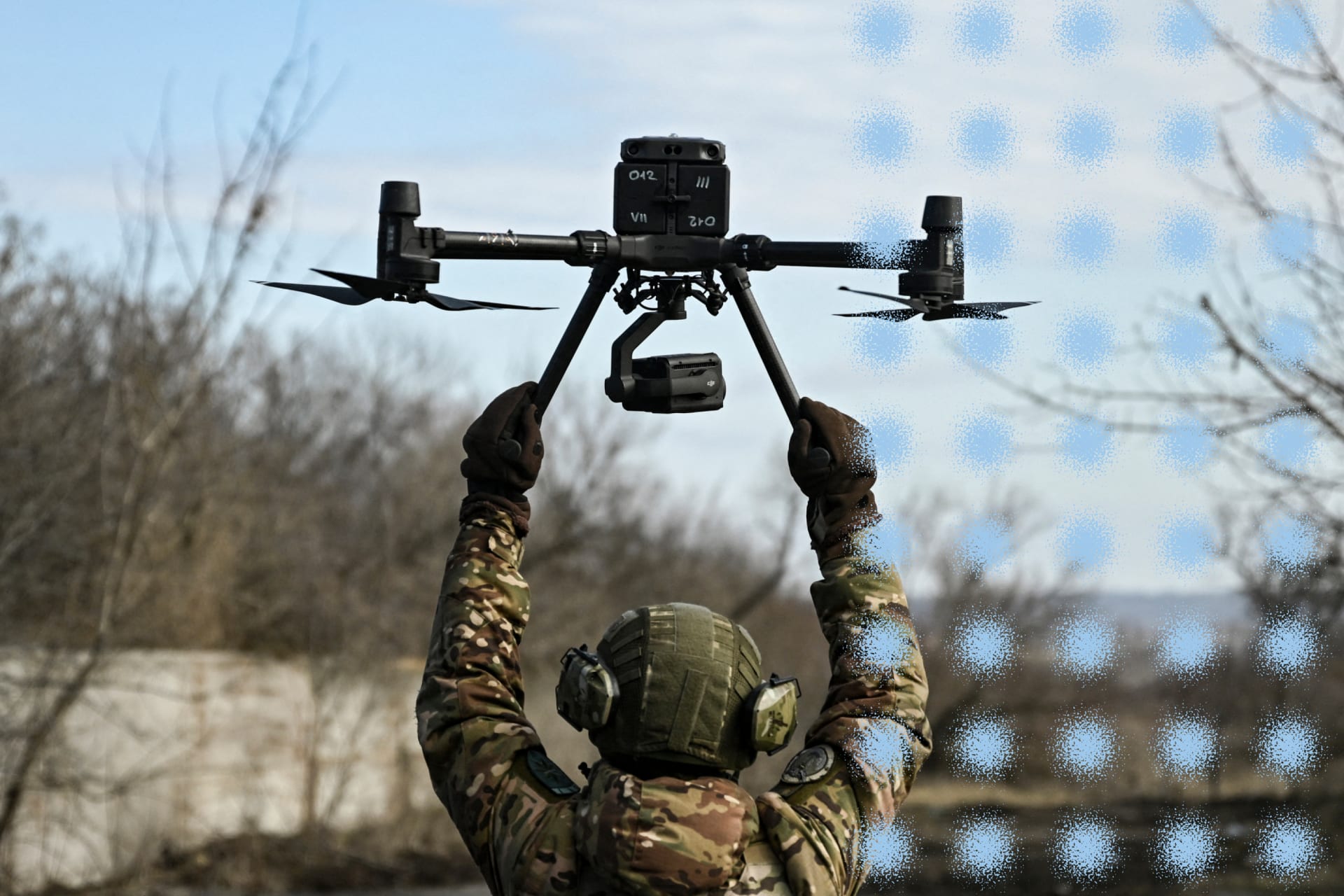
Paul SHARRE: You know, one of the things I looked at for my book, Army of None, was how easy would it be for somebody to build a do-it-yourself autonomous weapon in their garage? And the answer is, it is terrifyingly possible. All of the basic elements exist and are pretty widely available today. You’d need a platform. And you can buy a drone online for a few hundred bucks that’s pretty autonomous. It could go autonomous takeoff and landing. It could fly a GPS-programmed route all on its own. You’d need to put a weapon on it. Well, that’s been done. It seems like the two things that people do when they first get ahold of drones, whether it’s a country or an individual, is they fly it someplace it doesn’t belong, and they put a gun on it. And you’ve seen individuals do this here in the U.S. A couple years ago there was a teenager up in Connecticut who posted a video on YouTube of a flamethrower that he put on a drone, and he basted a turkey for Thanksgiving with it.
So you know, that’s been done. And fascinatingly, here in the U.S., as long as you keep your drone below a certain altitude, and it’s on your private property, it’s not illegal to put a gun on a drone. The FBI, the FAA—
SIERRA: Or a flamethrower.
SCHARRE: Yeah, like, land of the free, go for it.
There you have it, a deeper dive into some of the conversations we had in 2019. We hope you enjoyed it!
If you are on the hunt for some more end of year listening, check out another CFR podcast called The World Next Week, which just released a special year-end episode called The World Next Year. On this episode, hosts Robert McMahon and James M. Lindsay look ahead at events to keep an eye on in 2020.
As for Why It Matters, we’ve got some really awesome stuff coming up, and will be back in action on January 15. From all of us at Why It Matters, to all of you out there in the world, thank you for joining us and Happy New Year!
To learn more about Why It Matters, visit us at CFR.org where you can find a page for all of our episodes. Each one includes show notes, transcripts, and a whole lot of articles and cool resources.
Please subscribe on Apple Podcasts, Spotify, Stitcher, or wherever you get your audio. While you are there, leave us a review and hey, give us some stars. Also, don’t forget to tell your friends! Of course we want to hear from you too, so write us. Our email is [email protected].
Why It Matters is a production of the Council on Foreign Relations. The show is created and produced by Jeremy Sherlick, Asher Ross, and me, Gabrielle Sierra. Our sound designer is Markus Zakaria. Robert McMahon is our Managing Editor, and Doug Halsey is our Chief Digital Officer. Christian Wolan is our Product Manager. Original music was composed by Ceiri Torjussen. Special thanks to Richard Haass and Jeff Reinke.
For Why It Matters, this is Gabrielle Sierra, signing off. Now go out and enjoy your day! 2020 is going to be rad. See you soon!
Supervising Producer
- Lead Content Strategist
Audio Producer and Sound Designer
- Audio Producer & Sound Designer
Associate Podcast Producer
- Rafaela Siewert
Senior Producer
- Director of Video
 29:35Podcast
 26:04Podcast
 38:36Podcast
 31:35Podcast
 37:32Podcast
 32:26Podcast